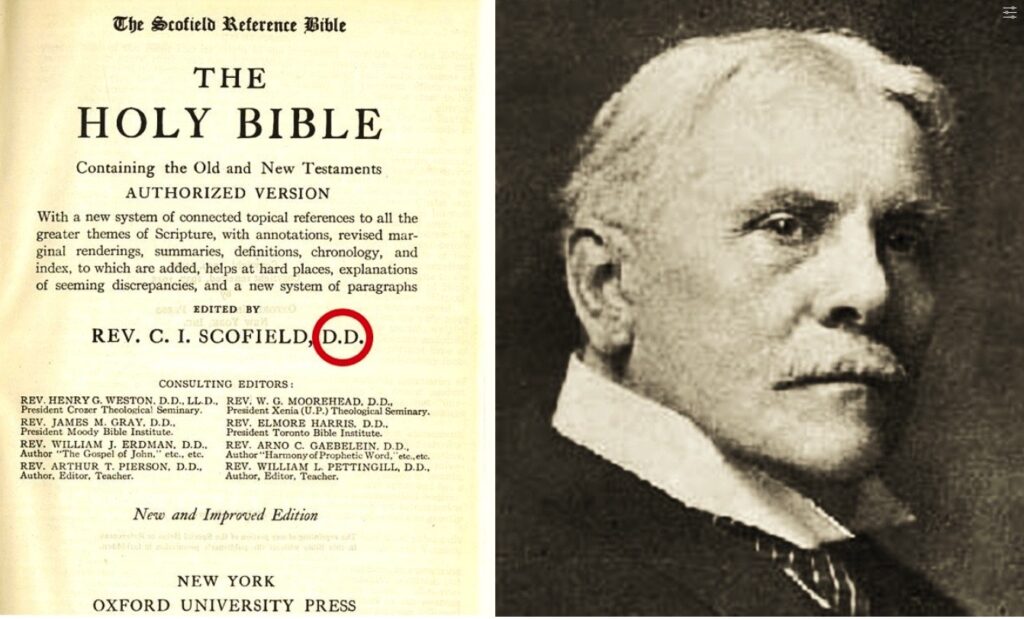
1. Scofield: The Christian Leader with Feet of Clay 2. The Link between Darby and Scofield in the Rise of Dispensationalism 3. Scofield’s Dispensational Hermeneutic: ‘Rightly Dividing the Word of Truth’ 4. Scofield, the Brethren and the Bible Prophecy Conference Movement 5. The Significance of the Scofield Reference Bible 6. Scofield’s Seven Dispensations 7. The Denigration of the Church within the Purposes of God 8. The Elevation of National Israel to a Superior Role over the Church 9. Prophetic Promises of a New Covenant with a Restored National Israel 10. Speculations on Armageddon and the Day of the Lord 11. Conclusions: The Legacy of Scofieldism on Christian Zionism
The Jewish Network for Palestine invited me to give a short presentation on coexistence at their recent annual meeting.
Convivencia simply means ‘coexistence. It is an academic hypothesis, first proposed by the Spanish philologist Américo Castro, regarding the coexistence of Christian, Muslim, and Jewish communities during the period of Spanish history from the Muslim Umayyad conquest of Hispania in the early eighth century until the expulsion of the Jews in 1492.
By extension the term can describe the contemporary religious and cultural interaction and exchange fostered by such proximity as a way to challenge the various forms of ethno-supremacism and exclusive religious nationalisms emerging in different parts of the world.
Like other Western colonial-settler experiments, for over 70 years, Zionists have been systematically erasing the culture and history of indigenous Palestinians to justify their forced removal and the theft of their land. Ilan Pappe, in his book The Ethnic Cleansing of Palestine, calls this ‘memorocide’ and in The Palestine Nakba, Nur Masalha elaborates,
“The founding myths of Israel have dictated the conceptual removal of Palestinians before, during and after their physical removal in 1948… The de-Arabisation of Palestine, the erasure of Palestinian history and the elimination of the Palestinian’s collective memory by the Israeli state are no less violent than the ethnic cleansing of the Palestinians in 1948 and the destruction of historic Palestine.”
This is why books such as Ancestral Journeys and Western Missions are so vital in recording the memories and eyewitness accounts of Arabs and Palestinians who experienced the arrival of Western colonialists to the Middle East, were co-opted into their wars, witnessed the rise of Zionism and then became refugees in the Palestinian Nakba. Anita Damiani-Shanley’s book will most certainly help perpetuate their heritage and rightful historic claim to Palestine.
Ancestral Journeys is however much more than the story of two families, one Arab and the other Scottish joined in marriage. It traces the influence of missionaries, archaeologists, traders and colonialists competing with each other for a share of the Near East as the Ottoman Empire met its demise. Richly illuminated with family photos, the three main chapters trace the ancestral journeys of Damiani-Shanley’s extended family from Scotland and Lebanon to Iraq and then to Palestine. A fourth chapter traces the role of the Anglican Church in Palestine.
This past year, during the pandemic, Rev. Naim Ateek, put together a collection of his writings including lectures, sermons, largely unpublished but mostly delivered at various universities, colleges, and churches over the years.
A number of them have been organized by topics and published in booklet forms. This is a work in progress. So far, six booklets have been published. They are now available through Sabeel Ecumenical Liberation Theology Center in Jerusalem.
I was invited to review one of the booklets, “Cry Out, Do Not Hold Back! Finding the Church’s Prophetic Voice for Palestine”.
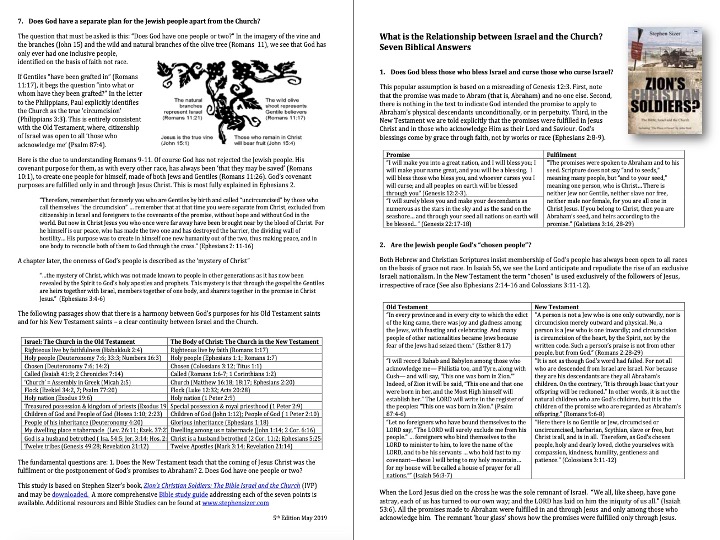
The United Methodist Church for Kairos Response present two authorities on Christian Zionism, a disturbing political theology embraced by millions of Americans who now have a tremendous influence on US foreign policy with regard to Israel and Palestine. Our speakers will help us understand the theology of Christian Zionism, why it is an inaccurate interpretation of Scripture, how it is harming Palestinian Christians and the entire Middle East peace process, and how to counter this theology in our churches.
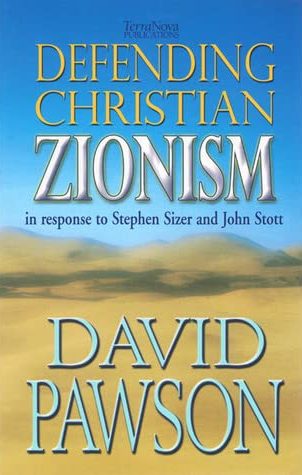
As a young Christian at Sussex University in the early 1970’s, I was enthralled by David Pawson’s biblically-based teaching and coveted his weekly teaching audio cassette tapes, especially on controversial theological and political subjects. He taught me to root my faith in scripture and apply it to every aspect of life. Forty years on, I remember David with respect and admiration. View his website here.
The Living Stones of the Holy Land Trust is an ecumenical charity with the primary aim of advancing education about Christianity in the Holy Land and countries around, by:
raising awareness in Britain and elsewhere, educating and informing the public concerning Christians in the Holy Land, through our website, lectures, newsletter and a yearbook of academic theological articles;
promoting contacts between Christians (and others) in Britain and in the Holy Land, e.g. through pilgrimages promoting encounter, reflection and witness;
cooperating with other charities and groups with similar aims, by sharing activities and information
Take away from me the noise of your songs; I will not listen to the melody of your harps. But let justice roll down like waters, and righteousness like an ever-flowing stream. (Amos 5:23-24)
The board of Kairos Palestine raises an alarm regarding the consequences of the third failed Israeli election in less than a year. The resulting coalition entered on April 20, 2020, combines two of the most right-wing parties—Bennie Gantz’s Blue and White and Benjamin Netanyahu’s Likud—in a deal that directly threatens Palestinians’ freedom, health and human rights.
Described as an “emergency government” to address the impacts of COVID-19, and under the cover of a so-called “coronavirus cabinet,” the State of Israel is empowered to continue its policies of home demolitions, closures, arrests, child detention and settler violence.