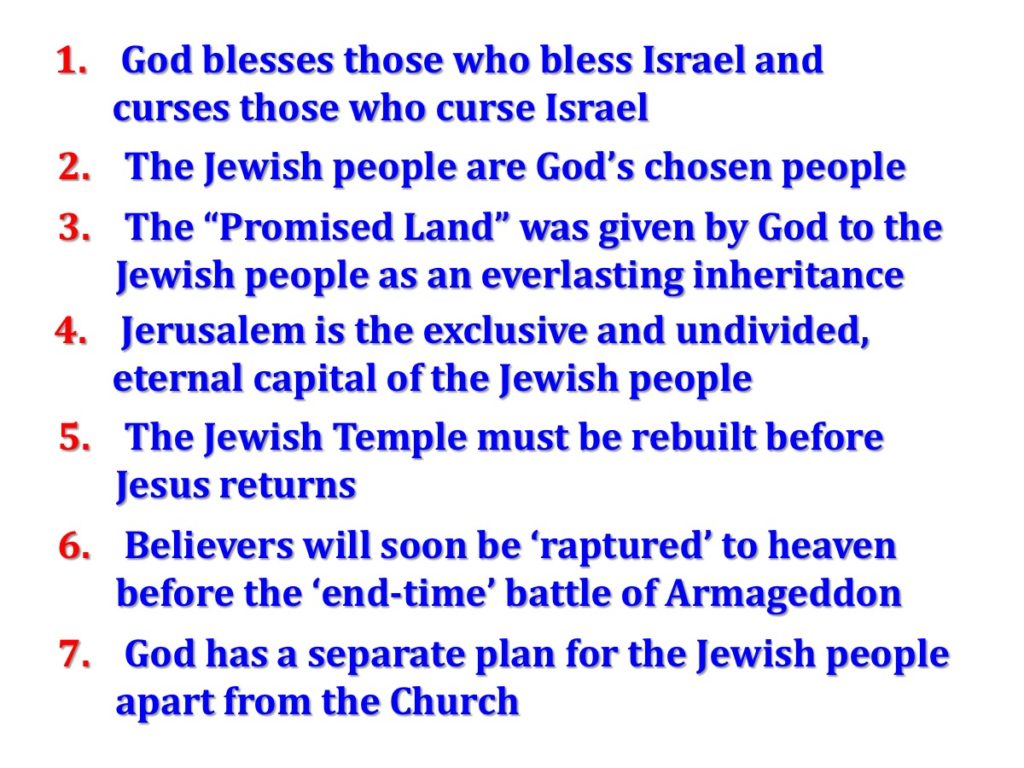
It is not an understatement to say that what is at stake is our understanding of the gospel, the centrality of the cross, the role of the church, and the nature of our missionary mandate, not least, to the beloved Jewish people. If we don’t see Jesus at the heart of the Hebrew scriptures, and the continuity between his Old Testament and New Testament saints in the one inclusive Church, we’re not reading them correctly. The key question is this “Was the coming of Jesus and the birth of the Church the fulfilment or the postponement of the promises God made to Abraham?” Christian Zionists see the promises of identity, land and destiny as part of an ongoing covenant God has with the Jewish people. In the following resources I answer this question and show that Christian Zionism is a recent manifestation of a heresy refuted by the Old and New Testaments.
Continue readingCategory Archives: Christian Zionism
Christian Zionism Preceded Jewish Zionism: WRMEA
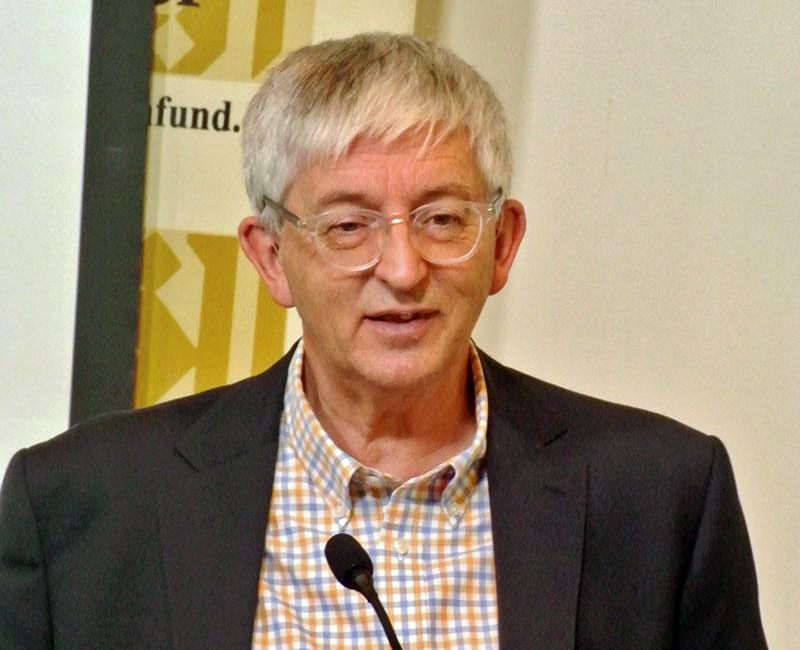 Delinda Hanley has written an article in the Washington Report on Middle East Affairs about a presentation I gave at the Jerusalem Fund in Washington DC in November last year.
Read her article here “Rev. Sizer Reveals Christian Zionism Preceded Jewish Zionism”
Watch the Jerusalem Fund video of the presentation here
Can Religion and Politics be Separated in the Middle East Today?
 A presentation by Colin Chapman
Cambridge Centre for Christianity Worldwide Seminar
9 October, 2018
Introduction
Let me begin with a one-sentence answer: it’s extremely difficult, if not impossible to separate religion and politics in the Middle East today; and the future is bleak unless we can find ways of separating religion and politics and allowing religion to support an international order that is based on the rule of law.
This presentation is very much a ‘big picture’ exercise, an attempt to put some of the pieces of the jig-saw puzzle together. As a Christian who is interested in the role of religion and the interaction of religion with politics, I’m trying to make sense of the history that is being played out before us in the Middle East at the present time.
I probably need to explain my credentials. I’m not a historian or a political scientist. I happen to have worked with a mission agency, the Church Mission Society (CMS), in the Middle East for 18 years and have been engaged in theological education of different kinds both there and in the UK, specialising in recent years in Islamic studies. Continue reading
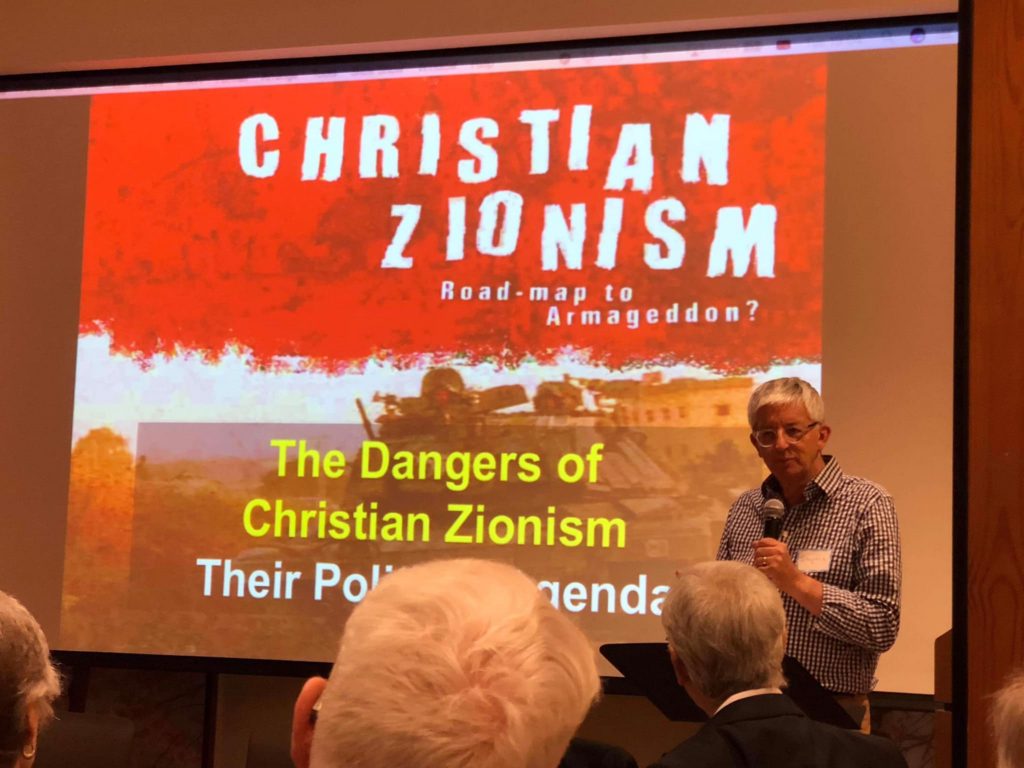
Christian Zionism: Roadmap to Armageddon?
A presentation given at the Palestine Center in association with the Jerusalem Fund, in Washington DC, last week on the historical roots, theological basis and political agenda of Christian Zionism. The presentation was drawn from the following three summaries of my PhD thesis on Christian Zionism.
Christian Zionism: Roadmap to Armageddon?
Christian Zionism Master History (part 1)
Christian Zionism Master Theology (part 2)
Christian Zionism Master Politics (part 3)
Read more here
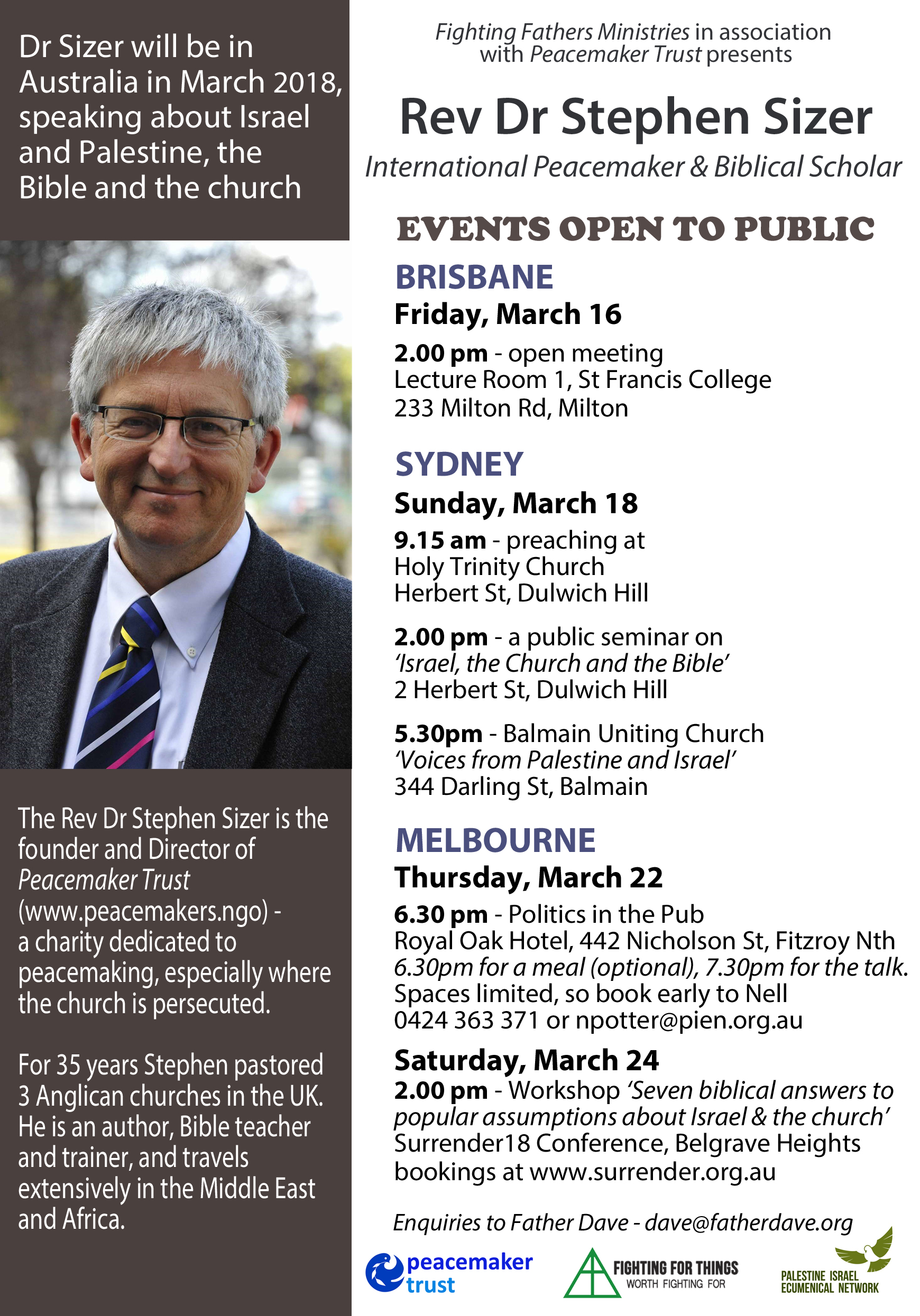
The Australia Tour
What Are We to Make of Jesus Christ?
 “Now the story of Christ is simply a true myth: a myth working on us in the same way as the others, but with the tremendous difference that it really happened.” — C. S. Lewis
‘What are we to make of Jesus Christ?’ This is a question, which has, in a sense, a frantically comic side. For the real question is not what are we to make of Christ, but what is He to make of us? The picture of a fly sitting deciding what it is going to make of an elephant has comic elements about it. But perhaps the questioner meant what are we to make of Him in the sense of ‘How are we to solve the historical problem set us by the recorded sayings and acts of this Man?’ This problem is to reconcile two things. On the one hand you have got the almost generally admitted depth and sanity of His moral teaching, which is not very seriously questioned, even by those who are opposed to Christianity. In fact, I find when I am arguing with very anti-God people that they rather make a point of saying, ‘I am entirely in favour of the moral teaching of Christianity’ — and there seems to be a general agreement that in the teaching of this Man and of His immediate followers, moral truth is exhibited at its purest and best. It is not sloppy idealism; it is full of wisdom and shrewdness. The whole thing is realistic, fresh to the highest degree, the product of a sane mind. That is one phenomenon.
Chosen? Reading the Bible amid the Israeli-Palestinian Conflict by Walter Brueggemann: A Review
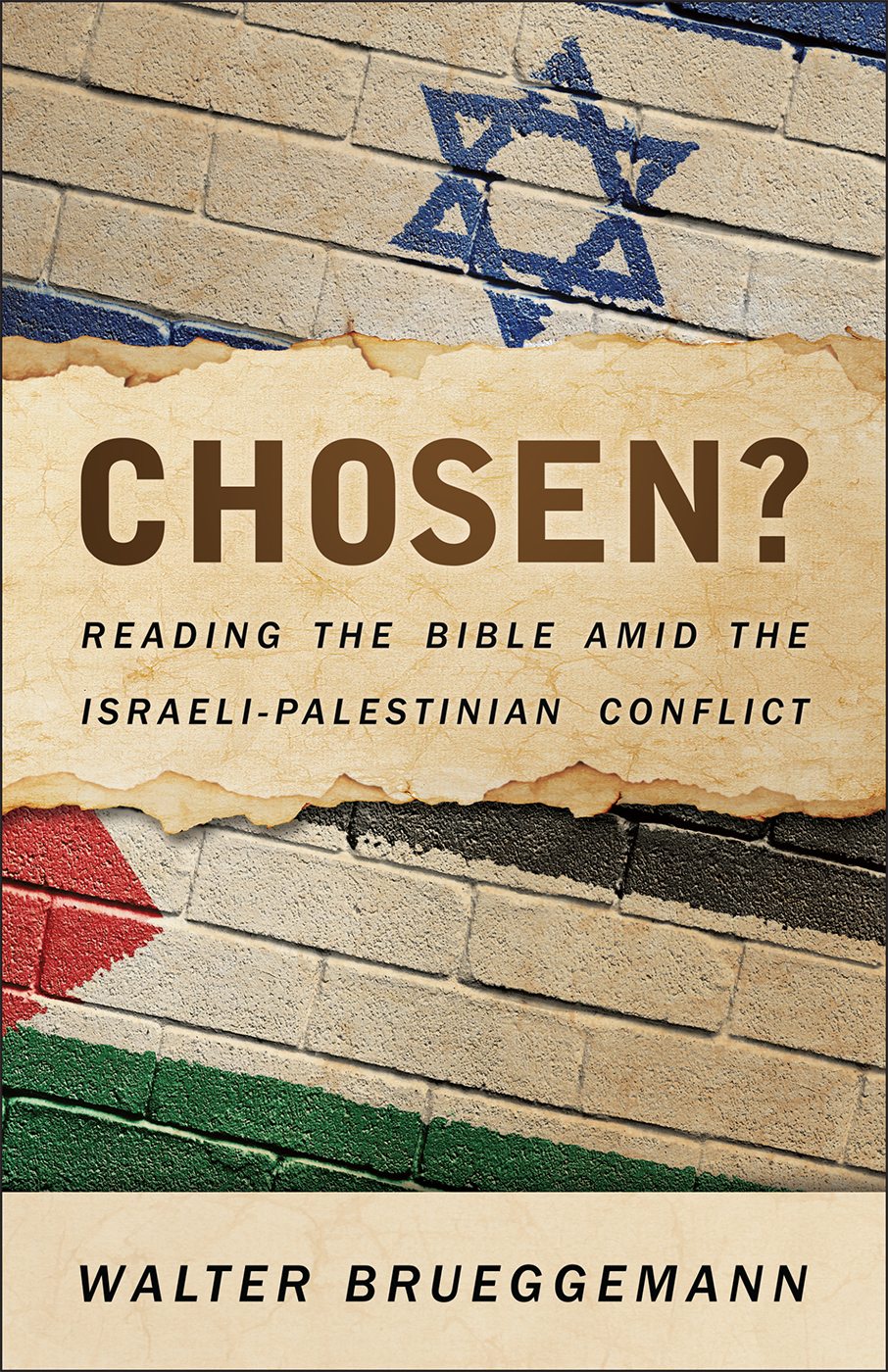 In his short but passionate little book, Chosen? Walter Brueggemann addresses some of the important questions regarding God’s purposes for Israel and the Church. For example, are contemporary Israeli citizens the descendants of the Israelites in the Bible whom God called chosen? Was the promise of land to Abraham permanent and irrevocable? What about others living in the promised land? Who are the Zionists, and what do they believe? The subtitle of the book tells us where he intends to look for answers, “Reading the Bible amid the Israeli-Palestinian Conflict.” His publisher, Westminster John Knox, promises,
“The reader will get answers to their key questions about how to understand God’s promises to the biblical people often called Israel and the conflict between Israel and Palestine today.”
Chosen? comprises 59 pages of scripture commentary in four short chapters, a Q&A with the author, a glossary and 20-page study guide to facilitate group discussion around each of the chapters. The four chapters are:
- Reading the Bible amid the Israeli-Palestinian Conflict
- God’s Chosen People, Claim and Problem
- Holy Land?
- Zionism and Israel
The book also contains very helpful guidelines for respectful dialogue first published by the Presbyterian General Assembly in 1992. Significantly, the title includes a question mark. I added a question mark to the titles of two of my own books: Christian Zionism: Roadmap to Armageddon? and Zion’s Christian Soldiers? The Bible, Israel and the Church.[i] Walter is recognising, as I did, that views differ on whether the Jews are God’s chosen people, even though, unlike me, he personally concludes that they are.
The Balfour Declaration: The Origins of the Arab-Israeli Conflict by Jonathan Schneer
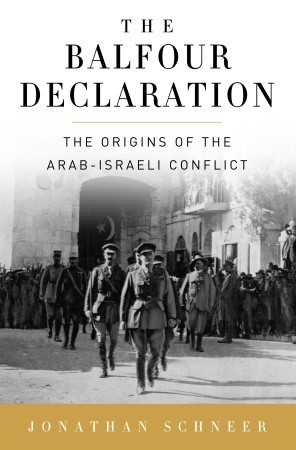 A Summary by Colin Chapman
The late Tony Judt described this book as ‘the best modern history of the Balfour Declaration,’ and Eugene Rogan of Oxford sees it as ‘the most original exposition of the Balfour Declaration to date.’ It deserves a wide circulation as we live through the centenary of the Balfour Declaration on 2 November, 2017. The author, Jonathan Schneer, is an American historian who specialises in modern British history and teaches at Georgia Tech’s School of History, Technology, and Society.
This is an attempt simply to summarise the contents of the book with a number of quotations. If it were a review, my only criticism of the book would be that, in concentrating so much on the politics behind the Declaration, there is no discussion of the religious beliefs of key players like Lord Balfour and David Lloyd George which made them so open to supporting Zionism.
The Balfour Declaration (BD) needs to be understood in the context of World War I
By the time the BD was issued on 2 November 1917, Britain and Germany had been at war for over three years. Millions had been slaughtered in the trenches and neither side seemed to be winning. The Battle of the Somme had been fought between 1 July and 1 November, 1916, and Passchendale between July and November, 1917. The British government was seeking for ways to turn the tide in the war. Some in the cabinet believed that all their energies should be concentrated on the western front on the continent (‘the westerners’), while others believed that new initiatives in the Middle East could break the deadlock and give Britain the advantage (‘the easterners’). After the fall of the Asquith government in December 1916, Lloyd George, an easterner, became Prime Minister.
Zion’s Christian Soldiers
Limited edition, signed and at the special price of £15 in the UK including postage, and £20 worldwide. Worth it just for the sermon by John Stott. Also available in Arabic and Korean.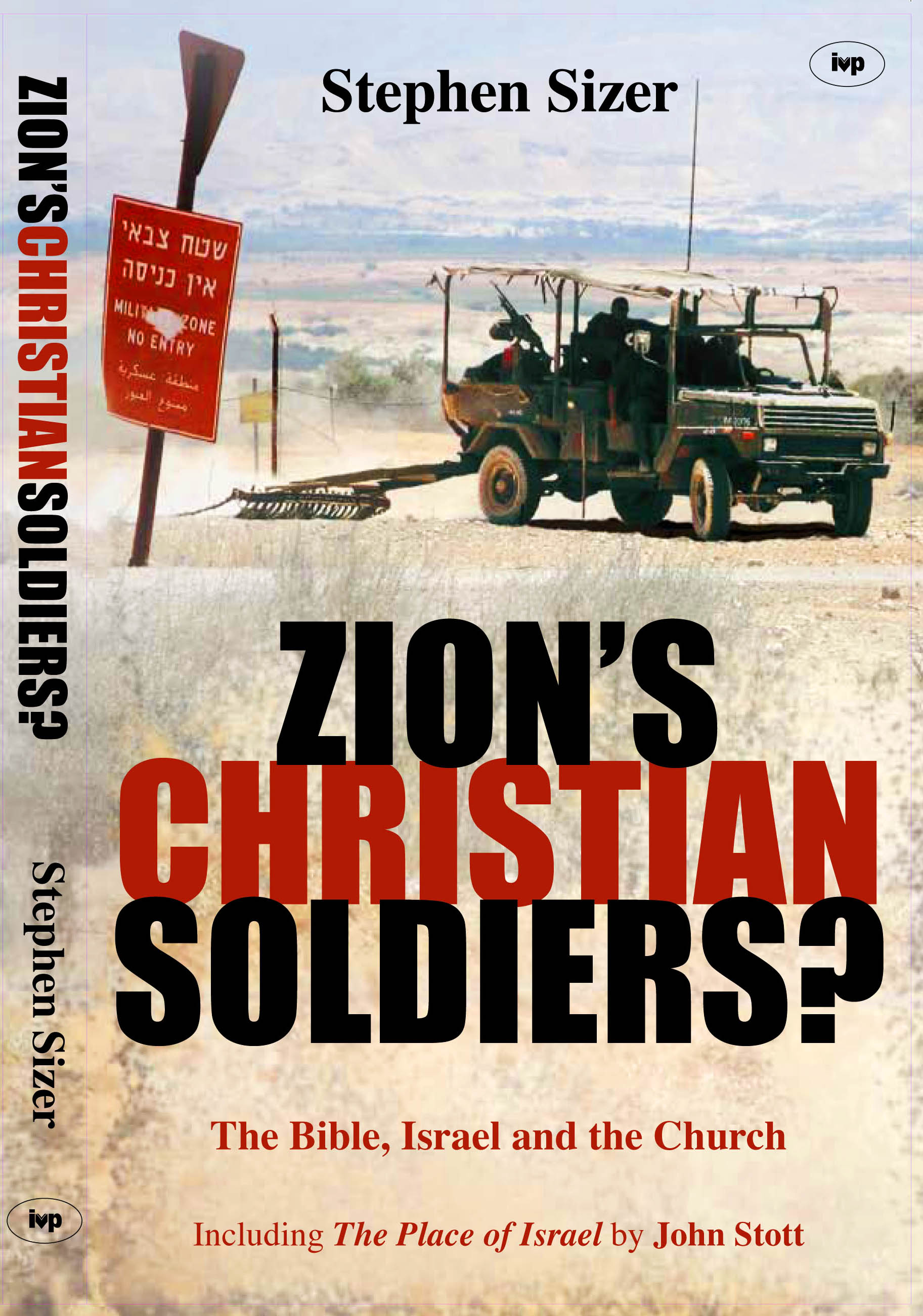
Holy War: The Christian Jihad
Following the tragedy of 9/11 and the destruction of the World Trade Centre in New York, multi-bestselling author and Christian journalist Anne Coulter, wrote,
“We don’t need long investigations of the forensic evidence to determine with scientific accuracy the person or persons who ordered this specific attack. We don’t need an “international coalition.” We don’t need a study on “terrorism.” … We know who the homicidal maniacs are. They are the ones cheering and dancing right now. We should invade their countries, kill their leaders and convert them to Christianity. We weren’t punctilious about locating and punishing only Hitler and his top officers. We carpet-bombed German cities; we killed civilians. That’s war. And this is war.”[3]
More recently, at the July 19th, 2006, inaugural event for Christians United for Israel, in Washington DC, after recorded greetings from the then President, George W. Bush, and in the presence of four US Senators as well as the Israeli ambassador to the US, Pastor John Hagee, stated :