Tag Archives: Apartheid

Normalising Apartheid: The Greatest Threat to the Palestinians since 1948

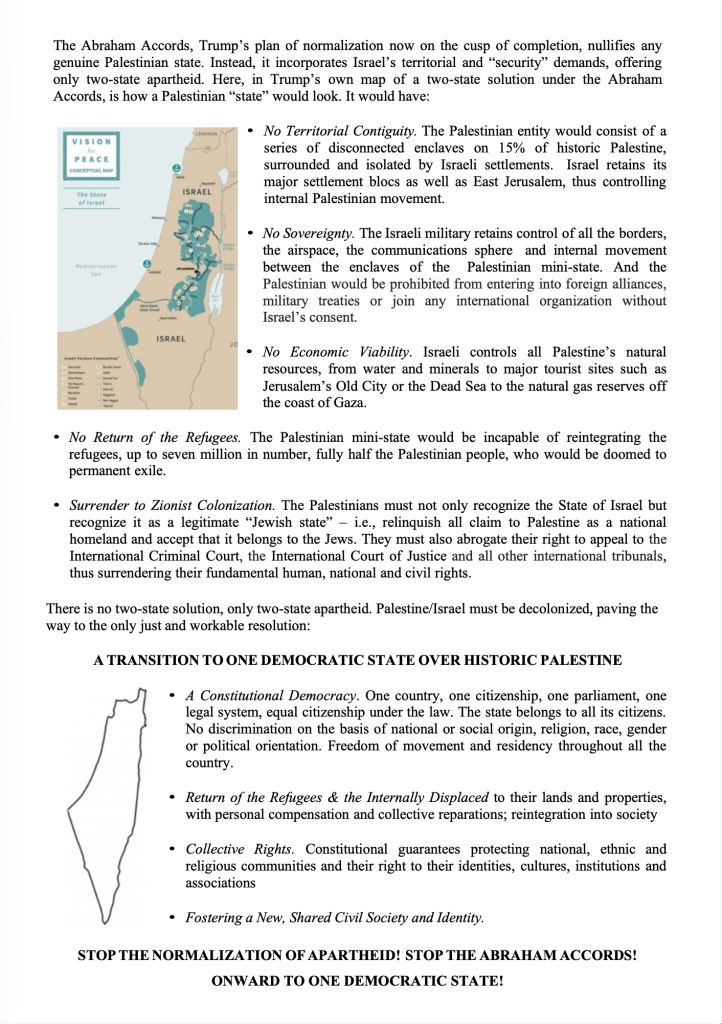
This two-page summary, prepared by ICAHD and Jeff Halper, sums up concisely where we are in the political moment in the struggle for a decolonized and free Palestine, which we hope you will consider and share.

As the page shows, we are in a confused but crucial moment between two initiatives that are coming down the pipeline and are being integrated — Trump/Netanyahu’s plan of normalization with the European/Saudi need for a Palestinian state (what I call a “good enough” Palestinian state, a Bantustan) — and the still embryonic, perhaps fantastical one-state idea, which, for all its far-fetchedness, is truly the only just and workable way out. So the page is a kind of combined reality-check of where we are politically and a warning that we are in the danger of being overtaken by events. Normalization is a closure. It is imposed by the US, Israel and the Arab states (plus other Muslim countries like Indonesia, Pakistan and Kazakhstan), not negotiated, and the Palestinians have little if any say. And after normalization, little space exists for furthering political struggle.
We may say, OK, let’s go with the flow. Apartheid is inevitable. Palestinian civil society and all of us, supporters of the Palestinians in their struggle for liberation, is simply not able to make its voice heard, fragmented and so harshly repressed as it is by both Israel and the Palestinian Authority. And so the Palestinians have no end-game of their own, the one-state idea far from being agreed-upon and formulated into a political program around which their supporters can be mobilized. When the Abraham Accords are imposed and apartheid becomes a reality, then, we can simply shift to an anti-apartheid struggle a la the ANC in South Africa. The Palestinians will then, with no choice, have the same end-game: decolonization (but more complete than what was done in South Africa) leading to a democracy based on one person, one vote.

There is a fatal flaw in this (sort of) strategy, however. While the international community refused to recognize the Bantustans in South Africa and finally rejected the apartheid regime, in the case of the Palestinians and Israel it will accept a Palestinian Bantustan as part of a “two-state solution” if only to wash its hands of this persky nuisance and move on to more weighty issues, like consolidating the rising Israeli/Saudi hegemony over the region as a NATO counterweight to China. Accepting and normalizing Israeli apartheid is a small price to pay. Good enough.

All this is to question whether a post-normalization strategy in fact exists; indeed, whether any political space exists after normalization, since normalization is, well, normalization. it’s done, it’s a closure, the international community has moved on. If we don’t try (and succeed) to block the vehicle of normalization, the impending Abraham Accords, I really wonder whether we have run out of political space for further struggle. Will the Palestinian people, despite the fervent support they enjoy from the peoples of the world, be able to continue their struggle, first and foremost against the very collaborationist Bantustan government the Abraham Accords will establish?

There is an urgency here. The Palestinian struggle is in danger of being overtaken by events. We do not determine the political timetable. Palestinian agency as expressed in the BDS movement, in film and literature, in sumud and resistance on the ground, in rallies and protests abroad must, in the end — and urgently — be accompanied by a political program, an end-game, with which to push back against the normalization of Israeli apartheid and effectively mobilize the global forces that played such a key role in defeating apartheid in South Africa.

This ICAHD page attempts to focus on the political moment we are in and the immediate threat normalization poses. Indeed, we argue that normalization represents the greatest threat to the Palestinian people since the Nakba. It also points to where, in our view and that of our Palestinian partners, the struggle should be going. A useful appraisal of the political moment, I hope, but an urgent warning as well. Please circulate.

Download a Pdf version of this ICAHD resource

Palestine Moments of Truth: Chulalongkorn University, Bangkok

A presentation entitled “A Christian Critique of Israeli Apartheid” delivered at the ‘Palestine: Moments of Truth‘ international conference on Palestine arranged by the Muslim Study Center, Institute of Asian Studies, Chulalongkorn University, Bangkok, Thailand, together with the Council for Humanitarian Network of Sheikhul Islam Office of Thailand on 30 January 2024.

A Christian Critique of Israeli Apartheid in Palestine

On 28 August 1963 Martin Luther King, co-led a civil-rights march of 250,000 people in Washington DC against racism and segregation. In what has become probably the most well-known and widely quoted speech in history, 

“I have a dream that one day this nation will rise up and live out the true meaning of its creed. We hold these truths to be self-evident that all men are created equal. I have a dream that my four little children will one day live in a nation where they will not be judged by the colour of their skin but by their character. When we let freedom ring, we will be able to speed up that day when all of God’s children, black men and white men, Jews and Gentiles, Protestants and Catholics, will be able to join hands and sing in the words of the old spiritual, “Free at last, free at last. Thank God Almighty, we are free at last.”[1]

Continue reading

A Survey of CofE Bishops Reveals a Moral Vacuum on Israel and Palestine

A survey of Anglican Bishops was planned by a coalition of ten Christian, Jewish, Muslim and secular groups[1] that were concerned about the position the Church of England had taken vis-à-vis Israel/Palestine under the leadership of Archbishop Justin Welby. It was executed by CAMPAIN (the Campaign against Misrepresentation in Public Affairs, Information and the News)

An Open Letter of April 25th raised a series of issues, but the matter of most immediate concern was Welby’s denial of the existence of Israeli apartheid, which placed him at odds with the views of late Archbishop Tutu, the Anglican Church of South Africa, renowned international and Israeli human rights organisations, Palestinian Christians and the United Nations. 

The purpose of the survey was to ascertain whether other CofE bishops widely shared Welby’s opinion, and if so, why?

Continue reading

A Christian Response to Israeli Apartheid

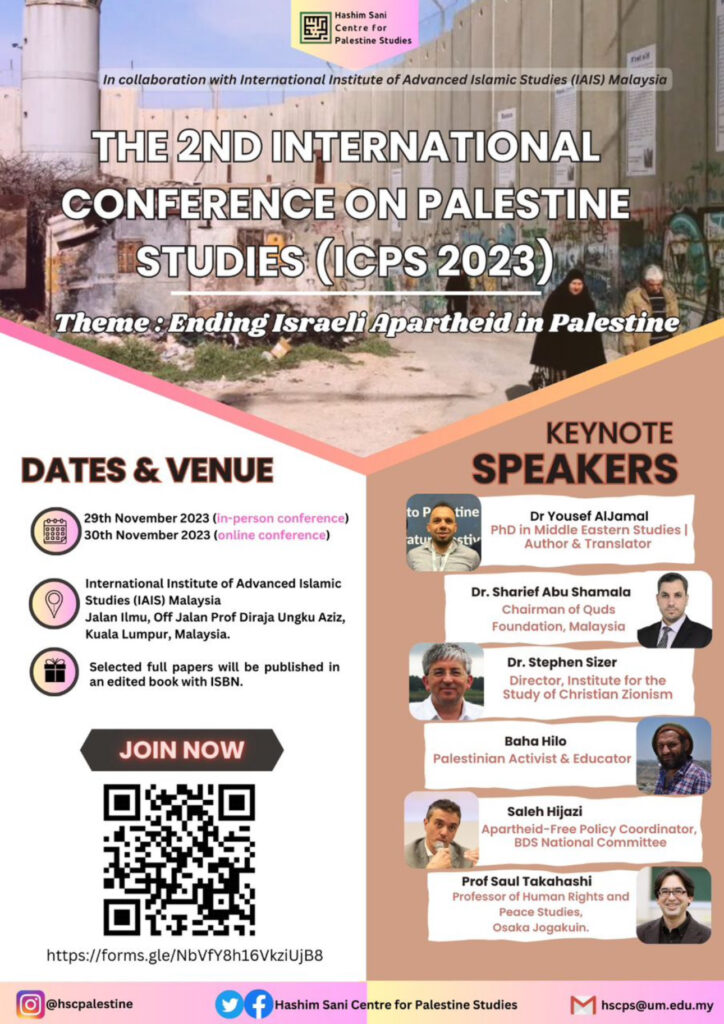
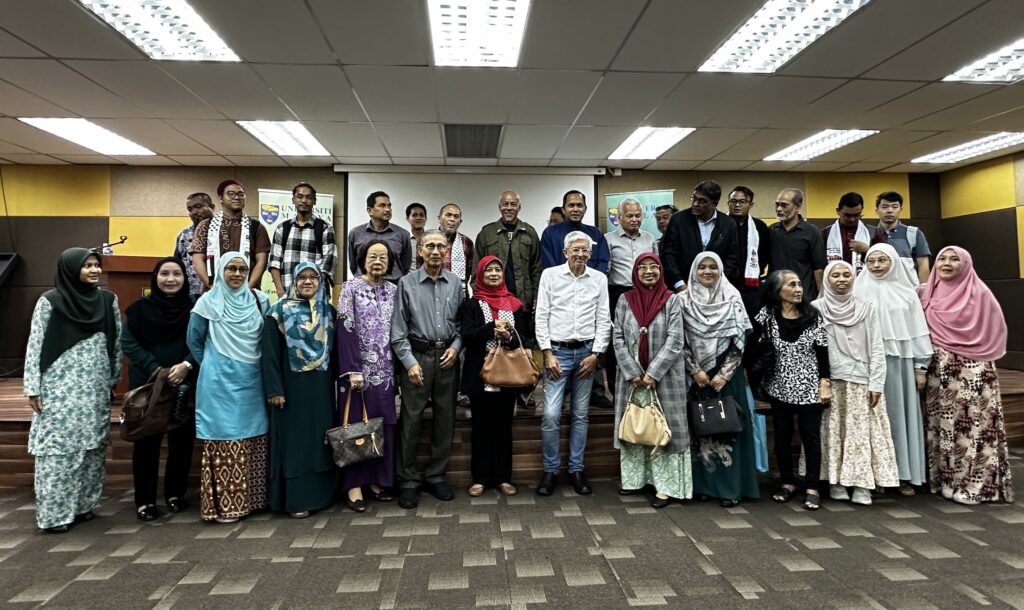
A presentation given in the Centre for Advanced Islamic Studies, University of Malaysia, at the Second International Conference on Palestine Studies

Download a pdf copy of my presentation.

On 28 August 1963 Martin Luther King, co-led a civil-rights march of 250,000 people in Washington DC against racism and segregation. In what has become probably the most well-known and widely quoted speech in history, King shared his dream of a diverse but united multi-ethnic nation:

“I have a dream that one day this nation will rise up and live out the true meaning of its creed. We hold these truths to be self-evident that all men are created equal. I have a dream that my four little children will one day live in a nation where they will not be judged by the colour of their skin but by their character. When we let freedom ring, we will be able to speed up that day when all of God’s children, black men and white men, Jews and Gentiles, Protestants and Catholics, will be able to join hands and sing in the words of the old spiritual, “Free at last, free at last. Thank God Almighty, we are free at last.”[1]

The origins of institutional racism can be traced back to the European colonization of the Americas and Africa and to the slave trade. With the abolition of slavery, institutional racism evolved into American segregation, German Antisemitism and South African Apartheid. 

Continue reading

Inevitable Solutions to the Palestinian Plight

May I begin by thanking Professor Datuk Azizian Baharuddin, the director of Universiti Malaya Centre for Civilisational Dialogue (UMCCD), for the kind invitation to give this lecture. I also wish to thank Norma Hashim and Professor Dr Mohd Nazari Ismail of the Hashim Sani Centre for Palestine Studies for co-hosting this lecture and also for sponsoring my visit.

Over thirty years ago I gave an annual lecture to 16–17-year-old students at Guildford Grammar School, on virtually the same subject as we are considering today. I began by warning the students that there would be homework to motivate them to pay attention. And I say the same to you today – there will be homework.

The title I have been given is “Inevitable Solutions to the Palestinian Plight”. Note the first two words – ‘Inevitable” and “Solutions” because there are many solutions to the Palestinian plight. I will major on three today. These three are in fact mutually exclusive. How then can they be inevitable? That in part depends on you, me and seven billion other people in the world. Let me illustrate. Climate change is inevitable, it is happening, but the solutions (and there are several) depend on us and how seriously we adjust our values, our priorities and life styles. So it is with resolving the Palestinian plight. 

You may download a pdf version of this lecture here.

Continue reading

The Bible and Zionism: An Interview with Mark Braverman

Mark is Executive Director, Kairos USA and Research Fellow in Systematic Theology and Ecclesiology, Stellenbosch University. 

These are the questions asked in our interview (paraphrased): 

How do we reconcile the biblical texts promising the land to the descendants of Abraham with the call of the Palestinian Christians for sharing the land of Palestine? 

The modern Jewish Zionist program calls the land “Israel.” And the settler movement, with the support of the Israeli government, is committed to Jewish hegemony over the entire land from the river to the sea (indeed, from the Nile to the Euphrates!). They justify this biblically. Is this claim consistent with biblical promises? 

Is it theologically sound to use the Bible to argue land claims and human rights issues of equality? How do we read the Bible today confronting issues of racism and colonialism? What does Jesus have to say about this? 

Christian Zionism provides the basis for many Christians’ commitment to and activity in support of the State of Israel. It is also being challenged, as biblically erroneous, theological unsound, and unacceptable on moral grounds. Is it Biblical? Indeed, what is its provenance with respect to the political and historical contexts in which it was conceived, took shape, and has been applied, right up to the present day? 

Visit Kairos USA 

Visit Kairos Palestine

A Dossier on Israeli Apartheid: A Pressing Call to Churches Around the World

We, members of Kairos Palestine and Global Kairos for Justice, have created a theological study for Christians and other civil society organizations who want to learn more about the crime of apartheid and why Palestinians and a growing number of churches and human rights organizations are using the word to describe Israel’s oppression of Palestinians.

Download Full Dossier

German: Download Full Dossier

French: Download Full Dossier

Spanish: Download Full Dossier

Italian: Download Full Dossier

United Against Apartheid: Jerusalem Day

John Wesley preached outdoors because the Church of England denied him a pulpit over his evangelical theology. He could have left the Anglican Church but didn’t. They didn’t want him. His theology was too evangelical. His love was too extravagant. His methods too unorthodox. So they shut him out of churches and pulpits. They could not silence Wesley. Instead he preached in the open air – in fields, markets, and cemeteries and the crowds loved him.

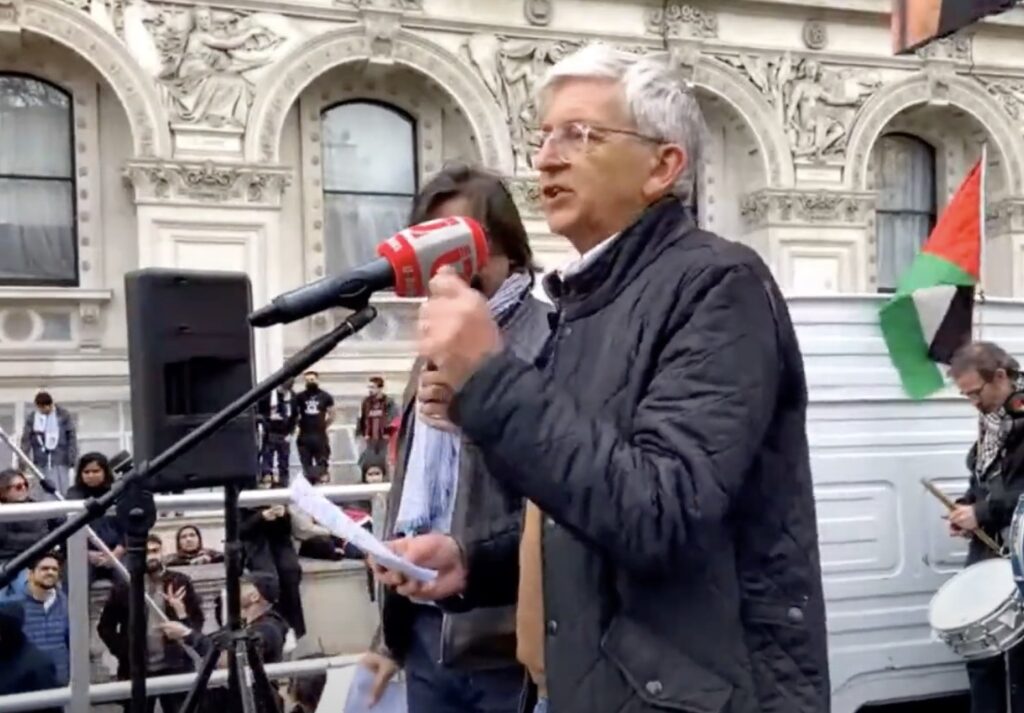
Today it was my privilege to read and expound the scriptures in the open air in Whitehall outside Downing Street before an estimated 15,000+ Jews, Muslims, Christians and those of no faith, all with police protection. It was truly one of the highlights of my ministry. (click on the photo above to watch my presentation). The text of my presentation together with photos and more short videos may be found below.

Continue reading

Challenging Apartheid: Four Bible Studies

In Advent last month, I prepared four Bible studies for Sabeel-Kairos UK as a resource to enable churches to engage with scripture and challenge apartheid. Although prepared for Advent, it is hoped you will find them a useful resource at any time.

Zionism and Apartheid
Colonialism and Apartheid
Militarisation and Apartheid
A Future without Apartheid

This is a more detailed resource tracing the history of apartheid in South Africa

A Biblical Response to Israeli Apartheid