 “I am not ashamed of the gospel, because it is the power of God that brings salvation to everyone who believes: first to the Jew, then to the Gentile.” (Romans 1:16)
Various attempts have been made in recent years to broaden the definition of anti-Semitism to both criticise those engaged in evangelism among Jewish people as well as those who question the continued Israeli occupation of Gaza, the Golan and the West Bank. Neither is necessarily true although it sometimes is.
However, articles such as “Anti-Zionist Attacks on Church and Messianic Group” (since removed from Moriel’s website but still endorsed by them) appears on a website associated with Christian Friends of Israel. They blame my writings for attacks against Jewish people and Christians here and abroad.
Jacob Prasch states, “We additionally agree that articles citing Sizer’s anti-Zionist and anti-Christian Zionist propaganda republished in radical Islamic publications are contributing to the incitement of Moslem attacks on churches in the UK are excellently written… But now he stands publicly accused by some sources (none published by Moriel) of having his articles against Christian Zionists used to help incite attacks on churches in the UK in the same manner radical Moslems attack churches in Islamic countries.”
Besides being economical with the truth (Moriel did publish the above article – it was accessible on 10th March 2009) these allegations are unproven and defamatory. Nothing could be further from the truth. When ever I am invited to speak, especially at interfaith gatherings, I present a Christian perspective that repudiates the use of violence to resolve injustice, and instead calls for active peacmaking efforts with the purpose of achieving reconciliation.
In Zion’s Christian Soldiers, I stress that it is important to distinguish between Judaism, Israel and Zionism as well as repudiate the use of violence to bring an end to the Arab-Israeli conflict.
“Judaism is a religious system. Israel is a sovereign nation. Zionism is a political system. These three are not synonymous. I respect Judaism, repudiate anti-Semitism, encourage interfaith dialogue and defend Israel’s right to exist within borders recognised by the international community…”
In Christian Zionism, I distinguish between three strands of Christian Zionism – Messianic, Apocalyptic and Political. Messianic and Jewish Christian organisations that are primarily evangelistic, such as the Churches Ministry Among Jewish People (CMJ), Christian Witness for Israel (CWI) and Jews for Jesus (JFJ) must be distinguished from those primarily having a social or political ministry, such as Bridges for Peace (BFP), Christian Friends of Israel (CFI), Christian Friends of Israeli Communities (CFOIC) and the International Christian Embassy Jerusalem (ICEJ). I am in the process of revising the book as the emphasis of some of these agencies has evolved over time and new ones have emerged such as John Hagee’s Christians United for Israel (CUFI) and Mike Evans’ Jerusalem Prayer Team.
How big is this movement? The Pew Forum on Religion and Public Life estimates there are 20-40 million supporters in America. The Unity Coalition for Israel draws together over 200 different organizations and claims 40 million active members. John Hagee has weekly access through TV and radio to 99 million homes in 200 countries. Hagee is just one of thousands of other pastors, television evangelists, authors and politicians who identify with Christian Zionism.
Whether they welcome it is another matter, but I endorse those ministries committed to presenting the good news of Jesus Christ to Jewish people, defending the existence of a safe homeland for the Jewish people, combating anti-Semitism and enhancing the understanding of the Gentile church as to our Jewish origins.
“I ask then: Did God reject his people? By no means! I am an Israelite myself, a descendant of Abraham, from the tribe of Benjamin. God did not reject his people, whom he foreknew.” (Romans 11:1-2)
That is why I have willingly contributed to Messianic conferences in South Africa and Israel, debated with Jewish rabbis and academics, dialogued with Zionists on radio and theological colleges as well as have met with representatives of agencies such as CMJ and CWI, for example, on a regular basis.
My books have been endorsed by Jewish academics such as Dr Jeff Halper, Rabbi Professor Dan Cohn-Sherbok and Professor Norton Mezvinsky
Jeff Halper writes,”Everyone loves peace, but not everyone loves peace-makers. The work of people like Stephen Sizer is crucial to peace-making. “Peace” is not merely a goody-goody term that we use on Christmas or Passover. It has to do with hard realities like conflict, injustice and suffering, all of which require not only good will, but an analysis which identifies the causes of the conflict and offers a way out. Hardest of all, peace-making requires self-reflection, self-criticism and the ability to see the viewpoint of the Other, the “enemy,” especially when “your side” is involved. And one more thing is essential to peace-making: an ability to reach out, even to your detractors, so that a common ground of action can be established.
In all these things my fellow peace-maker Stephen excels. Over the years he has shown both courage  and good-will, but most important, in my mind, he has provided us with tough analysis, primarily around issues dealing with Christian Zionism, a fundamental obstacle to a just peace in Israel and Palestine, that helps us get to the foundations of the conflict in order to resolve it. One would think Stephen’s work would be appreciated by everyone – Christian Zionists excepted, (although a sizeable number of critical Evangelicals do support his analysis). His seminal book, Christian Zionism, accompanied by films and presentations, provides an authoritative de-bunking of the spurious theology underlying that school’s seemingly “pro-Israeli” positions which make genuine peace-making so difficult.
Why Stephen is attacked and demonized by the organized Jewish community is an absolute mystery to me. After all, Christian Zionism is supremely anti-Semitic: at the End of Days those Jews who do not accept Jesus die. Indeed, the Jews are sacrificed in the battle of Armageddon; witness Pat Robertson’s outrage at Israeli Prime Minister Ehud Olmert when he ended the attack on Lebanon in 2006, an attack that, in the eyes of Robertson and other Christian Zionists, was supposed to trigger Armageddon – no matter what befalls the Jews/Israelis. Jewish demonization of Stephen, rather than of the Christian Zionists, who Jewish and Israeli leaders cynically consider our allies,” demonstrates nothing more than bad faith. It is perfectly acceptable, apparently, to be anti-Semitic if, like Robertson, you are “pro-Israel.” Simply professing a doctrine in which the Jewish people is exterminated and disappears is no crime, in their view, as long as it somehow serves short-term Israeli interests (and Stephen shows that Christian Zionism does not serve Israeli or Jewish interests in any way).
Ironically, then, it is the peace-makers – anti-anti-Semites like Stephen and even critical Israeli Jews like me – who are the enemy. If that is the case, then all the protestations of the Jewish community against anti-Semitism are hollow. What they really mean is, be anti-Semitic by all means if you combine that with a pro-Israeli position, but woe be unto those who fight such an anti-Semitic creed as Christian Zionism because by opposing Christian Zionism you are somehow opposing Israel. In attacking Stephen in his criticism of Christian Zionism, Jewish leaders have gone so far as to define “pro-Israeliness” in anti-Semitic terms.
But peace-makers are themselves tough people, willing and able to face down bigotry and bad faith. Indeed, this willingness and ability are what makes us peace-makers. To the organized Jewish community I would only say, as an Israeli Jew: remove your moral and intellectual blinders so as to be able to differentiate your true (if critical) friends from your true enemies.” Jeff Halper, Jerusalem, April 8, 2009.
My books have also received critical but constructive reviews from David Pawson and Tony Higton.
“my fellow Zionists… will be disturbed by my agreement with much of Sizer’s criticism of this position.” (p. 19). “I am grateful to Stephen Sizer for drawing attention to the legitimate criticisms of dispensational Zionism. He has rendered a service to the cause of Zionism which was needed.” (David Pawson, Defending Christian Zionism, p. 39)
“After years of sparring, Stephen Sizer and I met up and found we had wide areas of agreement. Having worked in Jewish ministry for seven years, half of them in Jerusalem, I have seen the best and worst of Christian Zionism. Insofar as it combats anti-Semitism, defends the existence of a safe homeland for Jewish people, promotes evangelism among Jewish people, and supports reconciliation in the Holy Land, it is good. However, Sizer is right to criticize the serious failings of some Christian Zionism. I agree with him in rejecting the following errors which are held by many Christian Zionists:
- Lack of godly compassion for the Palestinians, and of concern for their human rights and about their legitimate aspirations.
- A negative attitude toward Palestinians, and Arabs in general, to the point of racism.
- Uncritical support for Israel (a secular, sinful state like any other), justifying all its actions against the Palestinians.
- Neglecting or even opposing and forbidding evangelism of Israelis, sometimes believing that Jewish people can experience salvation through Judaism.
- Being more interested in the fulfilment of prophecy than in application of kingdom principles such as justice and reconciliation.
- Opposing the peace process.
- Sometimes advocating the ethnic cleansing of Palestinians from the Holy Land.
- Sometimes supporting the rebuilding of the temple regardless of the problematic theological implications and the danger of provoking extreme violence.” (Tony Higton, A Critique of Christian Zionism, p. 18)
Over the years we have also hosted events in our church for CMJ and Jews for Jesus and regularly invite a local Jewish Christian pastor to speak at our monthly men’s breakfasts. Our church family include several who are Jewish or identify with Messianic Judaism. They seem comfortable with my own views, despite attempts by at least one anonymous blogger to change their mind having gained access to our church Facebook account. Offers to meet face to face and resolve his or her concerns proved fruitless.
“Rather, we have renounced secret and shameful ways; we do not use deception, nor do we distort the word of God. On the contrary, by setting forth the truth plainly we commend ourselves to every man’s conscience in the sight of God.” (2 Corinthians 4:2)
An Annotated Bibliography
The following list is partial and subjective but these books have been helpful, at least to me, in understanding and distinguishing between Judaism, Israel and Zionism and the necessity of Christian witness among Jewish people.
 Light Force Brother Andrew
Wrongly accused of being anti-Israel, Brother Andrew replies, “The best way I can help Israel is by leading her enemies to Jesus Christ.” He shows that genuine dialogue is possible based on our common humanity. Should we really be surprised, he asks, to discover that so called terrorists are human beings like you and me created in the image of God? Dr. Carl Moeller, president of Open Doors USA, summarises the importance of this unique book. “Light Force is a riveting and often provocative book. The book details Brother Andrew’s passion and compassion for the Church and bringing the Light of Jesus to one of the world’s on-going hot spots. Like God’s Smuggler, it is compelling reading. By reading the daily headlines from the Middle East, we know Light Force will be both timely and relevant.”
 Israel: Land of God’s Promise: Murray Dixon
Israel is the most misunderstood nation on the planet. The Jewish people are the most consistently persecuted in all of history – ancient and modern – why? Can the Church afford to pursue its historically notorious treatment of the Jew and the nation of Israel? This book offers clarity where confusion abounds. The author compels us to examine Church history and Jewish history in the light of God’s word. Jesus is Jewish and so are the roots of the Christian faith – why is that significant? No nation, ever, has been regathered from worldwide dispersion to its ancient homeland, and speaking its ancient language – except Israel. And that, only, after man’s most hideous crime, to attempt to exterminate them – why?
 Atlas of the Holocaust: Martin Gilbert
The atlas traces each phase of the Holocaust, beginning with the anti-Semitic violence of prewar Germany and leading to the German conquest of countries in which the Jews had lived for centuries. Presented in chronological order, the maps document in compelling detail, month by month and week by week, the story of the Holocaust, from the spread of the early random killings of Jews and their systematic mass expulsion from thousands of towns and villages to the establishment of ghettos and the setting up of the death camps. The atlas ends with the death marches and executions in the final days of the Allied liberation. Also shown on the maps are more than two hundred acts of resistance and revolt, as well as areas of Jewish partisan activity and other avenues of escape and rescue. Many maps tell the stories of hundreds of children deported to their deaths. Others bear witness to individuals active in revolt and tell moving sagas of their courage and defiance.
No Strange God: Gordon Jessup
An outline of Jewish life and faith. Revised edition of this classic work which helps Christians understand their Jewish neighbours.
Christian Witness to the Jewish People: Lausanne Occasional Papers
This report, is one of a series of Lausanne Occasional Papers (LOPs) emerging from the historic Consultation on World Evangelization (COWE) held in Pattaya, Thailand, in June 1980.
Judaism is Not Jewish: Baruch Maoz
People from a Jewish background face difficult choices when they trust in Jesus as the Jewish Messiah. Baruch Maoz, the leader of a Christian Church in Israel, believes that to be Jewish is a blessing from God. The  strong Jewish cultural identity impacts on worship and life so how does a Jewish Christian worship with his Gentile brothers and sisters? If they join churches will they be assimilated? If they establish synagogues will their fellow Christians feel excluded? The response that some Jewish Christians have decided upon is to establish a fourth branch of Judaism called Messianic Judaism (the others are Orthodox, Conservative and Reform). Baruch accepts there are fine Christians within the movement but shows how Jewish life is not the same as synagogue life. He enables Jewish Christians to retain a cultural identity without losing fellowship with other Christians.
c
The Israel Lobby and US Foreign Policy: John Mearsheimer and Stephen Walt
How a powerful American interest group has created havoc in the Middle East, damaged Israel itself and now threatens an even more perilous future. The Israel Lobby by John J. Mearsheimer of the University of Chicago  and Stephen M. Walt of Harvard’s John F. Kennedy School of Government, was one of the most controversial articles in recent memory. Originally published in the London Review of Books in March 2006, it provoked both howls of outrage and cheers of gratitude for challenging what had been a taboo issue in America: the impact of the Israel lobby on U.S. foreign policy. Now in a work of major importance, Mearsheimer and Walt deepen and expand their argument and confront recent developments in Lebanon and Iran. They describe the remarkable level of material and diplomatic support that the United States provides to Israel and argues that this support cannot be fully explained on either strategic or moral grounds. This exceptional relationship is due largely to the political influence of a loose coalition of individuals and organizations that actively work to shape U.S. foreign policy in a pro-Israel direction. Mearsheimer and Walt provocatively contend that the lobby has a far-reaching impact on America’s posture throughout the Middle East—in Iraq, Iran, Lebanon, and toward the Israeli-Palestinian conflict—and the policies it has encouraged are in neither America’s national interest nor Israel’s long-term interest. The lobby’s influence also affects America’s relationship with important allies and increases dangers that all states face from global jihadist terror. You can read the London Review of Books article that inspired the book here.
Rabbis Meet Jesus the Messiah: Messianic Good News
This book contains the moving and exciting testimonies of twenty four Rabbis, each of whom were brought to  the wonderful, but startling revelation that Jesus is the Messiah through a careful and diligent study of the Scriptures. Part of the purpose of this book is to refute the view expressed by various Jewish leaders throughout the ages that only worthless, ignorant and mentally feeble Jews are likely to be believers in Christ and to accept his teachings as recorded in the New Testament. Contrary to this, the Rabbis mentioned in the book, had all received rabbinical ordination, having been thoroughly schooled in the traditions of their fathers and the teachings of Judaism. This book also corrects the misconception that when a Jew becomes a believer in Yeshua – Jesus, he becomes a traitor (meshumid) to the Jewish people and ceases to be Jewish. It must be emphasised that the turning away from sin to God, is the fulfillment of what it really means to be a Jew. These testimonies are presented as a source of inspiration and encouragement to readers and to those who are faced with the same challenge today.
 Abandoned: Stan Telchin
What’s the problem with Messianic Judaism? Stan Telchin, a Messianic Jew and former pastor, explores in depth the heart and soul of Messianic Judaism. He exposes the motive behind its creation, its controversial doctrines and its ineffectiveness in Jewish evangelism. Messianic Judaism has grown significantly in fewer than four decades. While intended originally to appeal to Jewish people, unexpectedly it appeals primarily to Gentiles. Telchin, in following the teaching of the apostle Paul, sees Messianic Judaism as divisive. With a firm and loving approach, he addresses the dangers of this movement, reiterates God’s intention for His Church to serve as “one new man” and, most importantly, advocates unity among the body of believers.
 Anti-Semitism: Dan Cohn-Sherbok
Dan Cohn-Sherbok traces the origins of anti-Semitism and its manifestations, from political opposition, to racial persecution and religious and philosophical justifications for some of history’s most outrageous acts. Against this background of intolerance and persecution, Cohn-Sherbok describes Jewish emancipation from the late 18th century and its gradual transformation into the parallel political and nationalistic ideal of Zionism. He explores how, in the post-war period, anti-Semitism, already triggered by 19th-century Zionism and the formation of a Jewish settlement in Palestine at the end of the 19th century, has become rampant in the Arab world. Finally, he discusses how specific strands of anti-Semitism have arisen in the United States largely as a result of conflict between African-Americans and Jews, and how in Russia and Poland anti-Semitism is as strong as ever. The book covers all historical periods up to the present day and is written for the general reader.
 The Iron Wall: Israel and the Arab World: Avi Shlaim
In the 1920s, hard-line Zionists developed the doctrine of the Iron Wall: negotiations with the Arabs must always be from a position of military strength. This doctrine, argues Avi Shlaim, became central to Israeli policy; dissenters were marginalized and many opportunities lost. Drawing on a great deal of new material and interviews with many key participants, Shlaim places Israel’s political and military actions under an uncompromising lens. The result is a fresh and informed account of one of the world’s most intractable conflicts of modern times.
Not Ashamed: The Story of Jews for Jesus: Ruth Tucker
Not Ashamed tells the remarkable story of how a small band of young Jewish believers became the world’s  best-known Christian ministry to the Jewish people. Historian Ruth A. Tucker affectionately describes them as a “mission with an attitude.” She pulls no punches in presenting their triumphs and flops, and their often-controversial methods for winning souls and facing down hostile opposition. You’ll find more than fascinating history in Not Ashamed. You’ll discover the underlying connections between Christianity and Judaism and the reasons for centuries of conflict between Christians and Jews. Most important of all, you’ll come to understand the passion behind Jews for Jesus as they bring the message of the Messiah to their own people.
An annotated bibliography of books on Islam will follow.

 Last Saturday Rico Tice of All Soul’s, Langham Place, spoke at two events at Christ Church on “What is Success?”. His short answer is this: ‘failure’ is being successful in things that ultimately don’t matter.
 Matt Sieger has written a brilliant article over at
 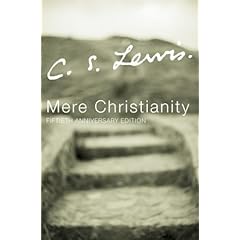 Mere Christianity: C.S. Lewis
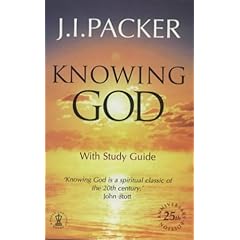 Knowing God: J.I. Packer
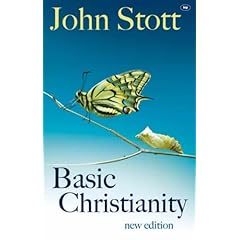 Basic Christianity: John Stott
 The Case for Christ: Lee Strobel
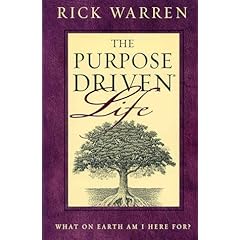 The Purpose Driven Life: Rick Warren
 Today’s New International Version (TNIV) Study Bible
 The English Standard Version (ESV) Study Bible
 Charles Freeman
 Michael Orsi, writing in the Homiletic and Pastoral Review, has a perceptive and timely article on
  Israel’s Channel 10 talk show mocks Christianity


