“Welcome Home” by Revd Nabil Shehadi from Stephen Sizer on Vimeo.

 Ten questions to get you started this morning[1]. Give yourself a:
1 for none of the time;
2 for a little of the time,
3 for some of the time;
4 for most of the time;
5 for all of the time.
In the last 4 weeks,
Score 2 or above for each question and you have a medium risk of depression. Score 3 or above and you have a high risk. Depression has been called the common cold of emotional illnesses. Everyone gets depressed at times, but some people are depressed nearly all the time. For most it is mild, for some it becomes clinical. This morning I want us to consider some of the spiritual causes for depression and discover from the Scriptures how to overcome it. This is not, however, a substitute for seeking medical. If you scored high on those questions, make an appointment to see your GP this week. Even godly people get depressed sometimes.
How to Win over Depression from Stephen Sizer on Vimeo.
Thomas Jefferson once asked:
“Can the liberties of a nation be thought secure when we have removed their only firm basis, a conviction in the minds of the people that these liberties are of the gift of God? That they are not to be violated but with his wrath?”
In the 18th Century, on both sides of the Atlantic, there would likely have been a consensus that the answer was self-evident – civic responsibility was but the outworking of a higher responsibility to God.

Not so today. In a largely secularized West, while we value our democratic heritage which balances the role and responsibilities of politicians and citizens, many fail to appreciate these values are rooted in eternal truths and immutable laws.
Unless there are moral absolutes by which we judge society, society becomes absolute.
Every person is created equal in the image of God and therefore worthy or dignity and respect. The Christian scriptures insist we have clear responsibilities to both God and the state.
This was taught by Jesus: ‘Give … to Caesar what is Caesar’s and to God what is God’s.’ (Matthew 22:21). The religious leaders of his day had tried to expose Jesus as either a collaborator with, or rebel against, the hated Roman Empire. Jesus insisted he was neither.

Our responsibility is to obey God for those who rule do so only under His authority.
We must first, obey our political leaders as God’s servants. Second pray for our leaders that God will give them wisdom and selfless impartiality in their role. Third, hold them accountable when they depart from their divinely appointed role.
The Christian scriptures teach: “Let everyone be subject to the governing authorities” (Romans 13:1a). The state’s authority is derived from God. So whether we enjoy good or bad government, the state is a divine institution with God’s authority.
But this also means we can say to rulers what Jesus said to Pilate at his trial, ‘You would have no power [authority] over me if it were not given to you from above.’ (John 19:11).
This is because the role of government is to commend those who do right and punish those who do wrong. (Romans 13:3). This means we should submit up to the point where obedience to the state would result in participation in evil, or disobedience to God. If the State ever commands what God forbids, or forbids what God commands, then our moral duty is to resist the government.
We must disobey the State in order to obey God. In this way we can contribute, with our lives if necessary, to the return of good government and secure a better future for our children than the one we inherited.
In the early Church, the Apostles were forbidden by the Jewish authorities to speak in the name of Jesus. They replied, “We must obey God rather than human beings.” (Acts 5:29).
This is the Christian justification for civil disobedience. Whenever human laws contradict God’s law, civil disobedience becomes a sacred, religious duty.

There are notable examples in British history of those who opposed slavery, who campaigned for trade union rights, who lobbied for an end to the use of child labour, and called for the emancipation of women. But this civil disobedience must be peaceful and non-violent.
Martin Luther King once said, “Nonviolence is a powerful and just weapon. It is a weapon unique in history, which cuts without wounding. It is a sword that heals.”
So, while we are to submit to the state’s God-given authority, we must remain opposed to both tyranny and anarchy. Our responsibility as citizens, whether here or in Bahrain, is to cooperate with, but hold governments accountable to fulfill their God-appointed role. That will lead not only to better government but also a more peaceful and stable society.
That is why I support the pro-democracy movement in Bahrain. The arc of history bends toward justice. May God give the people of Bahrain, justice, liberty and security before we meet to celebrate the 3rd anniversary of Bahrain’s Pearl Revolution.
Presentation delivered at the conference organized by the Bahrain Pro-Democracy Group ‘Understanding the Roots and Prospects of Bahrain’s Revolution’ held at King’s College, London, 6th February 2013.
A few photos of the early part of the event can be seen here
See also:
Press TV UK seminar sheds light on Bahrain’s revolution
Bahrain Freedom Movement
Frontline Club Bahrain Revolution 2nd Anniversary
I wonder what you consider to have been the biggest business failure of all time? Blockbuster? HMV? Jessops? Those are just from this month. Last year there was SeaFrance, JJB Sport and Comet. In 2011 there was Borders Books, Habitat and Oddbins. In 2010 there was Pontins. In 2009 there was Allied Carpets and Readers Digest. In 2008 there was Circuit City, MFI, Woolworths and Silverjet. In 2005 there was MG Rover. In 2002 there was Swissair. In 2001 there was Enron, Homebase and Poloroid. In 1995 there was Barings Bank and Bugatti. In 1991 there was the Bank of Credit and Commerce International, Pan Am and Polly Peck. But the biggest failure? Or perhaps rather the company with the greatest number of failures?
How about Dyson? If Hoover became synonymous with the vacuum cleaner, Dyson has become synonymous with… the dual cyclone bagless vacuum cleaner, the bladeless fans, the uniball wheelbarrow, the quickest, most efficient hand driers in the world and… probably the greatest number of failures in the world as well. Check their website out and they admit they are failures – indeed they are proud of it:
“Most people think testing is all about durability and reliability. Of course that’s a big part of it. But before that happens – before you even have something to beat the hell out of – you need an idea that works. Dyson engineers get those ideas often by trying the ridiculous. Most of the time it ends in failure. That’s good. Failure sparks thinking and the extraordinary.”
How Can I Overcome Failure? from Stephen Sizer on Vimeo.
There’s a misconception that invention is about having a great idea, tinkering with it in the garden shed for a few days, then appearing with the finished design. Know how many times James Dyson ‘failed’ before he cracked the Dual Cyclone bagless vacuum cleaner. Dyson — supported by his wife’s job as an art teacher — took five years and 5127 failed prototype to develop one that worked. If failure sucks but instructs, that is a lot of learning. Certainly, say 4000 prototypes and 4 years into the adventure, any reasonable person would have assumed that this was a failure, an extreme case of escalating commitment to a failed course of action. But not Dyson. I am a raving fan of Dyson products. They work and when one goes wrong they like to know about it so they can improve them.
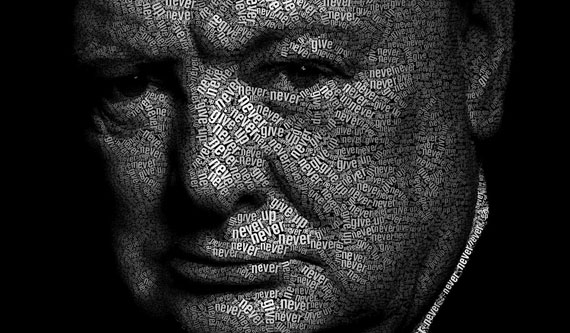
You could say the same about Apple and a small number of other leading edge companies that consistently hit the market with tried and tested products that gain an instant cult following and build a lasting market share. But they all begin with failures and like Dyson, often thousands of failures. So what is the difference? When failure stares them in the face for the 5126th time, they never give up. So do we overcome failure? Why do marriages fail? Why do families fall apart? Why do businesses fail? Why do teams disintegrate? Because people give up.

If you could change one thing about yourself, what would it be? My problem is choosing just one thing… At least by next Sunday I should be wearing different glasses. I had an eye test on Friday and need a new prescription. But I felt like changing my image too. So I hope you like the new frames. It’s the new me. Some things we long to change. Others we don’t want to change. This Summer I turn 60. Apparently my children want to celebrate. I don’t particularly. This hit home a few months ago. I was on a London tube train during the rush hour, carrying a rucksack. An Asian gentleman got up and offered me his seat. I didn’t know what he meant to begin with. Then it dawned on me. That was the first time anyone has ever offered me their seat. I felt acutely self-conscious. Ageing is an irreversible change. We can deny it, resist it, botox it, liposuction it, hide it, disguise it, colour it, ignore it or, we can accept it.
Rick Warren says, “A life that is never willing to change is a great tragedy – a wasted life.” That’s because God actually wants us to change. Because change is a necessary.
Change is an inevitable part of a growing spiritual life. We need to change continuously to become like Jesus.
How Can I Ever Change? from Stephen Sizer on Vimeo.
 A Chinese version of Seven Biblical Answers to Popular Zionist Assumptions, based on my book Zion’s Christian Soldiers is now available.
The Chinese version was kindly translated by Lo Yuk Fai. Presentations in Chinese were delivered recently for Macau Bible Institute, Sawtow Christian Church Hong Kong and All Saints Cathedral, Kowloon.
See more photos of recent visits to China here
See also:
Seven Bible Studies : Seven Biblical Answers : Seven Biblical Answers Video
How to Enjoy a Stress Free Christmas from Stephen Sizer on Vimeo.
The Good news is, the world did not end on Friday. According to the BBC “Scientists have done their best over the past week to reassure us that the end is far from nigh, but on Friday survivalists and doomsday cultists prepared to take their final stands in forests and on mountain tops around the world.
The latest outpouring of apocalyptic angst mixed with fatalism has been fuelled by the belief that the 5,125-year-old Mayan Long Count calendar predicted that 21 December 2012 would be the earth’s last. In truly British stiff upper lip style, Druids said they expected larger crowds than normal at the annual winter solstice event at Stonehenge.
NASA scientists have said for years that there was no need for alarm. Because of Hollywood films like 2012, NASA has been inundated with calls as the doomsday rumour took grip and the final day approached. To reassure the fearful, NASA produced a four-minute video entitled ‘Why The World Didn’t End Yesterday’ and published it online ahead of time. By Friday it had already been viewed more than five million times.

A couple of months ago I experienced some of the worst pain in my life. I know the scientific reasons why I was suffering but that didn’t make it any easier. If God wasn’t going to answer my prayers I felt like I wanted to die. When the pain had gone I changed my mind. Christians struggle to keep their faith when confronted with setbacks or illness or death.
The problem of suffering is therefore a question we have something with our friends. The answers we find should help us as much as them. Our culture finds the issue of suffering a huge problem. The presence of pain and evil in the world is used by atheists to question the existence of God. David Hume, the philosopher put it like this:
“Is he willing to prevent evil, but not able? then he is impotent. Is he able, but not willing? then he is malevolent. Is he both able and willing? whence then is evil?”
Here is how C.S. Lewis frames the dilemma,
‘If God were good, He would wish to make His creatures perfectly happy, and if God were almighty, He would be able to do what He wished. But the creatures are not happy. Therefore God lacks either goodness, or power, or both. This is the problem of pain in its simplest form.’ C. S. Lewis, The Problem of Pain
When someone poses the issue in roughly these terms I invite them to reflect on why they even ask the question. If there is no God, there is no meaning or purpose in anything, no right or wrong, no good or evil. There are no answers because there are no questions. The very fact that people view suffering as wrong indicates that God has put that thought in their minds. We have a deep seated vision of what the world should be even if we are short on solutions for putting it right. Perhaps underlying our culture’s attitude to suffering is the assumption that we each have a right to unbroken health, happiness and well-being throughout our lives. Anything that infringes this right must be an evil, and it is the responsibility of a good God to remove all evil from us. If he fails to do so, something has gone seriously wrong.
What has love got to do with it? from Stephen Sizer on Vimeo.
Yesterday our daughter, Louise was married to Hillman here at Christ Church. They are beginning a new life together in Hong Kong. It must surely be rare for parents with three beautiful daughters, to have them all get married in the same year. I was in South Sudan recently. My hosts were in awe at how wealthy I must surely have become as a result. In Dinka culture the father of the bride receives many cattle in exchange for each daughter. I had to explain that our society was not as enlightened and that I would probably have to wait until Michael gets married before starting my herd.
Our reading today is 1 Corinthians 13, the famous “love” chapter. It is probably most widely read at weddings. True, it is indeed the most beautiful description of love in the Bible – yet the context of the passage is not about marriage. The context is clear – I Corinthians 13 is sandwiched between teaching about spiritual gifts in 1 Corinthians 12 and chapter 14. Why is that? Because, like marriage, Christian ministry is not primarily about gifts and talents, its about serving in love.
These three chapters explain the relationship between the gifts of the Spirit and the fruit of the Spirit. In this series on service and on Pledge Sunday, I want us to consider our motivation for all that we do. What is driving us – really driving us? What is our motivation in giving? In serving? I have three headings:
Love is Essential in Service (12:31-13:3)
Love is Expressed in Relationship (13:4-8)
Love is Evidence of Maturity (13:8-13)
Why are we wired so differently? (1 Corinthians 12) from Stephen Sizer on Vimeo.
What was your worst life experience ever? Do you ever reflect back on the trauma and with the passage of time, now see the hand of God at work, even in your darkest moment? A while back I spent an eventful night visiting various local emergency health centres after three different antibiotics had failed to deal with an infection. A subsequent enforced stay in hospital left me physically drained but curiously refreshed and deeply aware about what matters most to me in life. I can’t say I found spending a wakeful night in pain lying on a 2.6 wide trolley in Accident & Emergency exactly heaven. Or indeed the next few days in a ward at St Peters.
I did however meet many angels from a wide range of countries serving in the NHS. In the space of 72 hours, as I observed the world going by my temporary home on wheels, in my enforced child-like dependence, I realised that a hospital is far more than just a loose collection of doctors and nurses. It is a highly disciplined, multi-dimensional 24 x 7 operation including paramedics and ambulance crews, receptionists and porters, nursing staff, auxiliary’s, ward sisters, surgeons, anaesthetists, junior doctors, consultants, pharmacists, technicians, lab assistants, cleaners, chefs and a hospital chaplaincy team. These highly qualified and deeply motivated guardian angels, used their skills and talents with one objective in mind – to help me get well again. Each has been trained, equipped and recruited for a specific role within that organisation. Each knows their job description, what is expected of them and to whom they are accountable. Despite their different uniforms, positions and titles, most have one thing in common – the desire to serve, to heal the sick, listen to the troubled, counsel the confused and comfort the dying, with patience, grace and humour. Continue reading