What are we to make of Jesus Christ?

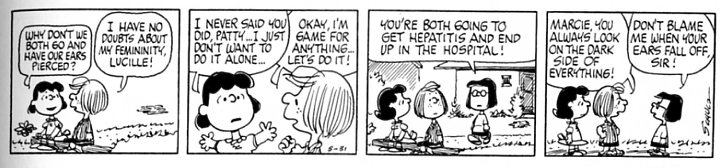
When I was a child, I used to read the Daily Mail newspaper every day – well, the Peanuts cartoons, to be precise. I still remember when Lucy asked each of her friends whether she should have her ears pierced. The conversation went on for days. Schroeder was playing his piano. “Do you think I should have my ears pierced?” He replies, “I don’t mind, you pierced mine long ago.” She storms off. “Linus, Do you think I should have my ears pierced?” “I have a better idea…” he replies cheekily, “Why don’t you have your mouth boarded up?” Lucy wallops him. When he comes to, he reflects, “It was worth it!”

How do you cope with people who just don’t seem to like you? No matter how hard you try to be nice to them, they will always twist your words, they question your motives, they gossip about you, they try and discredit you, they seem to undermine you at every opportunity.  Maybe you work with them, maybe they live next door, or maybe you are related. How do you deal with them? Blank them out? Retaliate? Stoop to their level? Do you go on the defensive? How do you react?

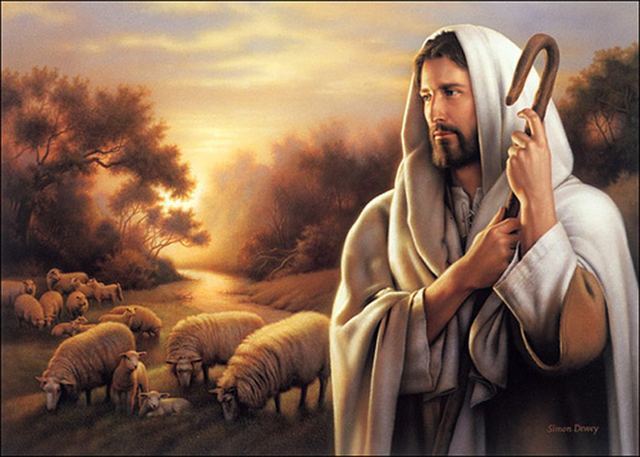
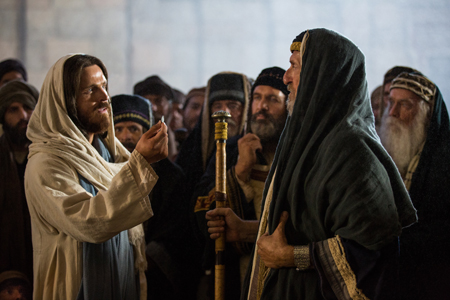
As we approach Easter, in the first of our new teaching series, entitled The Passion of Jesus, we see how Jesus dealt with his enemies. We see his passion for them. When they ask what appear to be innocent questions, Jesus responds with a question of his own:

What do you think about the Messiah?” – “who is he?” (Matthew 22:41). Implicit in that question are two more, “Why did Jesus come?” and What is his claim on our lives?”

What are we to make of Jesus Christ? from Stephen Sizer on Vimeo.

Continue reading

What Abraham Discovered: God will Provide

Our son Michael celebrated his 21st birthday last week.  When he was born, five weeks premature, and I held that little bundle of life in my hands for the first time, I didn’t know whether the Lord who had given us a son would take him back again. Although I wasn’t quite as old as Abraham, it was the first time I could really identify with him. Twenty one years later, Mike is taller, more intelligent and more attractive than me.
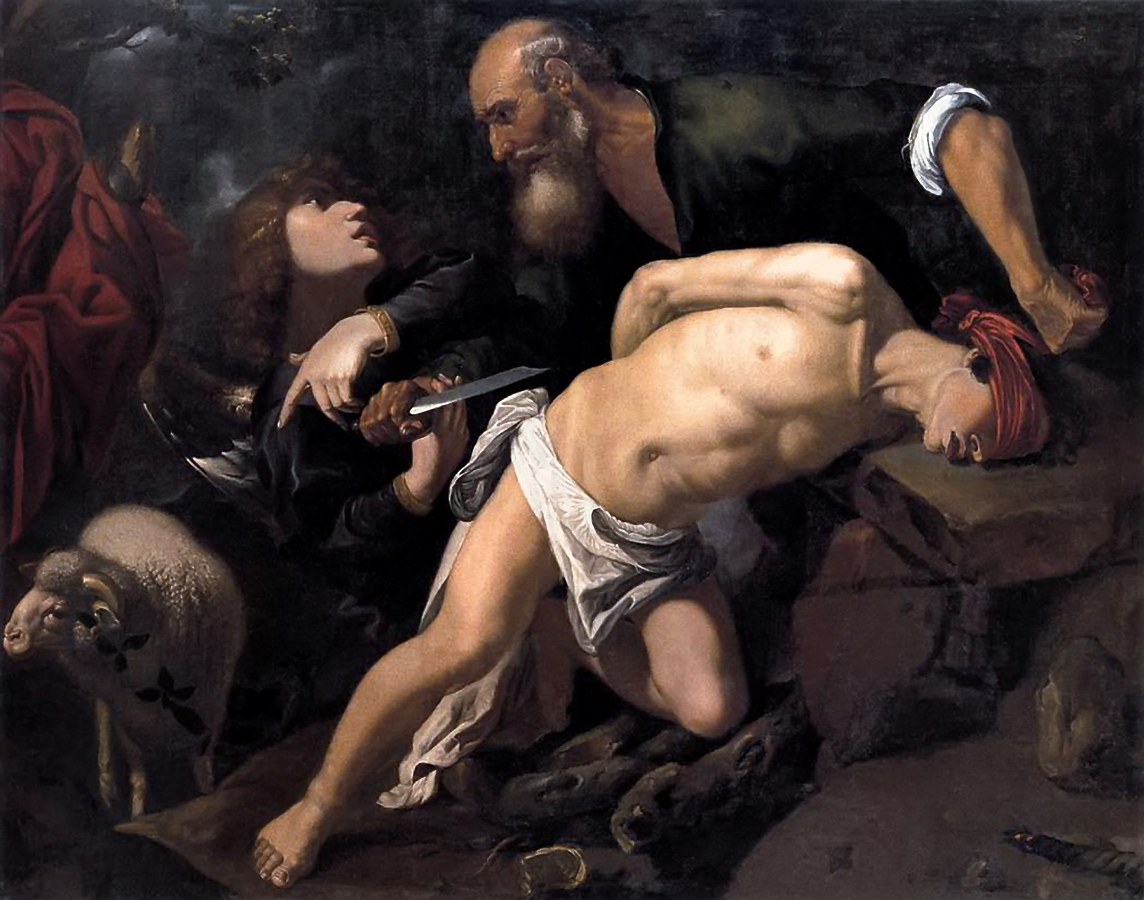
At the age of 75, Abraham was called to follow the Lord. Now, aged well over 100, he was still having faith-stretching, heart stopping experiences. The lesson? We are never too old to face new challenges, fight new battles, and learn new truths. When we stop learning, we stop growing; and when we stop growing, we stop living. “The first forty years of life give us the text,” “and the next thirty supply the commentary.” The “commentary” is being written as we listen to God, and follow His directions, one step, one day, one challenge at a time.  Sad to say, many people understand neither the text nor the commentary, and their lives are ended before they have understood the meaning of life. Genesis 22 records the greatest test that Abraham ever faced. In it we also see the progressive unfolding of God’s rescue mission for planet earth. As we found in our series Christ in All the Scriptures, it contains a beautiful prefiguring of Christ’s sacrifice on Calvary.

In both, the lesson from this passage is this:  obedient faith overcomes in the trials of life. I want us to consider five lessons we can learn from the testing of Abraham. We can learn them the hard way or the easy way. With God or without him.


Continue reading

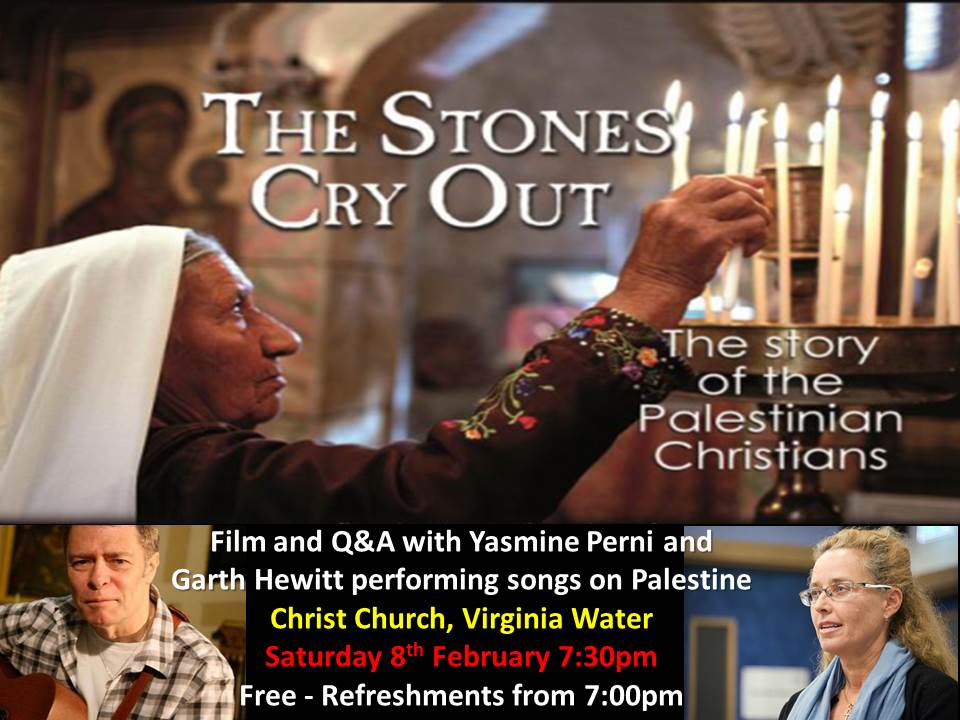
The Stones Cry Out: Saturday 8th February: Garth Hewitt and Yasmine Perni

Stones Cry Out 8 February

The film, “The Stones Cry Out” is being shown at Christ Church, Virginia Water, on Saturday 8th February at 7:30pm. Refreshments will be served from 7:00pm.

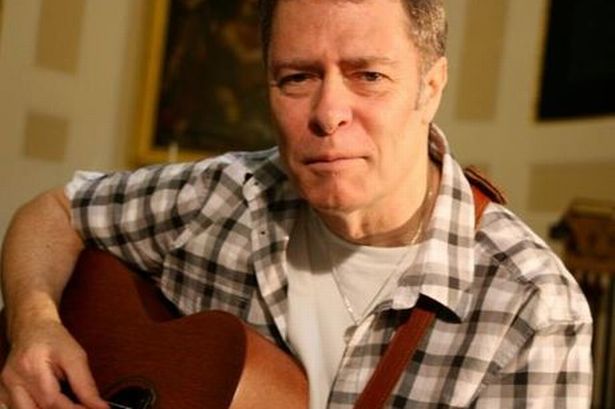
christian-singer-songwriter-garth-hewitt-652377482-2491467Yasmine Perni, the producer, will be with us and answer questions after the film is shown and Troubedor, singer and song writer, Garth Hewitt will be singing songs of Palestine.

The Stones Cry Out gives a detailed account of the historical, cultural, and political place occupied by Christians in the recent history of the Palestinian nation, and in its struggle against colonialism.

LINKS

Covering a broad sweep of history, from 1948 to the present day, Yasmine’s documentary includes interviews with preeminent leaders, scholars, and activists, and conveys some of the very specific challenges faced by Christians living in Palestine today.

DID-YOU-KNOW

Check out the website The Stones Cry Out and on Facebook

ORDER

Watch the trailer with Archbishop Elias Chacour here

There is no charge or tickets, but a retiring collection will be taken to help cover Yasmine’s travel expenses.

Christ Church, Christchurch Road, Virginia Water, GU25 4LD

The Liberty of Grace

The Liberty of Grace – and Why the Church is Persecuted (Galatians 5)

Last Sunday while we were holding our service, Islamist militants “slaughtered” some 30 churchgoers in north-eastern Nigeria.  The Bishop of Yola told the BBC the insurgents had locked the church and “cut people’s throats” in Waga Chakawa village, Adamawa state. On the same day, militants also attacked Kawuri village in neighbouring Borno, killing 52 people. Both assaults were blamed on the Boko Haram group. The name means “Western education is forbidden” – is especially active in the north-east of the country. Boko Haram wants to impose a severe form of Islamic law, and has been blamed for thousands of deaths in Nigeria.

The Liberty of Grace from Stephen Sizer on Vimeo.

The Bishop of Yola, Mamza Dami Stephen, said parishioners described how the insurgents had arrived on trucks and locked the church “towards the end of the service”. “Some people tried to escape through the windows and the [attackers] shot at them,” the bishop said. The militants set off bombs, before burning houses and taking residents hostage during a four-hour siege. The bishop said locals were gripped by terror. “Everybody is living in fear,” he explained. “There is no protection. We cannot predict where and when they are going to attack. People can’t sleep with their eyes closed.” Open Doors asks us to pray for God’s comfort and grace to reach all affected by these tragic incidents and that there will be an end to this cruel war against the people of Nigeria, and Christians in particular. But what happened in Nigeria last Sunday should not surprise us. This is the Open Doors 2013 Watch List.

Jesus said, “If you hold to my teaching, you are really my disciples. Then you will know the truth, and the truth will set you free.” (John 8:31-32). But the truth is dangerous for many in our world today. And Christians in the South and East, it seems, are willing to pay the price to stand for Jesus. Yet in the West, we have domesticated Him. We don’t necessarily see the link between truth and freedom. We probably don’t experience opposition to our faith on a daily basis. So we take freedom for granted and we are liable to compromise the truth. When was the last time you brought Jesus into a conversation at a dinner party or meal with friends or neighbours? Die for Jesus on the streets of Virginia Water? I don’t think so. Hard to imagine. In November each year, we pause for two minutes silence to remember the names of people from Virginia Water who gave their lives to preserve our freedoms and defend us from fascism and totalitarianism. Imagine if those lists were the names of Christian brothers and sisters from our church family who had given their lives in the service of Christ? Would we honour them differently? What of those Christ followers in Syria, Iraq, Iran, North Korea, and many parts of the world, for whom the persecution Paul writes of in our passage today is the norm. Can we take it for granted that it won’t happen in our country?

Continue reading

El Shaddai: The God Who Covenants

Have you seen the weather forecast for this week? Temperatures will be dropping to – 60 degrees centigrade. Winds exceeding 100 mph. No sunlight for months on end. Imagine surviving in those conditions without shelter, without heat, without clothes. Its hard to believe but some do, indeed they have adapted and thrive in such conditions. Every aspect of the Emperor Penguin’s life is tough, for the bird is the southernmost species and breeds on the ice-bound Antarctic land mass. What it takes to do this is remarkable.

At the end of the Antarctic summer, in March, the birds flop out of the Southern Ocean where they have been assiduously stuffing themselves, and begin a long trek to their mating grounds, up to 70 miles away. Thousands gradually come together, tramping over the ice in long single files like patrols of infantry. But that’s only the beginning. After courtship and pairing, the female bird produces a single egg, and then one of nature’s great curtains comes down.

A six-month [winter] dark descends, and the temperature drops with it, to minus 60 and [lower] – and the female bird departs. She has gone without food for so long – and the effort of producing the egg has been so great – that she must return to the sea to feed. The task of incubating the egg, in the harshest conditions on earth, falls to the males.  When blizzards arrive, with 100 mph winds in a nightmare of [24 hour] frozen dark, [they] huddle round together in great groups to keep a minimum of warmth…

Most survive, and so do their eggs, kept secure and warm in a fold of abdominal skin just above their feet. After 60 days of this, the eggs hatch. The male then feeds the tiny chick at first with a milky substance, then eventually the female returns to take over, recognising her mate by call. How do the penguins survive 100 mph winds and -60 degree temperatures? By taking turns at standing on the outer edge of the crowd where it is coldest, and then moving back in to the relative warmth and shelter of the huddle.

It seems to me to be a vivid natural illustration of what God intends human society to be. A supernatural window on what his Covenant people, the Church, have been called to be, to show those who are spiritually cold, lost and alone in the dark, how to find the way home to the warmth, the comfort and light of the Father’s embrace.

God’s rescue plan for the world began a long time ago with Abraham. From Abraham, God was going to build a family of faith who would become an entire nation who in turn would lead the whole world back to God. That is the context for the covenant God makes with Abraham in Genesis 17. Our series is entitled “What Abraham Discovered” and today our theme is “El Shaddai – the God who Covenants.” Lets explore the passage and ask three questions:

  1. What did the Covenant mean for Abraham?
  2. What did the Covenant mean for God’s people?
  3. What does the Covenant mean for us today?


El Shaddai: The God Who Covenants from Stephen Sizer on Vimeo.

Continue reading

A Time for Everything

You cannot see it, smell it, hear it or feel it but its all around us. We live by it. Some have more, some have less. Some do more with it, some do less. Some are passionate about squeezing the very last drop out of it, while for others it is a living death sentence. Its fresh every day but we can use it only once. What is it? Time. When we are young, (and especially in a boring lesson at school) time can seem to drag so slowly. As we grow older, we never seem to have enough. We mark time with birthdays, anniversaries, centuries, millenniums, light years and of course grey hairs – a sign that time is running out. Time is ticking away all the time and we are all growing older because of it. The Bible says

The length of our days is seventy years– or eighty, if we have the strength; yet their span is but trouble and sorrow, for they quickly pass, and we fly away.” (Psalm 90:10).

The older we get the more this verse seems to makes sense, or at least it does for me. Average life expectancy in some parts of the world is only in the 30’s, while in Western Europe it is in the upper 70’s. This week I read that baby girls born in Britain today could expect an average life expectancy of 100.

If the average life expectancy in the UK is presently 75, that means we have on average 52×75 weeks on earth = 3,900 weeks. Some of us will have less, some will have more. If you are aged 10 you have on average 3,380 weeks left; 20 = 2,860; 30 = 2,340; 40 = 1,820; 50 = 1,300; 60 = 780; 70 = 260; If you are over 75 you have beaten the average!

A Time for Everything from Stephen Sizer on Vimeo.

Continue reading

Ten Commandments for Worship

I modestly suggest ten rules for the introduction of new music without pain, if sensitivity and careful explanation are used in the exercise.

  1. The best in traditional hymnody should be preserved and used. Much modem worship may supplement the old, but it cannot possibly replace it.
  2. New songs should be biblical in emphasis and in actual wording.
  3. Heavy use should continue to be made of the Psalms (in one form or another). This is our only God-given hymn book.
  4. The music should be appropriate to the words. This is easier to feel than to define—but we all know when it happens, and when it doesn’t.
  5. There should be a judicious mixture of styles, age, rhythm, length of hymns, shortness of songs, etc.
  6. At least some of the hymns and songs should be credal, confessional and Christological (ie stating the great facts that we believe, especially about Jesus). Traditional examples are ‘At the name of Jesus.’ Splendid modern examples are ‘These are the facts as we have received them’, ‘Jesus is Lord! creation’s voice proclaims it’, and the more brief ‘God has highly exalted Jesus’.
  7. At least one hymn or song should be trinitarian (ie proclaiming the persons of the Godhead and what they mean to us). Traditional examples are ‘Thou whose almighty word’ and ‘God is in his temple’. It is significant that many of the modem songs are specifically trinitarian: ‘Holy, holy, holy is the Lord’, ‘Father, we adore You’, and ‘Father, we love You’ to quote but a few.
  8. There should be a balanced mixture of the objective (what God is, whether anyone believes it or not) and the subjective (how we feel about it and what we experience when we believe it).
  9. Use the right instruments for the appropriate words.
  10. If you can’t find any modern hymns to fit your sermons, there’s probably something wrong with your sermons. If you have the same problem with traditional hymns, quit preaching.

Continue reading

Faith Groups Under Attack: Hilary Wise

The Israeli government and a variety of Zionist organisations have long been pouring huge resources into “hasbara,” meaning “advocacy” or “propaganda” in Hebrew. This involves both promoting a positive image of Israel and hounding and intimidating those they say are guilty of the “new anti-Semitism,” which amounts in practice to any criticism of Israeli policies and actions.

The bodies involved in this hasbara campaign range from the immensely powerful American Israel Public Affairs Committee (AIPAC) to internet-based organisations such as Honest Reporting, BBC Watch and the Jewish Internet Defence Force, and poisonous personal blogs.

Christian churches, having by definition a special interest in the Holy Land and what is happening there, are increasingly coming under fire from such sources for noting and deploring Israel’s policies of oppression and dispossession, which affect Christians and Muslims alike.

Methodists in the US and the UK have for years been outspoken in their concern over the plight of the Palestinian people. The report Justice for Palestine and Israel, presented to the 2010 Methodist conference, was harshly criticised by the Board of Deputies of British Jews, the Jewish Leadership Council, the Chief Rabbi and the Council of Christians and Jews (CCJ).

Continue reading

Abraham, Melchizedek and Jesus

OLYMPUS DIGITAL CAMERADo you remember life before email? Before junk mail? Before Gmail? Before instant messaging? Before the internet? Before mobile phones even? As a child the highlight of my day was the sound of letters plopping through the letter box on to the door mat, especially around birthdays or Christmas. The more plops the better. And a day without letters was a sad day. Most of all, I longed to receive letters addressed to me. I remember even posting a letter to myself with Green Shield stamps on it. I addressed it to Master Stephen Robert Sizer, 117 Beccles Road, Oulton Board, Lowestoft, Suffolk, England. And I still have it…  My identity – my self esteem – was in some sense, bound up with something as simple as receiving an occasional letter. Now we are rather more sophisticated, but we all crave recognition, we hunger for affirmation, we long for recognition.  Because these feed our need for meaning and purpose.

In our series “What Abraham Discovered” we are focussing on the discoveries Abraham made about God and his purposes for Abraham and his offspring. As the children of Abraham we are discovering more of God’s purposes for our own lives too. Please turn with me to Genesis 14. Here we read about two kings – two very different kings – Bera was the king of Sodom and Melchizadek was the king of Salem. The contrast is stark. Between Sodom’s decadence and Salem’s decency. Between King Bera’s opulence and Melchizadek’s holiness. Abraham encounters these two kings following a regional conflict involving numerous tribal alliances and battles for control of the area around the Jordan Valley and Dead Sea. Having discovered that his nephew Lot and his relatives had been taken captive when Sodom was defeated and plundered, Abraham took 318 of his own men, hunted down the enemy and rescued his family. We pick the story up in verses 17.

“After Abram returned from defeating Kedorlaomer and the kings allied with him, the king of Sodom came out to meet him in the Valley of Shaveh (that is, the King’s Valley). Then Melchizedek king of Salem brought out bread and wine.” (Genesis 14:17-18)

Abraham, Melchizedek and Jesus from Stephen Sizer on Vimeo.

Continue reading