Category Archives: Theology

Christianity Explored: What must I do to inherit eternal life?

A famous professor of surgery died and went to heaven. At the entrance he was asked by the gatekeeper: ‘Have you ever committed a sin you truly regret?’ ‘Yes,’ the professor answered. ‘When I was a young intern at the Hospital of Saint Lucas, we played soccer against another hospital team, and I scored a goal. I was actually off-side but the referee did not see it. The goal won us the match. I regret cheating now.’ ‘Well,’ said the gatekeeper. ‘That is a very minor sin. You may enter.’ ‘Thank you very much, Saint Peter,’ the professor answered. ‘I’m not Saint Peter,’ said the gatekeeper. ‘He is having his lunch break. I am Saint Lucas.’  “If God were to say to you: ‘Why should I let you into heaven? Why should I give you eternal life?’ what would you say?” In Mark 10 we meet someone who really wanted eternal life. I hope you do too.

The Ideal Candidate for Eternal Life: Good

As Jesus started on his way, a man ran up to him and fell on his knees before him. “Good teacher,” he asked, “what must I do to inherit eternal life?” “Why do you call me good?” Jesus answered. “No one is good—except God alone.  You know the commandments: ‘You shall not murder, you shall not commit adultery, you shall not steal, you shall not give false testimony, you shall not defraud, honour your father and mother.’” “Teacher,” he declared, “all these I have kept since I was a boy.” Jesus looked at him and loved him.” (Mark 10:17-20)

Continue reading

Christianity Explored: Why did Jesus Rise?

I needed to renew my health insurance last month. I was offered up to 15% discount on my premiums if I completed an online interactive questionnaire about my health, my lifestyle, diet, and fitness regime. I wish I hadn’t. There were about 100 multi-choice questions. Things like, do you exercise regularly? One hour a day, two hours a day? Two hours a day? How far do you jog a day? Jog? One mile? Two miles?  Are you serious? How much do you drink and how often?  I thought that was a trick question because red wine is supposed to be good for you. A bottle a day is not as good as abstinence apparently. Do you smoke? Is there a history of cardiovascular problems, mental illness, diabetes, etc. in your family? Well we are all damaged good’s aren’t we? How much do you weigh? Truthfully or aspirationally? Before or after the full English breakfast? Do you eat saturated fats?  Saturated fats apparently are things like spinach, carrots and Brussels sprouts, don’t go near them, they’ll kill you. What is your waist measurement? Well that depends doesn’t it? When I breath in or out? Then you factor in your height (without shoes), your marital status and age and then the programme will calculate your likely chances of needing medical treatment in the next ten years. A virtual doctor even gives you advice on improving your health and how to reduce your premiums still further. Staying healthy can become a full time occupation if you are not careful. It was depressing.

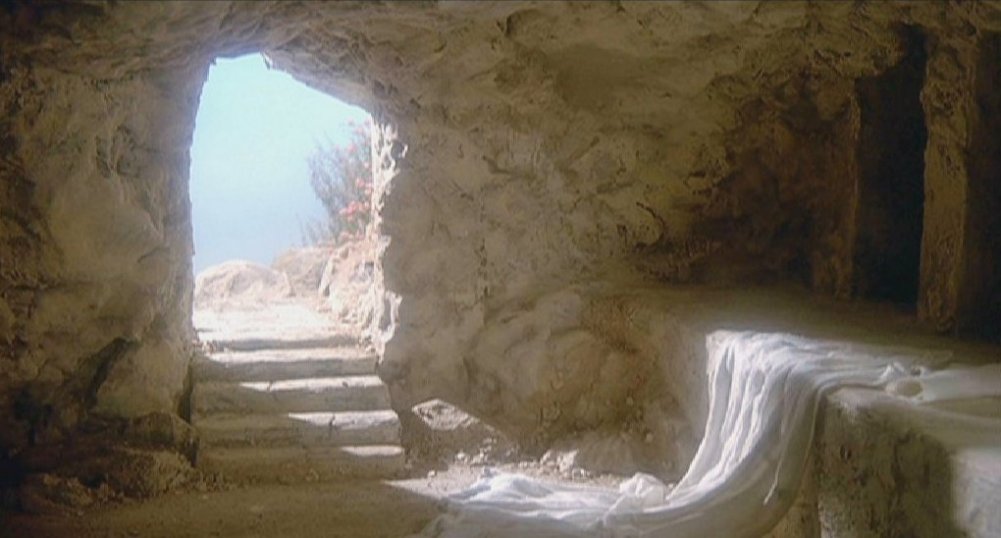
I managed to squeeze 5% off my premiums with a few nods, winks and promises. After I finished the survey, I ate salads for a whole week with no French fries. I went to the gym twice and got to bed earlier. It nearly killed me. Fortunately it did not last. Life insurance companies, and even retirement homes, use something similar called the countdown calculator to work out how long clients are likely to live and therefore their liability. Premiums are adjusted accordingly.  Whatever my insurance premiums next year, I know for a fact that, unless Jesus comes first, I will die one day. I don’t know if you realise but we all have a sexually transmitted disease. It is called life and the fatality rate is 100%. But because of what we read in Mark 16, the ultimate terror of death is removed. Our theme in this series entitled Christianity Explored is “The Resurrection : Why did Jesus Rise?” Let’s find some answers from Mark 16. Continue reading

Seven Biblical Answers to Popular Zionist Assumptions

After extensive field testing in the UK, USA and in the debate with Dr Calvin Smith on Revelation TV, “Has the Church Replaced Israel“, I have revised and enhanced my paper ‘Seven Biblical Answers to Popular Zionist Assumptions’ The pdf version contains additional illustrations.

1. God blesses those who bless Israel and curses those who curse Israel

Promise Fulfilment
“I will make you into a great nation, and I will bless you; I will make your name great, and you will be a blessing.  I will bless those who bless you, and whoever curses you I will curse; and all peoples on earth will be blessed through you” (Genesis 12:2-3). “The promises were spoken to Abraham and to his seed. Scripture does not say “and to seeds,” meaning many people, but “and to your seed,” meaning one person, who is Christ… There is neither Jew nor Gentile, neither slave nor free, neither male nor female, for you are all one in Christ Jesus. If you belong to Christ, then you are Abraham’s seed, and heirs according to the promise.” (Galatians 3:16, 28-29)
“I will surely bless you and make your descendants as numerous as the stars in the sky and as the sand on the seashore… and through your seed all nations on earth will be blessed…” (Genesis 22:17-18)

This popular assumption is based on Genesis 12:3. First, note that the promise was made to Abram (that is, Abraham) and no one else. Second, there is nothing in the text to indicate God intended the promise to apply to Abraham’s physical descendants unconditionally, or in perpetuity. Third, in the New Testament we are told explicitly that the promises were fulfilled in Jesus Christ and in those who acknowledge Him as their Lord and Saviour. God’s blessings come by grace through faith, not by works or race (Ephesians 2:8-9). Continue reading

Christ in all the Scriptures: Judges and the Angel of the Lord

In the second Millennium BC, the place to live was called Canaan. The estate agents described it as “a land flowing with milk and honey”. After 400 years in Egypt and another 70 wandering around in the desert, God’s people were keen to muscle in on the Promised Land. They would literally kill for it. They promised God and Joshua, everything under the sun if they could just get their hands on it. On our journey through the Old Testament we have arrived in the Promised Land.  In case you have not been with us this Autumn, a word of explanation.

For many people the Old Testament is a closed book, rarely read, even less understood. This Autumn series on Sunday mornings is intended to show how important the Old Testament is in making sense of our faith in Jesus Christ. In this series “Christ in all the Scriptures” we are discovering that Jesus is at the heart of every book of the Bible. God’s rescue mission did not begin in Bethlehem nor even Calvary, but way back in the Garden of Eden. So far in our journey as we traced God’s plan from Genesis to Joshua. Today we find ourselves in the Promised Land. So where does the Book of Judges fit into this story line? And where does Jesus appear in Judges?  Judges describes the life of God’s people from the death of Joshua to the rise of the monarchy.

A. M. Hodgkin describes Judges as “one of the darkest periods in the history of God’s people… There is something startling in the swiftness with which the Israelites degenerated.”

Continue reading

Christ in all the Scriptures: Joshua and the Commander the Army of the Lord

I spent Friday in London with a small group of historians and educationalists. We met to consider the global implications of a letter sent by the British Foreign Secretary. Let me read it to you.
Dear Lord Rothschild, I have much pleasure in conveying to you, on behalf of His Majesty’s Government, the following declaration of sympathy with Jewish Zionist aspirations which has been submitted to, and approved by, the Cabinet. “His Majesty’s Government view with favour the establishment in Palestine of a national home for the Jewish people, and will use their best endeavours to facilitate the achievement of this object, it being clearly understood that nothing shall be done which may prejudice the civil and religious rights of existing non-Jewish communities in Palestine, or the rights and political status enjoyed by Jews in any other country.” I should be grateful if you would bring this declaration to the knowledge of the Zionist Federation. Yours sincerely, Arthur James Balfour.

That short, one page letter, sent on the 2nd November 1917, probably secured the Allies victory over Germany in the 1st World War. But it also sparked a series of other wars in the Middle East, including  the Arab Revolt of 1936, the Arab-Israeli war of 1948, the Suez War of 1956, the Six Day War of 1967 and Yom Kippur War of 1973. It has led to more UN Resolutions than on any other issue. The Palestinian Authority bid for UN recognition of their State, as well as the US Administration’s decision to veto it in the Security Council trace their origins to that letter. Our meeting on Friday launched what will become the Balfour Project.

Continue reading

Who is Jesus?

Royal Holloway University of London Christian Union launched their Autumn series “Uncover Luke” last night with an introductory talk based on Luke 5:17-31.

The song popularized by Louis Armstrong ‘What a Wonderful World’ is a beautiful song that celebrates nature: Trees of green, red roses too, they bloom for me and you; Skies of blue, clouds of white, bright blessed day and dark sacred nights.

It’s a song that also celebrates friendship, and above all, falling in love: Friends shake hands saying, ‘How do you do?’ What they are really saying is, ‘I love you.’ It’s a great song about the gift of life: creation; friendship; falling in love. But as we know, the is something wrong with our world. In Mitch Markowitz’s film Good Morning Vietnam, while the song, ‘What a wonderful world’ says one thing, the pictures say something very different. As we are told ‘the roses bloom for me and for you’, we see a bomb going off. As we hear the words ‘the colours of the rainbow so pretty in the sky’, we see protesters being beaten. And, most poignant of all, the chorus of ‘I say to myself, what a wonderful world’ is accompanied by images of the little child’s sandal. That’s the world we live in.  It should be so good and yet there is something desperately wrong. The film’s artistry is very clever because it shows us that the world is not the place it ought to be. It should be a wonderful world, but all too often it is spoilt by people. The film is summed up by the Vietnamese girl with whom Robin Williams has fallen in love. She says that so many things do not happen the way you want them to.

The Bible actually goes deeper than that.  The Bible says that so many things don’t happen the way we want them to because people are not what they should be. People are sick, says Jesus, and desperately need a doctor.  How do we get that across to people who don’t realize the seriousness of their condition, or who don’t know where to get help? I prefer to let the Bible do it. I don’t try and prove the Bible is God’s word, I simply let God do that. The Bible is like a lion. You don’t need to defend a lion, you just let the lion out. Luke’s introduction explains why we can trust this account of the life of Jesus.

Continue reading

Christ in all the Scriptures: Leviticus and the Day of Atonement

A “lame duck” Prime Minister had just lost a General Election. He was meeting with his successor in No. 10 Downing Street for an informal handover. Near the end of the orientation, he gave the incoming leader three numbered envelopes. He suggested they be opened, in order, on the anniversary of their meeting, or at times of national crisis. After the new Prime Minster had enjoyed his “honeymoon” year with the media and the public, the nation experienced something of an economic downturn. Curious, and beginning to feel lonely and isolated, he opened the first envelope. Inside was a card with two words: “Blame me.” So he did, criticizing the former Prime Minister for the countries woes. By the second anniversary, demonstrations and strikes had brought the country to a standstill. The Prime Minister eagerly opened the second envelope. Inside there were two words on the card: “Blame my administration.” So he did, blaming the unrest on the failed policies of the previous government now in opposition. About a year later, foreign policy blunders were leading to tensions in Europe and the Commonwealth and his popularity in the polls was plummeting. The Prime Minister reached for the third envelope desperate for a solution. Inside, the card read: “Prepare three envelopes.”  Someone once said, “He who smiles in a crisis has found someone to blame.

Some enterprising businessperson will sooner or later register the domain name “Rent-a-Scapegoat.com” with the motto “Mea Culpa.” Here’s what the homepage might offer.

“In today’s society finding a solution to a problem is much less important than finding someone to blame. If you find yourself being blamed by the media, customers or politicians, for something you did not do, or even if you did, that’s where we come in. For a negotiable fee, one of our trained staff can be seconded to your company on a six month contract retrospectively backdated to before the controversy blew up. You mount an investigation, they will accept full responsibility, you fire them and they take the heat. You get a positive media story, and the “scapegoat” walks away. It’s clean, it’s tidy and it’s containable. It’s the new “go-to-fall-guy” concept brought to you by www.rent-a-scapegoat.com

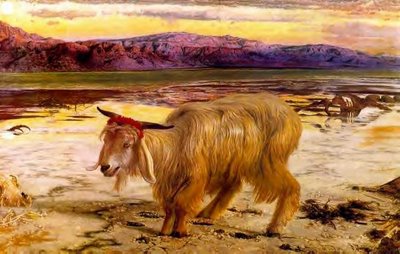
Let’s be honest. How many of us would be tempted to use that kind of service, if it existed? Especially, if they did house calls as well as business consulting? But seriously, is it not instinctive? When we come under the spotlight, we look for someone to blame, someone to pass the buck, someone to take the rap, a scapegoat? Where did this idea of the scapegoat come from? The term goes way, way back to Leviticus 16 when God introduced an annual festival called the Day of Atonement. Known as Yom Kippur (in September), it became the most solemn day in the Jewish calendar, a day of national mourning, of humiliation, of fasting, repentance and forgiveness. Yom Kippur is still observed today as a solemn Sabbath, but without the sacrifices because there is no Temple.

Continue reading

Christ in all the Scriptures: Exodus and the Passover Lamb

As a young Christian, one of the most influential people in my life was the Finnish evangelist Kalevi Lehtinen who died in July aged 75. At several Bible conferences I vividly remember him telling us to keep studying the Bible until you can see the smiling face of Jesus on every page. Keep reading the Bible until you can see the smiling face of Jesus on every page. “Christ in all the Scriptures” That is the theme for our morning sermon series this Autumn. We will only get from Genesis to Ruth, but we will come back and dip into every Old Testament book to discover what it can teach us about the Lord Jesus. We will see that every central character, every major event, every prophecy, every Festival reveals ever more brightly the person and work of the Messiah, God’s anointed Son.  We will see conclusively that the coming of Jesus Christ was no accident but part of God’s redemptive plan from the very beginning and was revealed progressively through history and Scripture. And if you would like to read the book that inspired the series, it is called Christ in all the Scriptures. Written by A. M. Hodgkin in 1909, it has become a classic. Hodgkin observes, in his introduction,

“Abraham rejoiced to see My day.” ”Moses wrote of Me.” ”David called [Me] Lord.” (John 8:56; 5:46; Matthew 22:45). We have in these words of our Saviour abundant authority for seeking Him in the Old Testament … To those of us who believe in Christ as truly God, as well as truly Man, His word on these matters is authoritative.”

As we saw last week, Jesus refers to 20 Old Testament characters and quotes from 17 Old Testament books. In Genesis, for example, Jesus refers to creation, the institution of marriage, Noah, Abraham, Lot, to Sodom and Gomorrah. From Exodus, Jesus speaks of Moses, the burning bush, the Mannah in the wilderness and the Ten Commandments. From Leviticus, the ceremonial and moral law. From Numbers, the bronze serpent. From Deuteronomy, the law of Moses. Jesus refers to David, Solomon, Elijah and Zechariah. He confounds his critics not just by quoting Scripture but by identifying himself as the one the Scriptures are speaking about. In his very first sermon Jesus said, “Today this scripture is fulfilled in your hearing.” (Luke 4:21). To his opponents, Jesus replied.

“You diligently study the Scriptures because you think that by them you possess eternal life. These are the Scriptures that testify about me.” (John 5:39).

After his resurrection, on the road to Emmaus, to his doubting disciples Jesus said,

“How foolish you are, and how slow to believe all that the prophets have spoken! Did not the Messiah have to suffer these things and then enter his glory?” And beginning with Moses and all the Prophets, he explained to them what was said in all the Scriptures concerning himself… Everything must be fulfilled that is written about me in the Law of Moses, the Prophets and the Psalms.” Then he opened their minds so they could understand the Scriptures.” (Luke 24:25-27; 44-45)

May the Lord open our minds too, to understand everything written about Jesus in the Law of Moses, the Prophets and the Psalms, has indeed been fulfilled and accomplished for us. Continue reading

2020 Vision

2011 Church Council Vision Cast

I have three questions for you this morning:

1. What is your ultimate vision of the future?

What motivates you to get up in the morning? What excites you about the future? What drives you to realise your goals in life? What do you long to see our world become?

Here is the ultimate biblical vision of the future:

“ Then I saw “a new heaven and a new earth,” for the first heaven and the first earth had passed away, and there was no longer any sea. 2 I saw the Holy City, the new Jerusalem, coming down out of heaven from God, prepared as a bride beautifully dressed for her husband. 3 And I heard a loud voice from the throne saying, “Look! God’s dwelling place is now among the people, and he will dwell with them. They will be his people, and God himself will be with them and be their God. 4 ‘He will wipe every tear from their eyes. There will be no more death’ or mourning or crying or pain, for the old order of things has passed away…

Then the angel showed me the river of the water of life, as clear as crystal, flowing from the throne of God and of the Lamb down the middle of the great street of the city. On each side of the river stood the tree of life, bearing twelve crops of fruit, yielding its fruit every month. And the leaves of the tree are for the healing of the nations.” (Revelation 21:1-4; 22:1-2)

Continue reading

Christ in all the Scriptures: Genesis and the Sacrifice of Isaac

Christ in all the Scriptures: Genesis and the Sacrifice of Isaac from Stephen Sizer on Vimeo.

Jesus said to them, “How foolish you are, and how slow to believe all that the prophets have spoken! Did not the Messiah have to suffer these things and then enter his glory?” And beginning with Moses and all the Prophets, he explained to them what was said in all the Scriptures concerning himself… Everything must be fulfilled that is written about me in the Law of Moses, the Prophets and the Psalms.” Then he opened their minds so they could understand the Scriptures.” (Luke 24:25-27; 44-45)

“Christ in all the Scriptures” That is the theme and title for our morning sermon series this Autumn. Please pick up a programme card if you don’t yet have one to see what treasures are in store. This is going to be an exciting and revealing series. We won’t finish it this term – we will only get from Genesis to Ruth. But over the next few years we are going to dip into every book of the Old Testament to see what is said in all the Scriptures concerning the Lord Jesus Christ. We will see that every central character, every key event, every prophecy, every Feast and Festival reveals ever more brightly the person and work of the Messiah, God’s anointed Son.  We will see conclusively that His coming was no accident but part of God’s redemptive plan, revealed from the very beginning and progressively through history and Scripture. And if you would like to read the book that inspired the series, it is appropriately called Christ in all the Scriptures. Written by A. M. Hodgkin, and first published in 1909, it has rightly become a classic. I would also commend Vaughan Robert’s book, God’s Big Picture. We are also commending the Home Group study guide Full of Promise

Hodgkin observes, in his introduction,

“Abraham rejoiced to see My day.” ”Moses wrote of Me.” ”David called [Me] Lord.” (John 8:56; 5:46; Matthew 22:45). We have in these words of our Saviour abundant authority for seeking Him in the Old Testament … To those of us who believe in Christ as truly God, as well as truly Man, His word on these matters is authoritative.”

In the Gospels, Jesus refers to 20 Old Testament characters and quotes from 17 Old Testament books. In Genesis, for example, Jesus refers to creation, the institution of marriage, to Noah, Abraham, Lot, to Sodom and Gomorrah. From Exodus, Jesus speaks of Moses, the burning bush, the Mannah in the wilderness and the Ten Commandments. From Leviticus, the ceremonial and moral law. From Numbers, the bronze serpent. From Deuteronomy, the law of Moses. Then there are references to David, Solomon, Elijah and Zechariah. He confounds his critics not just by quoting Scripture but by identifying himself as the one the Scriptures are speaking about.

“Today this scripture is fulfilled in your hearing.” (Luke 4:21).

“You diligently study the Scriptures because you think that by them you possess eternal life. These are the Scriptures that testify about me.” (John 5:39).

Finally three of his last seven sentences from the cross are quotations from the Old Testament. Hodgkin says,

“From a careful study of the Gospels, we cannot fail to see that the Old Testament Scriptures were continually upon Christ’s lips, because [they] were always hidden in His heart….”

Let us pray that the Lord will open our minds, as he did the Apostles, to understand how everything written about Jesus in the Law of Moses, the Prophets and the Psalms has indeed been fulfilled and accomplished for us. Then this good news will not only be hidden in our hearts but always on our lips.

Continue reading