Read or print the sermon text here
See also:
The Contagious Christian’s Testimony
The Contagious Christian’s Message
The Contagious Christian’s Mind-Set
The Contagious Christian’s Motivation
The Contagious Christian’s Mandate
Read or print the sermon text here
See also:
The Contagious Christian’s Testimony
The Contagious Christian’s Message
The Contagious Christian’s Mind-Set
The Contagious Christian’s Motivation
The Contagious Christian’s Mandate
How good are you at memorising messages? Probably better than you realise. I suspect over the years you have memorised hundreds and hundreds of messages. Lets test you. Let see how many of these messages you can complete, and for a bonus, who said it.
To our members we’re the fourth…emergency service:
Bread wi’ nowt …taken out: Allinsons.
Don’t leave home… without it: American Express
Soft, strong and…very long: Andrex
ithink therefore… iMac: Apple
Vorsprung durch… technik: Audi
I’d love a… Babycham: Babycham
The United Colors of… Benetton: Benetton
Ahh… Bisto!: Bisto
The taste of… paradise: Bounty
Du pain, du vin… du boursin: Boursin cheese
The World’s Favorite… Airline: BA
Go to work on… an egg: Egg Marketing Board
Let the train take… the strain: BR
A glass and a half in every… half pound: Cadburys
And all because the lady loves… Milk Tray
For mash get…Smash
The man from Del Monte he… say yes
Put a tiger in… your tank: Esso
Now hands that do dishes can feel… soft as your face.
No FT… no comment.
The best a man… can get. Gillette
Guinness is… Good for You.
Refreshes the parts other beers.. cannot reach: Heineken
Beanz Meanz… Heinz
Graded grains make… finer flour : Homepride
Don’t say brown… say Hovis
Say it with… flowers. Interflora
Have a break. Have a… Kit-Kat
Never knowingly… undersold. John Lewis
Because You’re … worth it. L’Oreal
It does exactly what it says… on the tin: Ronseal
Toilers in Agriculture… Strengthen the fodder basis of animal husbandry! Raise the production and sale to the state of meat, milk, eggs, wool and other products!: Communist Party of the Soviet Union
OK so we all watch too much television but do you see the power of a well-constructed message? Why do we remember these messages? Because they are simple, memorable, visual, sometimes humorous, but most important, they are convincing, they are true – mostly. All except the last one perhaps. What is the Christian message? Can it be summed up in one sentence? How about, “For God so loved the world that… he gave his one and only Son, that whoever believes in him shall not perish but have eternal life.” (John 3:16).

9th April 2013
Dear Archbishop Justin,
We write as representatives of organisations and as individuals who are deeply involved in the search for peace with justice in the Holy Land to express our deep concern over the remarks that have been attributed to you in a recent interview with the newspaper “Jewish News”. Amongst the aspects of the interview with which we were most saddened were that you regretted not voting against the General Synod decision to support EAPPI.
As you know, the main criticism that was levelled against EAPPI before the vote was, in the words of one of their more strident opponents, that it created “a cohort of very partisan but very motivated anti-Israel advocates who have almost no grasp of the suffering of normal Israelis”.
However, EAPPI seeks a just solution to the problems in the Holy Land that will benefit both Palestinians and Israelis. It operates in terms of what it calls “principled impartiality” with its Code of Conduct stating: “We do not take sides in this conflict and we do not discriminate against anyone but we are not neutral in terms of principles of human rights and international humanitarian law. We stand faithfully with the poor, the oppressed and the marginalized. We want to serve all parties in this conflict in a fair and unbiased manner in word and action.”
In our experience, all Ecumenical Accompaniers are scrupulous in their determination to be fair to all sides in their work, as befits both the programme and the senior positions they often hold as Church leaders, in the legal profession, as teachers and many other areas.
Its participants are given a full briefing on a wide variety of Israeli perspectives including taking an extended tour of the Holocaust Museum and travel to Sderot to meet Israeli people affected by rockets fired from Gaza. Their discussions with Israelis also include briefings from those who work with Palestinians most directly – some of whom wrote most powerfully in support of EAPPI when it came under its most sustained attack.
One of these was Professor Jeff Halper, who wrote as an Israeli Jew and as one of the founders of EAPPI in Geneva to remind us of the particular challenges that EAPPI addresses in the Palestinian West Bank. He says that many of these have no parallel for Israelis, “where children hardly need to be escorted to school and where children of settlers are escorted by the Israeli army, and Palestinian children walking miles through the hills of Hebron to school and being regularly attacked by thugs from the settlements armed with baseball bats and guns. Anyone who tries to equate the “sides” ignores the immense power differential created, among other things, by the Israeli Occupation. (Last time I looked, the Palestinians were not occupying Tel Aviv or demolishing Israeli homes.)” He went on to say that “as the head of an Israeli peace and human rights organization that tries to stop Israel’s wanton demolition of Palestinian homes (27,000 so far since 1967, almost none for “security” reasons), I call on the Synod to give the EAPPI all the support it can.”
It need hardly be added that some of the organisations who have attacked EAPPI most vociferously have seldom been noted for their own impartiality in the Middle East conflict, promoting as they do their “Speak out for Israel” campaign.
Many of us are frequent visitors to the Holy Land and are passionate in our belief that peace with justice will only come when all communities have their need for security, equality and dignity addressed. But this will not come whilst discriminatory laws, home demolitions, planning restrictions, checkpoint and movement restrictions and enforced family separations persist. Indeed, we agree with the former Speaker of the Knesset Avraham Burg that the constant building of illegal settlements on Palestinian land, not only prevents the emergence of a viable Palestine but jeopardises the future of the state of Israel.
We welcome the news that you are to visit the Holy Land in June. In hoping that you get the opportunity for a comprehensive view of the conflict, we encourage you to visit Israelis from all sides of the spectrum of opinion, including those who are risking so much in the campaign to end the occupation. We also encourage you to visit Palestinians who are suffering behind the walls, including the Christian community in Bethlehem, the people of the Jordan Valley, those living in refugee camps such as Aida and Balata as well as the people of Gaza who are so often marginalised and forgotten. We also encourage you to visit with international lawyers, who can provide vital background on the legal obligations, such as in the 4th Geneva Convention, that a situation of Occupation imposes.
Please support those who are advocating for peace with justice, please support those who are risking their reputations and even their lives to oppose military domination of one by another and please speak out for those who oppose oppression. Above all, we ask you to hear the 2009 Kairos call of the Palestinian Christians, who ask “are you able to help us get our freedom back, for this is the only way you can help the two peoples attain justice, peace, security and love?”
This comes with our prayers, support and good wishes for your important ministry.
Yours sincerely,
Laura Abraham, Founder of the Peace Cycle
Issam Aburaya
Suzy Andrews
Revd John Angle
Revd Alan Ashton
Right Revd Riah Abu El Assal, retired Episcopal Bishop of Jerusalem
Revd Andrew Ashdown, Enham Team Rector
Fr Robert Assaly, Chair Canadian Friends of Sabeel
Revd Warren Bardsley, Methodist minister and former Ecumenical Accompanier
Leonard Beighton
Leila Bentley
Karen Chalk, former Ecumenical Accompanier and Administrator of ICAHD UK.
Revd Colin Chapman
Anne Clayton, Friends of Sabeel UK
Diane Conti
Janet Davies
Joy Davies
Rebecca Dawson
Verity Elson, St Andrew’s Church Cobham
Adam Estle, Executive Director, Evangelicals for Middle East Understanding
Noushin Framke, Israel/Palestine Mission Network of the Presbyterian Church
Angus Geddes, member of Havant URC
Sharen Green
Professor Mary Grey, Emeritus Professor of Theology, University of Wales
Norma Hashim
Kamel Hawwash
Revd Dr Fiona Haworth, Chaplain, University of Worcester
Revd Canon Garth Hewitt, Honorary Canon of St George’s Cathedral Jerusalem
Donna Hicks, Convener, Episcopal Peace Fellowship’s Palestine Israel Network
Revd Wendy Hough
Carol Hylkema, IPMN
Israel/Palestine Mission Network of the Presbyterian Church (USA)
Barbara Ivy
Lucy Janigian
Revd Stuart Jennings, Methodist Minister and University Chaplain
Darlene Jones-Owens, Christians United for Peace
Keith Killough
Salaam Khoury
Stevie Krayer, signing as a concerned Jew
Revd Emma Langley, Priest in Charge of St Alban’s Church, Bristol.
Dibartolo Laurie
Dr Stephen Leah, Member of the Methodist Conference
Cilla Lynch
A.J. McDonald Jr. Christians United for Peace
Joy McKenzie
Audrey McKenzie
Elizabeth M. Molchany, USA, Attorney-at-law
Mary Morris, USA, former Ecumenical Accompanier
Jon Neall, former Ecumenical Accompanier
Michael Newbold
Revd Steve Openshaw, Ramsbottom and Edenfield Team Ministry
Revd Tom Patton, Methodist Minister and former Ecumenical Accompanier
Miranda Pinch, former Ecumenical Accompanier
Penny Potter
Dee Poujade, Ecumenical Accompanier
Ronan Quinn, Armagh, former Ecumenical Accompanier
Alexandra Pupo Quintino
Linda Ramsden, Director of ICAHD UK
Christine Robson
Len Rogers, Former Executive Director, Evangelicals for Middle East Understanding
Revd Chris Rose
Revd Dr Stephen Sizer, Vicar of Virginia Water
Revd Alison Shaw, Vicar St Boniface, St Budeaux, Plymouth, Sabeel Peninsula
Philip & Denise Small
Andrew Smith
Colin South, Chair of Living Stones
Jake Terpstra
David Toorawa
Maggie Vicuna
Michaela Whitton, peace activist
Revd David Willis
Revd Simon Winn
Revd Anna Wright, Blyth Valley Team Ministry, Wenhaston
If you wish to add your signature to this letter please do so here
For more information on EAPPI


I got a surprise call from the BBC recently. “Did I have a spirit of adventure? Could I think on my feet and cope without home comforts? Did I like a challenge? Was I willing to appear on their programme ‘Bare Necessities’? Two teams compete against each other to see who can survive in a remote location somewhere in the world for a week with only the bare essentials provided. Was I willing to join a team of three vicars competing against three bookmakers? Naturally. With God on our side it would be no contest. Could I participate at short notice? Did I have a passport? Could I go anywhere in the world? For an audience of 2 million, when do we start? Did I have any phobias? Real men don’t have phobias – at least we don’t admit them to strangers. Would I be prepared to eat anything? Yes with my eyes closed. Could I work in a team made up of strangers? Try me. The last question – Did I have one wish? ‘To see heaven on earth’ I heard myself say. The interview lasted half an hour. It felt a cert. I was in. They loved me. The delightful programme co-ordinator assured me she would come back to me in a few days. I put the phone down and began to prepare myself.
Joanna thought I was utterly and completely mad. I had three weeks to get fit. The first thing I did was block into my diary a two hour gym session every day for the next three weeks. I had three weeks to learn how to survive in the wild. I got out my SAS Pocket Survival Guide. I began to learn about which plants and animal parts you can and cannot eat. I learnt how to trap game. How to collect water. How to make a shelter from branches and leaves. How to start a fire. I also began to prepare myself psychologically. What it would be like to join a small team of strangers thrown together in full view of the TV cameras? I began to listen to tapes on team building, determined that we were going to work well as a team. It didn’t matter if we won or not as long as by the end of the week we still cared for each other and glorified God. Finally I began to prepare myself spiritually. What did God want me to achieve through the programme? How could I show that being a Christian makes a difference in a godless cynical world? Christian Aid had nominated me because they wanted viewers to realise most people in the world have to survive on bare necessities every day and thought I could help get that message across.
Jeremy Moodey, CEO of Embrace the Middle East delivered this sermon at Christ Church, Virginia Water on 14th April 2013.
See also:
The Contagious Christian’s Testimony
The Contagious Christian’s Message
The Contagious Christian’s Mind-Set
The Contagious Christian’s Motivation
The Contagious Christian’s Mandate
Read the sermon here
See also:
The Contagious Christian’s Testimony
The Contagious Christian’s Message
The Contagious Christian’s Mind-Set
The Contagious Christian’s Motivation
The Contagious Christian’s Mandate
Have you ever wondered how God might start a conversation to get someone’s attention? How about these for starters?
“Please don’t drink and drive. You’re not quite ready to meet me yet.” God
“When you’re weary, feeling small. When tears are in your eyes, I will dry them all.” God
“Can you imagine the price of air if you had to buy it from another supplier?” God
“I was thinking of making the world in black and white . Then I thought naaaah.” God
“If you think the Mona Lisa is stunning, you should look at my own masterpiece, in the mirror.” God
“Don’t’ forget your umbrella. I might water the plants today.” God
“If you missed the sunrise I made for you today, never mind. I’ll make you another one tomorrow.” God
“How can you possibly be a self-made man? I specifically recall making you.” God
“I think you are the most beautiful person in the world. Okay, so I’m biased.” God
If that is how God might start a conversation to get someone’s attention, how might you? How do we become fruitful in sharing our faith? How can we become contagious Christians? That is our theme for the next five Sundays.
It is ironic that the word ‘evangel’ means good news but the word evangelism or evangelist is so often associated with negative connotations. Why is that? We sometimes equate evangelists with men in dark suits with loud voices standing on soap boxes on street corners haranguing passers by.
You may have experienced the kind of teaching that suggests your spiritual maturity depends on how often you witness to others. And like me you may have felt a failure or guilty. That is why I am really excited about this series Becoming a Contagious Christian because we are going to learn an entirely different way of sharing Jesus. No matter what your background, your personality or temperament. It doesn’t matter whether you are an extrovert or an introvert. God has wired us uniquely. In Scripture we find many different examples and approaches to evangelism and I’m confident there is at least one that is natural for you.
By the end of this five week series, my prayer is that every member of Christ Church will:
1. Be sure that they are a Christian.
2. Be able to share their faith naturally using a simple tool.
3. Have discovered their preferred evangelism style.
4. Be able to tell the story of their personal faith journey.
5. Become a contagious Christian among friends & family.
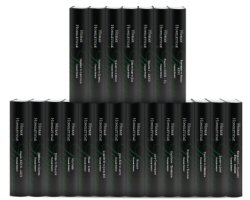
I am selling a rare and unique set of Charles Simeon’s classic commentary, Horae Homileticae. These 21 volumes, featuring Simeon’s collected sermons, represent the fruit of his fifty-four years of preaching. Published originally in 1832 for the benefit of younger pastors seeking practical improvement at the task of sermon creation, Horae Homileticae reflects the rich source of Biblical understanding of its author, a towering figure in the history of evangelical theology.
My set is unique because the volumes date from 1832 and have been lovingly and professionally rebound in chocolate brown cloth with gold lettering. The set cost over £300 and rebinding cost more than £400. You can own this unique set for just £395. Also included free is a copy of the Memoirs of the Life of the Rev Charles Simeon by Rev William Carus dated 1847 in the same rebound format.
 These expository outlines (or “skeletons”) are not a verse-by-verse explanation of the English Bible. Rather, they are a chapter-by-chapter study with explanations of the most important and instructive verses in each chapter. Simeon’s aim with this commentary is “Instruction relative to the Composition of Sermons.” To this end, his exposition of the Scriptures is designed to maintain a focus on the more general aspects of a passage over and above possible treatments of particulars. His test for a sermon, as he teaches in Horae Homileticae, is threefold: does it humble the sinner, exalt the Saviour and promote holiness?
Opposing all human systems of divinity, Simeon’s commentary is also marked by an avoidance of any possible systemization of God’s Word and entanglement with theological controversies. A self-described “moderate Calvinist” or, more plainly, a “Biblical Christian,” Simeon believed that the Bible should speak for itself. “Be Bible Christians, not systems Christians” was his maxim; “My endeavor is to bring out of Scripture what is there, and not to thrust in what I think might be there. I have a great jealousy on this head; never to speak more or less than I believe to be the mind of the Spirit in the passage I am expounding.” With Horae Homileticae this conviction is soundly applied.
[Horae Homileticae] is the best place to go for researching Simeon’s theology. You can find his views on almost every key text in the Bible. . . . What Simeon experienced in the word was remarkable. It is so utterly different from the counsel that we receive today that it is worth looking at carefully.—John Piper
One can easily find suggestive and practical helps in the preparation of sermons, devotional talks, young people’s messages, prayer meeting talks, Sunday School lessons and personal Bible study. The study of these outlines will contribute greatly to expository preaching. —B. B. Siegel, Bibliotheca Sacra
If Wilberforce is the most famous evangelical layman in the Church of England, then Simeon is the most famous evangelical clergyman.—Who’s Who in Christian History
[The volumes of Horae Homileticae] have been called ‘a valley of dry bones’: be a prophet and they will live.—Charles Spurgeon
More about Charles Simeon
Sample a digital volume here


“Brothers and sisters, my heart’s desire and prayer to God for the Israelites is that they may be saved. For I can testify about them that they are zealous for God, but their zeal is not based on knowledge.” (Romans 10:1-2)
Unanswered Questions?
Why is there such a close relationship today between the Christian Right, the American political establishment and the State of Israel? Why after 40 years, does Israel continue to occupy territory in Lebanon (the Sheba Farms), Syria (the Golan Heights) and Palestine (the West Bank) while Syria has been pressured to withdraw from Lebanon? Why is Israel allowed to retain nuclear weapons while Iran is threatened with a pre-emptive attack for aspiring to obtain nuclear technology? And how have Britain and America become the focus of so much hate in the Arab world and the target for Islamic terrorism – despite out commitment to the rule of international law, democracy and human rights? The answers to these questions remain inexplicable unless we factor in what is now probably the most influential and controversial movement amongst Christians today – Christian Zionism.
The Significance of Christian Zionism
Let me give you a flavour of the movement and their strategy from a recent speech given by John Hagee. Hagee is the Founder and Senior Pastor of Cornerstone Church, an 18,000 member evangelical church in San Antonio in Texas. Hagee broadcasts a national radio and television ministry to Americans on 160 T.V. stations, 50 radio stations and eight networks into an estimated 99 million homes worldwide on a weekly basis. In 2006 he founded Christians United for Israel with the support of 400 other Christian leaders.
For 25 almost 26 years now, I have been pounding the evangelical community over television. The bible is a very pro-Israel book. If a Christian admits “I believe the Bible,” I can make him a pro-Israel supporter or they will have to denounce their faith. So I have the Christians over a barrel, you might say.[1]
The assumption Hagee makes, that Bible-believing Christians will be pro-Israel, is the dominant view among evangelical Christians, especially in the USA. In March 2007, Hagee was a guest speaker at the American Israel Public Affairs Committee (AIPAC) Policy Conference. He began with these words: “The sleeping giant of Christian Zionism has awakened.
There are 50 million Christians standing up and applauding the State of Israel…” As the Jerusalem Post pointed out, his speech did not lack clarity. He went on to warn:
It is 1938. Iran is Germany, and Ahmadinejad is the new Hitler. We must stop Iran’s nuclear threat and stand boldly with Israel, the only democracy in the Middle East… Think of our potential future together: 50 million evangelicals joining in common cause with 5 million Jewish people in America on behalf of Israel is a match made in heaven.[2]
The Pew Research Centre recently discovered that 60% of evangelicals said they supported the state of Israel,[3] and 32% cited their religious beliefs as the primary reason for such support.[4]
The Unity Coalition for Israel, which brings together over 200 different autonomous organizations, is the largest pro-Israel network in the world. They claim to have 40 million active members, and lobby on behalf of Israel through 1,700 religious radio stations, 245 Christian TV stations, and 120 Christian newspapers. [5] Besides, Christian’s United for Israel, the other three largest Christian Zionist organizations are the International Christian Embassy, Jerusalem, Christian Friends of Israel and Bridges for Peace. A powerful lobby movement? You bet. Christian Zionism is undoubtedly a dominant force shaping US foreign policy in the Middle East.[6]
What about your Presuppositions?
Discovering what the Bible has to say about the relationship between Israel and the Church, in history and prophecy, is not just an academic exercise. What we believe and understand affects how we behave and act. Let me illustrate. If you believe the Bible predicts an imminent war of Armageddon with Israel and the United States on one side and the Islamic and Communist world on the other, then you will not lose any sleep over the stalled peace process. And when you read about yet more bloodshed and suffering in the Middle East it will confirm what you already think is going to happen.
However, if you believe peace and reconciliation between Jews and Arabs in the Middle East is not only possible, but also God’s will; that the UN Declaration of Human Rights is based on Judeo-Christian principles; and that the consistent implementation of international law should form the basis for our diplomacy in the Middle East, then you will act to achieve peace with justice. Our presuppositions not only shape our beliefs but also our actions.
Postponement or Fulfilment?
Why does this subject arouse such strong emotions among Christians, and evangelicals? Because the very gospel is at stake. The question to have at the back of your mind as you read further is this: Did the coming of Jesus, his death and resurrection and the founding of the Church, fulfil or postpone the biblical prophecies concerning Israel? Is the Church central to God’s purposes on earth, or a temporary side show? In answering this question, evangelicals tend to fall into one of two camps – covenantalists and dispensationalists. Now there are variations of each, but if you haven’t heard of the terms before, you are not alone. Most evangelicals don’t necessarily know which they are.
Covenantalism or Dispensationalism?
Covenantalists tend to see the coming of Jesus as the fulfilment of the promises made to Israel while dispensationalists tend to see it as the postponement of those promises. Covenantalists believe the Bible teaches that God has one ‘chosen people’ called out from among the nations. Dispensationalists believe the Bible teaches that God has two separate and distinct peoples – the Church and Israel. They believe that the biblical promises made to the ancient Israelites apply to their Jewish descendents today. If Covenantalists emphasize the continuity within God’s progressive revelation, Dispensationalists emphasize the discontinuity, distinguishing seven ‘dispensations’ in biblical history when God has tested mankind in a different way, and each time they have failed. They believe the present Church Age or Dispensation of Grace will fail and soon come to an end. Then during the Millennium, Jesus will reign as King of the Jews in Jerusalem and the unfulfilled promises of the Old Testament will be realised.
Covenantalists tend to regard promises relating to the Land, Jerusalem and the temple as annulled or fulfilled in the Church. Dispensationalists tend to see them as still in force and either being, or about to be, fulfilled in Israel today. Covenantalists tend to be neutral or positive about the future before the return of Jesus being either amillennial or postmillennial. Dispensationalists tend to be premillennial and pessimistic about the future.[7]
Read more here and other chapters here. Buy the book here.
Seven Biblical Answers to Popular Zionist Assumptions summarises the book.
A set of Seven Bible Studies can be downloaded here.
[1] John Hagee, The One Jerusalem Blog, 25 January 2007. http://www.onejerusalem.org/blog/archives/2007/01/audio_exclusive_12.asp <Accessed March 2007>
[2] “Christians for Israel” Editorial, The Jerusalem Post, 14 March 2007. http://www.jpost.com/servlet/Satellite?cid=1173879085796&pagename=JPost%2FJPArticle%2FShowFull <Accessed March 2007>
[3] The Pew Research Center for the People and the Press and The Pew Forum on Religion and Public Life, “Many Americans Uneasy with Mix of Religion and Politics,” August 24, 2006. The Pew Research Center for the People and the Press, http://peoplepress.org/reports/display.php3?PageID=1084 <accessed March 2007>
[4] The Pew Research Center for the People and the Press, “Americans’ Support for Israel Unchanged by Recent Hostilities,” July 26, 2006. The Pew Research Center, http://pewresearch.org/reports/?ReportID=37
[5] http://www.israelunitycoalition.org/about/index.php <Accessed March 2007>
[6] See Robert Jewett & John Shelton Lawrence, Captain America and the Crusade Against Evil (Grand Rapids, Eerdmans, 2003); Timothy Weber, On the Road to Armageddon: How Evangelicals became Israel’s Best Friend (Grand Rapids, Baker, 2004); and John Mearsheimer and Stephen Walt, ‘The Israeli Lobby’, The London Review of Books, 23 March 2006, http://www.lrb.co.uk/v28/n06/mear01_.html
[7] See chapter 7 and the glossary for an explanation of these terms.