
Jennifer Aniston, Courteney Cox, Lisa Kudrow, Matt LeBlanc, Matthew Perry, and David Schwimmerwere the six actors in the TV series… that’s right – Friends. It is hard to believe Friends first aired 24 years ago and lasted 10 seasons. You either loved it or hated it. If you’re a fan, you probably binge-watched Friends growing up. And in 2004 you may have bought the exclusive, limited edition “Friends are Forever” season finale from Warner Brothers and possibly even the Friends Party Pack which enabled you to host the perfect evening to watch the final episode with your own friends, complete with the Friends party invitations, a commemorative serving tray, coffee, party recipes, coasters and trivia card game.What made Friends as a series so popular? I don’t think it was simply the acting, the folksy humour or even the static between six young and attractive men and women living in close proximity. I think what made Friends so popular as a series was because friendship and companionship touches our deepest need. And in this fictional encounter between six different people who became friends, millions of people have lived out their own hopes, struggles and dreams. While millions without Netflicks may have mourned the end of the series, the amazing truth of the Bible is that God wants to be your best friend forever.
Category Archives: Bible
Lord, Teach us to Pray
 I wonder if you are old enough to remember the early Beatles hit, “Help”? How do the lyrics go? “Help. I need somebody. Help. Not just anybody. Help. You know I need someone. Help!” Some people view prayer that way. They only call on God when they have a problem.
Corrie ten Boom, knew the importance of prayer. She once asked the question, “Is prayer your steering wheel or your spare tyre?” While your car has both, they have very different purposes. When you are driving, your need to keep your hands on the steering wheel at all times.
The steering wheel allows you to navigate and gets you to your destination safely. But the spare tyre plays a secondary role. You may never have touched the spare tyre in your car. You may not even know where it is. It is probably new and unused because it is only needed in case of an emergency.

How is your prayer life defined by this question? Is prayer like your steering wheel or a spare tyre? Does your prayer life guide you in every facet of your life? Is it something you have your hands on every waking moment of the day? Or is it like a spare tire, something you only use in times of emergency? For most of the day you forget that it’s there. You’re not even sure how to use it and find yourself struggling when you need to use it. Continue reading
What is Conversion?
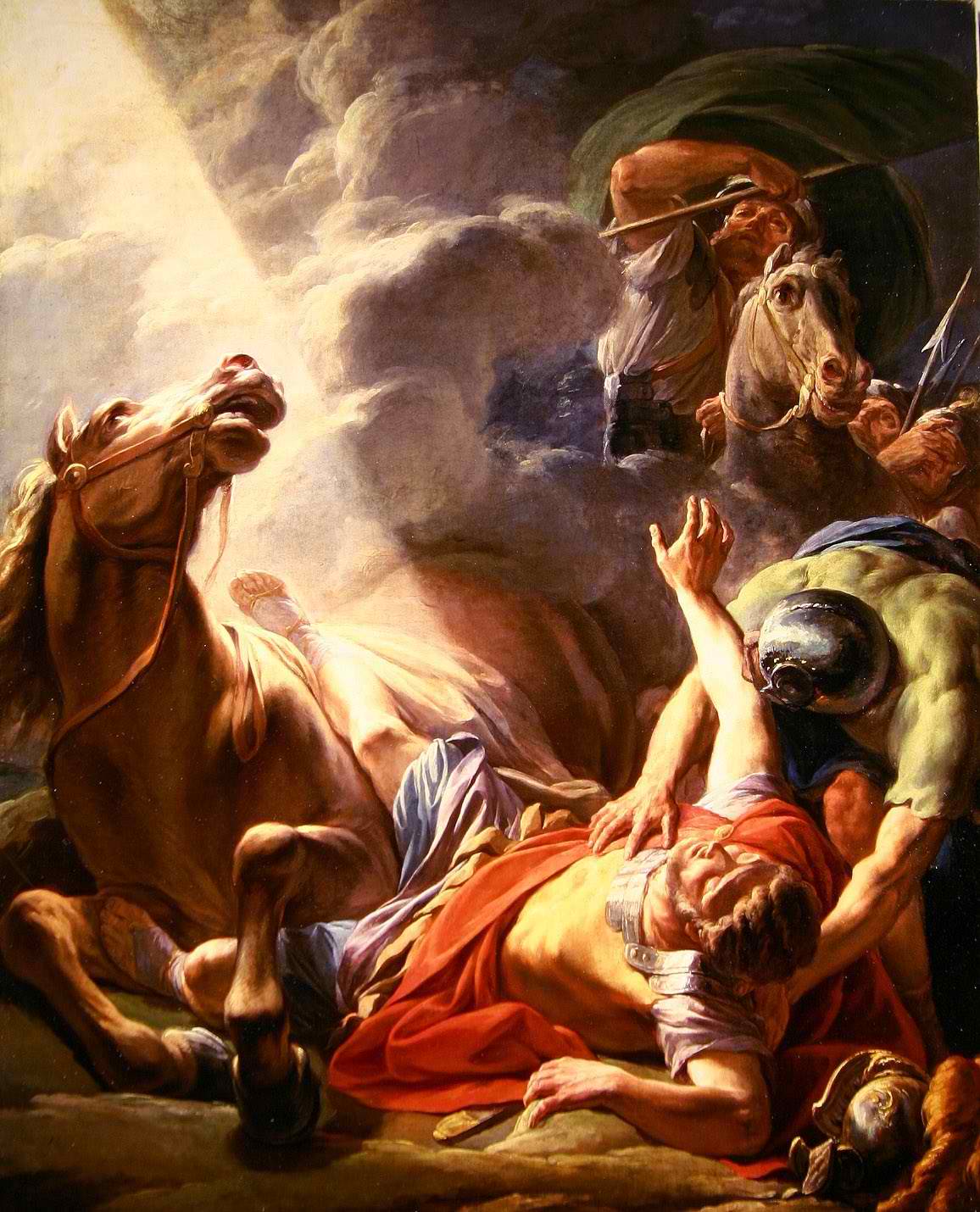 Frank Sinatra’s song, “I did it my way”, would have made a good epitaph on my early life. I was brought up in a Christian home, believed in God and we went to church on Sundays. I thought Jesus was a good man sent from God but Easter didn’t make sense. If only Jesus had not died, he could have done so much more good in the world. I had a Bible but it had small print and was written in old English so I rarely attempted to read it. When I left home and went to work in London for the Civil Service, I never got round to finding a church. I tried to live by the Ten Commandments and hoped that when I died, in the scales, my good would outweigh my bad. I remember praying on the way to work thanking God for the beauty of creation but he always seemed distant, like a sepia photo of my great-grandparent, we were related but I didn’t know them. Then I had the opportunity to go to University at Sussex. I met two people, Trent and Ed, who talked about Jesus as a personal friend. They explained that God loved me and created me to know and enjoy him for ever. They told me what I already know – that I fell short of God’s standards and although I may not be as bad as I could be, I could never be as good as I should be. My sin cut me off from God and because the wages of sin is death. The good news is that God sent his son, the Lord Jesus Christ, to die in our place, to forgive our sins and give us the gift of eternal life. They showed me that the Bible promised, if I trusted in Jesus as my Lord and Saviour I would experience God’s love and forgiveness.
The Australia Tour
The Historical Jesus: The Evidence from Scripture and Archaeology
 I was recently invited to give a series of lectures in a dozen or so universities across Iran and dialogued with Islamic scholars in Qom. The Q&A session after each presentation was a lively affair – longer in fact than my presentations. The most frequently asked question concerned the reliability of the Bible. What did I think about Dan Brown’s book, The Da Vinci Code? Apparently more than a billion people worldwide believe the views popularized in the Da Vinci Code.
They believe the message of the Bible has been corrupted and distorted, that Jesus is not the Son of God, but a prophet and that he did not die on the cross or rise from the dead.
They believe that in 325AD the Emperor Constantine commissioned the writing of the New Testament we now have which portrays Jesus as a divine figure. Dozens of other “gospels” were censored or destroyed. Constantine actually summoned the Council of Nicaea to end disunity caused by the Arian controversy. Arius taught that although Jesus was the Son of God, he was less than the Father. The Council was attended by around 300 bishops. The Arian Creed was soundly rejected. The Nicene Creed was accepted by 298 Bishops. 2 were against. (i.e., over 99% in favour). The Council of Nicaea recognized Jesus as “begotten not made, of the same substance (homousios) as the Father.”
In the Footsteps of Jesus and the Apostles

Introduction
Israel, Palestine, the Promised Land, the Holy Land, the very name we use says as much about us and our presuppositions and aspirations as about this inscrutable, hypnotic, exotic location. Historically the birthplace of the Judeo-Christian heritage, it is today claimed by two peoples, the Jews and Palestinians, its holy sites shared, at times uneasily, by three religions, Jewish, Christian and Moslem, often in close proximity as at the Temple Mount in Jerusalem or the tomb of Rachel in Bethlehem. Baraba Tuchman summarises some of the reasons why this place holds such fascination to so many,
More blood has been shed for Palestine than for any other spot on earth. To Protestant England it was not only, as Lord Curzon said, “the holiest space of ground on the face of the globe,” the land of the Scriptures, the land of the Crusades, the land “to which all our faces are turned when we are finally laid in our graves in the churchyard.” It was also the geographical junction between East and West, the bridge-head between three continents, the focal point in the strategy of empire…
Few countries attract so much media coverage, or arouse such intense religious feeling and political controversy. Yet it has been the same for countless generations. Why have people for millennia, longed to live here, or make a pilgrimage to this land? What is the fascination this land has over so many people around the world?
Renewing the Church of England
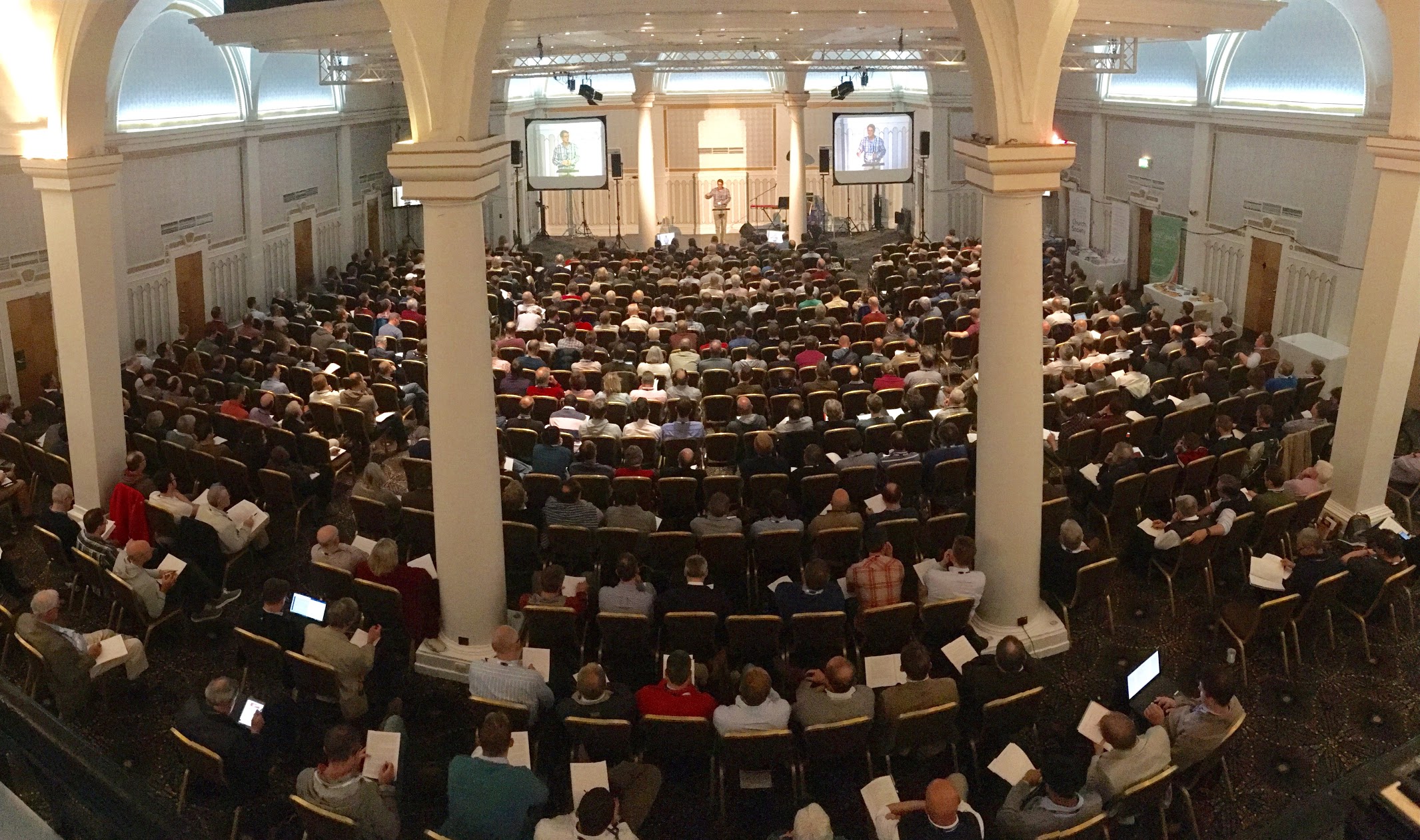
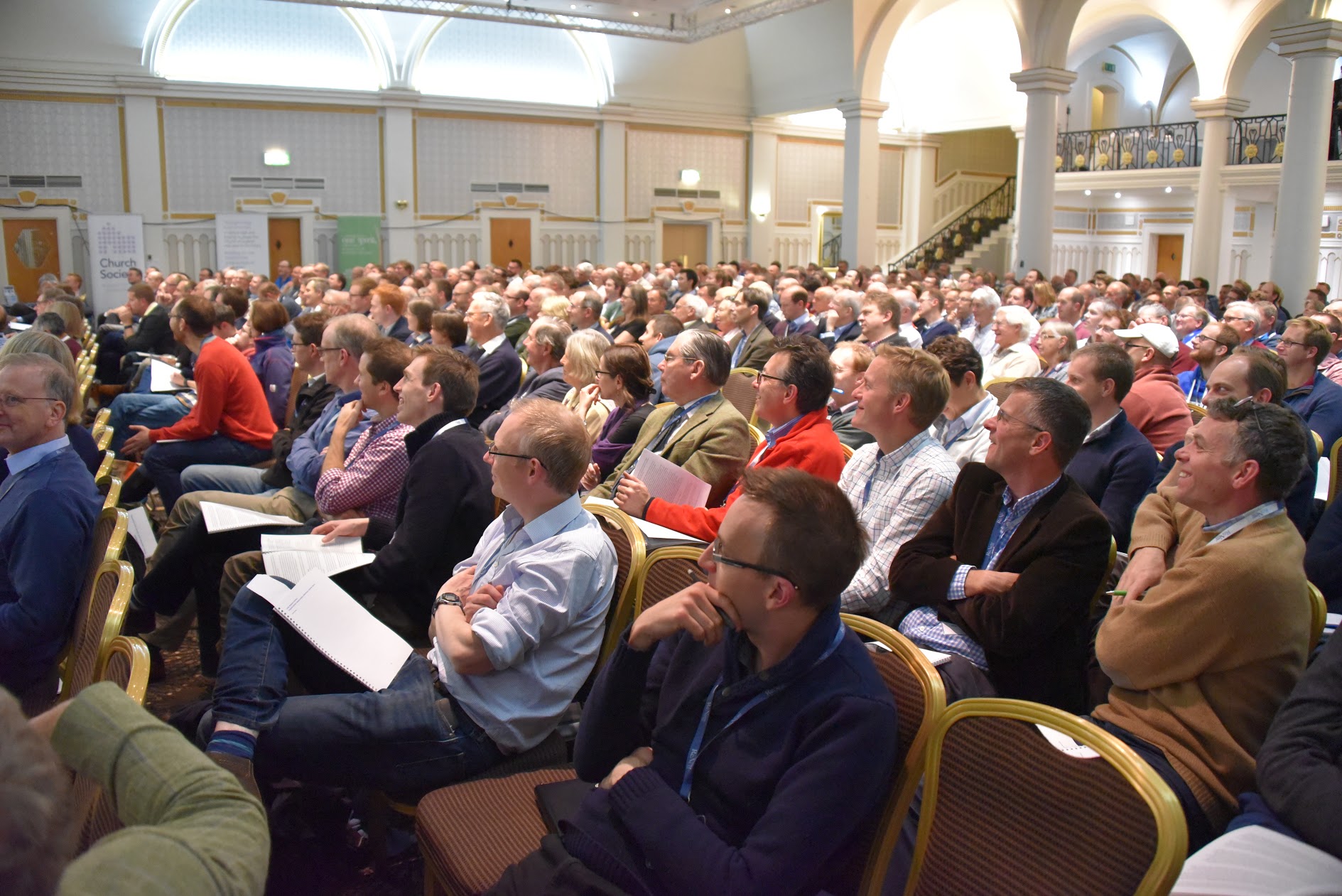 This year’s ReNew conference was organised by Anglican Mission in England, Church Society, and Reform and held in Leeds under the title Gospel Advance. The major theological theme of the conference explored the Atonement. Contributors included Christopher Ash, Sam Allberry, George Crowder, Matthew Mason, Vaughan Roberts, Rob Scott, Glen Scrivener, William Taylor, Rico Tice, Robin Weekes, and Paul Williams.
Chosen? Reading the Bible amid the Israeli-Palestinian Conflict by Walter Brueggemann: A Review
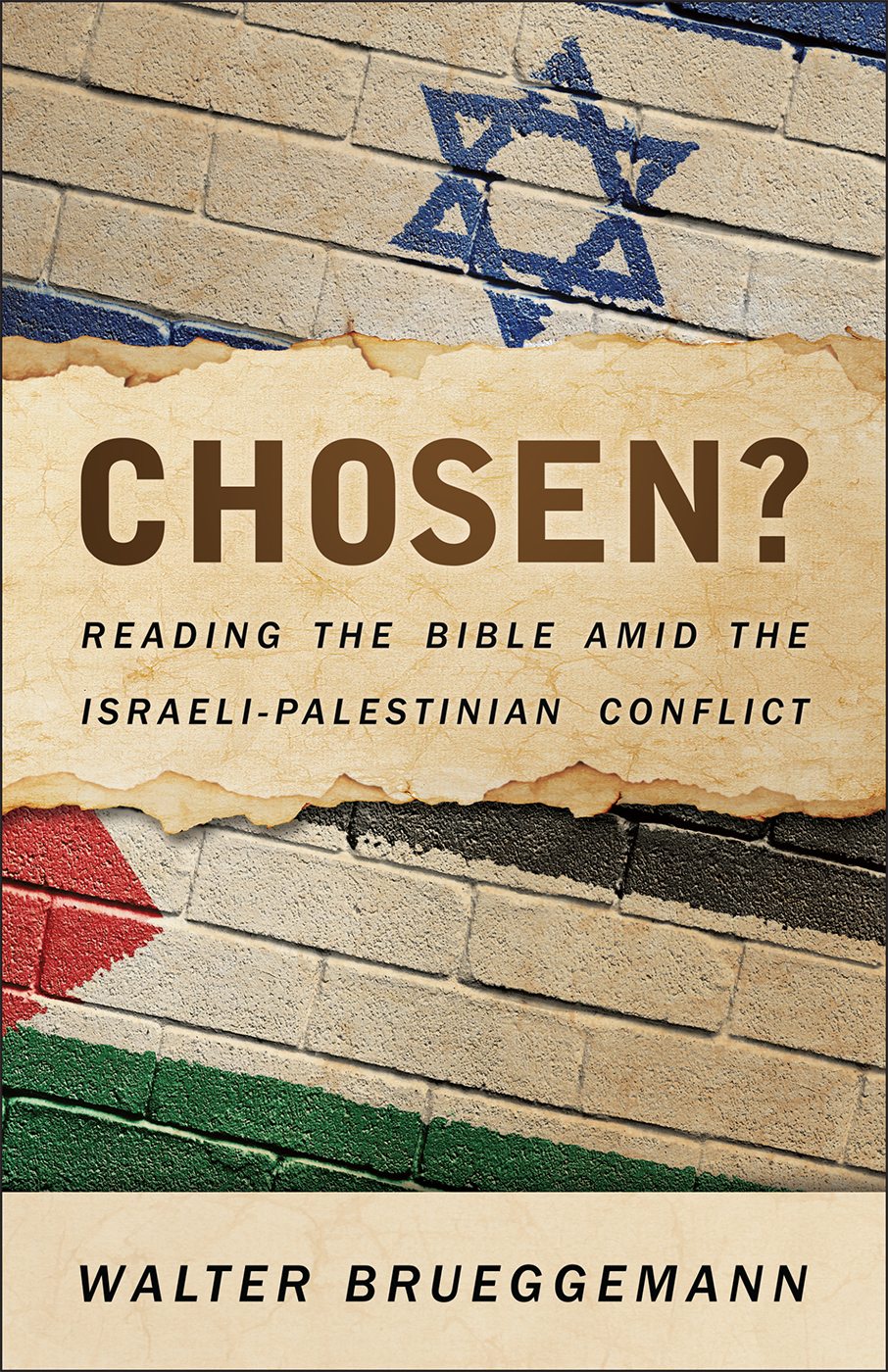 In his short but passionate little book, Chosen? Walter Brueggemann addresses some of the important questions regarding God’s purposes for Israel and the Church. For example, are contemporary Israeli citizens the descendants of the Israelites in the Bible whom God called chosen? Was the promise of land to Abraham permanent and irrevocable? What about others living in the promised land? Who are the Zionists, and what do they believe? The subtitle of the book tells us where he intends to look for answers, “Reading the Bible amid the Israeli-Palestinian Conflict.” His publisher, Westminster John Knox, promises,
“The reader will get answers to their key questions about how to understand God’s promises to the biblical people often called Israel and the conflict between Israel and Palestine today.”
Chosen? comprises 59 pages of scripture commentary in four short chapters, a Q&A with the author, a glossary and 20-page study guide to facilitate group discussion around each of the chapters. The four chapters are:
- Reading the Bible amid the Israeli-Palestinian Conflict
- God’s Chosen People, Claim and Problem
- Holy Land?
- Zionism and Israel
The book also contains very helpful guidelines for respectful dialogue first published by the Presbyterian General Assembly in 1992. Significantly, the title includes a question mark. I added a question mark to the titles of two of my own books: Christian Zionism: Roadmap to Armageddon? and Zion’s Christian Soldiers? The Bible, Israel and the Church.[i] Walter is recognising, as I did, that views differ on whether the Jews are God’s chosen people, even though, unlike me, he personally concludes that they are.
Are you desperate enough for Jesus?
When you find yourself in deep trouble, when the rubber has hit the fan, it really does not matter whose fault it was or what caused it. All you really want is someone to help, someone to understand, someone to get you out of trouble. You see dying people, broken people, hurt people, used and abused people, don’t need theological explanations, or self-help tutorials, they need practical help, not next month, not next week, but today, right now, this very minute.
In Matthew 15 we meet a mother. A desperate mother. A mother with a sick child. Imagine that you’ve carried this baby in your womb for nine long months. You’ve been through the excruciating pain of childbirth. You’ve nursed her, fed her, washed her, changed her. Watched her grow, take her first step, say her first word. You can still remember her first day of school. How pretty she looked in that dress. The first time you let her out of your sight. She’s your little girl. Your little girl. And this was her little girl. Maybe she had been sick before. A cold here. A headache there, maybe a bruise or bump from time to time. But nothing ever like this before. In the daytime she screams and shouts constantly. You can’t put clothes on her because she’ll tear them off. Her hair is no longer washed and tidy with sweet little pig-tails. Her hair is all pulled out at the roots and the remaining ones are left sticking up. Strange voices come out of her mouth. She can’t eat, can’t sleep, can’t play. But one thing is constant, those eyes. There’s a strange look in her eyes. Eyes that tell you that this is no ordinary sickness, no ordinary problem, no ordinary trouble. She is …. and you don’t want to even say the word… possessed.
Who do you say I am?
 On my first visit to Palestine, about 25 years ago, our tour guide was a Messianic Jew called Zvi. One day, someone in the group asked him a question about the Palestinians. He was prepared. He gave each of us a piece of paper with a quote by Golda Meir,
“It was not as if there was a Palestinian people in Palestine and we came and threw them out and took their country away from them. They did not exist.”
We didn’t ask any more questions until we got to Nazareth and met one of the local pastors. He gave us a short talk about why he was an Arab, a Palestinian, an Israeli and a Christian. I learnt that day that it was wiser and safer to let people self-identify and not presume to tell them who they are or are not.
Who am I? The world out there has plenty of ideas. Some would say I am who I was – the quest to trace our family tree, to know who are ancestors were can define us. My ancestors were here before yours were. Others insist I am what I achieve. What university did you go to? For others, I am what I drive. For some it is all about where I live. In a Settlement or an unregistered village? For some I am what I eat. For many I am what I do. For some I am who I love. For some I am what I know. For others I am who I know. For lots of people I am what I possess. But many people just don’t know. They are searching for meaning and purpose. They are trapped not knowing who they really are. Who am I? The Bible says, we will never know who we are until we decide who Jesus is. Because Jesus says, “I am who I follow”.