Category Archives: Anglicanism

Len Rogers on Vindication

Dear Stephen,

I await your vindication. You are a messenger just like Martin Luther King or Nelson Mandela. Unlike them you may find that in this life you will not be accepted except by a few but in years to come the world will realize you were a champion of justice and human rights. Do what is right in God’s eyes. May the Holy Spirit give you strength. Keep your roots and values in God’s word in a loving relationship with Jesus. You are always in my thoughts and prayers.

Your friend and brother in Christ,

Len Rodgers

Director Emeritus of Evangelicals for Middle East Understanding
Founder/President-Emeritus Venture International
Founder of World Vision Middle East

And a few other friends

Guildford Diocesan Synod Celebration with Bishop Christopher Hill

On Saturday, the Guildford Diocesan Synod said its “goodbyes” to Bishop Christopher Hill who is retiring in September. The photos were taken at a service following the Synod meeting and at a “hog roast” lunch hosted by Bishop Christopher for Synod members at Willow Grange afterwards.


The Venerable Julian Henderson, Archdeacon of Dorking has been appointed the new Bishop of Blackburn and will be moving in the Autumn.

More photos can be seen here

The Tongue and How to Control it


What are you doing Saturday night? Would you like to come to the cinema? How about a meal? Just you and me? When can I see you again? Yes I like you. I can’t stop thinking about you. You are very yummy. I’d like to get to know you better. I love you. I love you with all my heart. I’d like to spend my life with you. Will you marry me? I do….  That was careless. That was thoughtless. That was mean. That was hurtful. But you promised. You did what? The honeymoon is over. Don’t turn your back on me. Look at me when I am speaking to you. I give up. I’m not standing for that. How dare you. You are a…… Get out of my life. I never want to see you again. Good riddance and don’t come back. The power of speech. With the tongue, we can praise God, we can speak God’s Word and we can lead lost people to Jesus Christ. And in virtually the same breath we can tell a lie that ruins a reputation; with the slip of the tongue we can destroy a relationship; in a heated moment a single sentence can break someone’s heart. Once spoken, words cannot be deleted, they cannot be taken back, and sometimes never forgotten.

Continue reading

Bishop John Gladwin Refutes Allegations of anti-Semitism

I understand that the Board of Deputies has made a complaint against Stephen under the Measure suggesting that he is guilty of anti-Semitism.

Not only did I get to know Stephen very well when I was in Guildford but Lydia and I spent time with him on a pilgrimage to the Holy Land during those years. At no time have I ever heard him engage in anti-Semitic language or opinions.  Our pilgrimage included meeting and encouraging a number of Jewish Israeli citizens working hard for peace across the divide with the Palestinian people.

Stephen has devoted a great deal of his intellectual and theological gifts to resisting every endeavour to provide a religious and specifically Biblical justification for Zionism.  Holding such a view is not and should not be treated as anti-Semitic.  His target includes those Christians who believe the Bible supports the Zionist vision.  Stephen has sought to de-construct any religious/theological wall preventing us facing the difficult questions of justice for Palestinian people in the Holy Land.  This important, if controversial work,  has the support of some key Jewish thinkers and activists.

These strongly held views have not prevented Stephen from a clear commitment to the peace and well-being of all the people in the Holy Land and of all whatever their ethnic and political identity.

He may be a controversial figure but he is a courageous and godly man.

+ John Gladwin

Retired Bishop of Guildford


Antisemitic? We don’t think so

Tanas Alqassis, Chairman, Arab Vision International
Revd Andrew Ashdown, Enham Team Rector and Trustee of Embrace the Middle East
Right Revd Riah Abo El Assal, 13th Anglican Bishop of Jerusalem
Fr Robert Assaly, Priest in the Anglican Diocese of Ottawa
Dr Bishara Awad, Founder and President Emeritus, Bethlehem Bible College
Dr Mark Braverman,
Author of the Fatal Embrace
Canon Dr Mike Butterworth, former Academic Registrar, Oak Hill College
David Carter
, Director, Middle East Evangelical Concern
Anne Clayton, Coordinator, Friends of Sabeel UK
Rabbi Professor Dan Cohn-Sherbok, Professor Emeritus of Judaism, University of Wales
Michael Connarty MP, Council of Europe Parliamentary Assembly
Jeremy Corbyn MP, Islington North
Katherine Cunningham, Moderator, IPMN, Presbyterian Church USA
Dr Martin Davie, Theological Advisor to the House of Bishops
Professor Philip Davies, Department of Biblical Studies, University of Sheffield
Professor Scott Elias, Royal Holloway, University of London
Adam Estle, Executive Director of Evangelicals for Middle East Understanding
Right Revd John Gladwin, former Bishop of Guildford and Chairman of Citizens Advice
Anthony Gratrex, member of Christ Church, Virginia Water
Tony Greenstein, Founding Member, Palestine Solidarity Campaign
Professor Mary Grey, Emeritus Professor of Theology, University of Wales
Dr Jeff Halper, Co-founder of the Israeli Committee Against House Demolitions
Hank Hanegraaff, President, Christian Research Institute
Revd Phil Hill, Nazareth Evangelical Theological Seminary
Canon Garth Hewitt, Founder, Amos Trust
Lawrence Jones, former member of Christ Church, Virginia Water
Dr Ghada Karmi, Fellow of the Institute of Arab and Islamic Studies, Exeter University
Manfred W. Kohl, Ambassador, Overseas Council
Dr Attorney Jonathan Kuttab, Chairman of the Board, Bethlehem Bible College
Venerable Michael Lawson, Chairman, Church of England Evangelical Council
Anne Martin, member of Christ Church, Virginia Water
Jeremy Moodey, Chief Executive, Embrace the Middle East
Craig Murray, former British Ambassador to Uzbekistan
Diana Neslen, Ex-officio, Jews for Justice for Palestinians
Professor Ilan Pappe, Director, European Centre for Palestine Studies, Exeter University
Revd Chris Rose, Director of the Amos Trust
Canon John Salter, Vice Chair, Garden Tomb Association
Revd Jack Sara, President, Bethlehem Bible College
Rabbi Dr Stanley Howard Schwartz, Hospice Chaplain and retired Army Chaplain
David Toorawa, Chair, Friends of Sabeel UK
Revd Dr Donald Wagner, National Director, Friends of Sabeel North America
Revd John Woodger, Retired vicar, St Mary’s Watford

News Sources:

Church Times: Conciliators to work on complaint
Church Times: Vicar is not Anti-Semitic
Church Times: Rabbi Clears Vicar of Anti-Semitism
Church of England Newspaper: Sizer complaint
Jewish Chronicle: Bishop: anti-Zionist vicar ‘no antisemite’
Jewish Chronicle: Sizer: I am ready to meet the Board of Deputies any time
Jews for Justice for Palestinians Digging for dirt: the campaign against Stephen Sizer
Phil Groom (member of CCJ): Jeremiah’s Underpants
Phil Groom (member of CCJ): Dr Sizer is cleared
Craig Murray: Defend Stephen Sizer


Commendations

“He has recently explained, however, that he ‘categorically reject[s] any position that threatens the territorial integrity of Israel as a sovereign nation…. Stephen Sizer’s work has the merit of clearly setting out the issues that divide the two sides, and furthermore doing so without the rancour or sheer nastiness of tone typical of the polemics in the conflict.” (p.571). Anthony Julius, Chairman of the London Consortium and a Visiting Professor at Birbeck College, University of London. His book Trials of the Diaspora, is a magisterial 800 page examination of the history of Anti-Semitism in England.

“I am glad to commend Stephen Sizer’s ground-breaking critique of Christian Zionism. His comprehensive overview of its roots, its theological basis and its political consequences is very timely. I myself believe that Zionism, both political and Christian, is incompatible with biblical faith. Stephen’s book has helped to reinforce this conviction.” Revd John Stott, Rector Emeritus, All Soul’s, Langham Place, London, the principal framer of the Lausanne Covenant (1974) and founder of the Langham Partnership International. 
 
“This is a very fine and important book.  All Christians who believe that Jesus favoured peacemakers, should read it and realise what terrible harm is being done in the name of Christianity.  And all who are concerned about the Israeli/Palestinian conflict should read it to understand how Christian Zionism disables the US as fair minded mediator.  European foreign policy thinkers should read it,because this distortion of US political space, puts a greater responsibility on European governments to stand up for justice and international law” Clare Short, former British Secretary of State for International Development

More than sixty bishops, clergy, politicians and academics have endorsed my books Christian Zionism and Zion’s Christian Soldiers

Church of Scotland Censors ‘Inheritance of Abraham’ Report

In May, the Church of Scotland published a major report on Israel-Palestine entitled the Inheritance of Abraham. Under pressure from the Zionist Lobby, however, the report was swiftly removed from their website and a revision promised.

Read the original report here and the heavily redacted revision here with changes highlighted.

A ‘before and after’ comparison is both illuminating and depressing. It shows that what was promised would be a minor rewrite of the introduction, to provide “context”, actually became a major rewrite of the whole document.

It appears the Church of Scotland has censored itself and limited its own theological discussion under intense pressure from the Israeli ambassador, the Board of Deputies of British Jews, the Scottish Council of Jewish Communities and the Council of Christians and Jews.

In particular:

  • The section dealing with the writing of Mark Braverman has been heavily edited so as to remove his most penetrating comments on the Holocaust and Jewish ‘specialness’.
  • A reference to Jerusalem as ‘the most contentious religious and political issue’ has been deleted.
  • The quote from Ben Gurion (‘The Bible is our mandate’) has been removed.
  • All references to the book of Joshua in relation to the occupation of the land have been removed.
  • The reference to “the violence used to deprive some 750,000 Palestinian people from their homes” has been toned down.
  • References to the State of Israel have been amended so as to dilute criticism of the state and to remove any suggestion that it is ‘an ethnic democracy’.
  • The reference to Luke 4:25-30 (Jesus’ rejection by the Jews in Nazareth) has been deleted, along with the sentence ‘Jesus offered a radical critique of Jewish specialness and exclusivism, but the people of Nazareth were not ready for it’.
  • The reference to Paul’s writings about the Jews in Romans 11 has been deleted, along with the sentence ‘No part of the New Testament gives any support to a political state of Israel beyond that to any other state. All are challenged to the same requirements for justice and the protection of human rights for all their inhabitants’.

The only part where the revised report has been strengthened is the very final sentence, where the Church of Scotland says it should urge the UK government to “remove existing illegal settlements” in addition to stopping further settlement expansion.

In no sense did the original report disenfranchise anyone from legitimate rights to citizenship in Israel and Palestine, merely the claim made by some Zionists that the Bible mandates an exclusive right to the land for the Jewish people alone.

On the contrary the Hebrew Scriptures repeatedly insist that the land belongs to God and that residence was always conditional. For example, God said to his people, “‘The land must not be sold permanently, because the land is mine and you reside in my land as foreigners and strangers.” (Leviticus 25:23).

The following notes are a summary of chapter 4 of my book Zion’s Christian Soldiers.

They amplify and explain the significance and purpose of the Promised Land,  its geographical boundaries, the conditions for residency, the nature of the Kingdom and concept of land in the New Testament.

Read more here or you can download a copy as a PDF. The Promised Land from the Nile to the Euphrates.

A summary of the book as a whole is also available entitled Seven Biblical Answers to Popular Zionist Assumptions.

Marc Ellis has written a useful commentary on the Church of Scotland report Exile and the prophetic: the Church of Scotland weighs in

“Woe to you who add house to house and join field to field till no space is left and you live alone in the land. The Lord Almighty has declared in my hearing: “Surely the great houses will become desolate.” (Isaiah 5:8-9)

The losers? Genuine interfaith dialogue between Jews, Christians and Muslims, willing to engage honestly with our sacred texts, openly share our theological convictions and aspirations for a just and lasting peace in Israel-Palestine based on justice, mercy and reconciliation.

The indigenous Church in Palestine are learning to our shame that they cannot rely on the wider church to advocate for them or speak biblically and theologically on their behalf.

Watch this space for the Kairos UK Report due in August. No doubt its authors will come under the same pressure.

See also:

BBC News: Church of Scotland revises controversial Israel report
Christian Today: Church of Scotland releases revised report on Israel
Christian Today: Church clarifies its position on Israel
Church of Scotland: The Inheritance of Abraham? A report on the ‘promised land’

Over 1000 Clergy and Laity Co-Sign Letter to Archbishop of Canterbury in Support of EAPPI

9th April 2013

Dear Archbishop Justin,

We write as representatives of organisations and as individuals who are deeply involved in the search for peace with justice in the Holy Land to express our deep concern over the remarks that have been attributed to you in a recent interview with the newspaper “Jewish News”. Amongst the aspects of the interview with which we were most saddened were that you regretted not voting against the General Synod decision to support EAPPI.

As you know, the main criticism that was levelled against EAPPI before the vote was, in the words of one of their more strident opponents, that it created “a cohort of very partisan but very motivated anti-Israel advocates who have almost no grasp of the suffering of normal Israelis”.

However, EAPPI seeks a just solution to the problems in the Holy Land that will benefit both Palestinians and Israelis. It operates in terms of what it calls “principled impartiality” with its Code of Conduct stating: “We do not take sides in this conflict and we do not discriminate against anyone but we are not neutral in terms of principles of human rights and international humanitarian law. We stand faithfully with the poor, the oppressed and the marginalized. We want to serve all parties in this conflict in a fair and unbiased manner in word and action.”

In our experience, all Ecumenical Accompaniers are scrupulous in their determination to be fair to all sides in their work, as befits both the programme and the senior positions they often hold as Church leaders, in the legal profession, as teachers and many other areas.

Its participants are given a full briefing on a wide variety of Israeli perspectives including taking an extended tour of the Holocaust Museum and travel to Sderot to meet Israeli people affected by rockets fired from Gaza. Their discussions with Israelis also include briefings from those who work with Palestinians most directly – some of whom wrote most powerfully in support of EAPPI when it came under its most sustained attack.

One of these was Professor Jeff Halper, who wrote as an Israeli Jew and as one of the founders of EAPPI in Geneva to remind us of the particular challenges that EAPPI addresses in the Palestinian West Bank. He says that many of these have no parallel for Israelis, “where children hardly need to be escorted to school and where children of settlers are escorted by the Israeli army, and Palestinian children walking miles through the hills of Hebron to school and being regularly attacked by thugs from the settlements armed with baseball bats and guns. Anyone who tries to equate the “sides” ignores the immense power differential created, among other things, by the Israeli Occupation. (Last time I looked, the Palestinians were not occupying Tel Aviv or demolishing Israeli homes.)” He went on to say that “as the head of an Israeli peace and human rights organization that tries to stop Israel’s wanton demolition of Palestinian homes (27,000 so far since 1967, almost none for “security” reasons), I call on the Synod to give the EAPPI all the support it can.”

It need hardly be added that some of the organisations who have attacked EAPPI most vociferously have seldom been noted for their own impartiality in the Middle East conflict, promoting as they do their “Speak out for Israel” campaign.

Many of us are frequent visitors to the Holy Land and are passionate in our belief that peace with justice will only come when all communities have their need for security, equality and dignity addressed. But this will not come whilst discriminatory laws, home demolitions, planning restrictions, checkpoint and movement restrictions and enforced family separations persist. Indeed, we agree with the former Speaker of the Knesset Avraham Burg that the constant building of illegal settlements on Palestinian land, not only prevents the emergence of a viable Palestine but jeopardises the future of the state of Israel.

We welcome the news that you are to visit the Holy Land in June. In hoping that you get the opportunity for a comprehensive view of the conflict, we encourage you to visit Israelis from all sides of the spectrum of opinion, including those who are risking so much in the campaign to end the occupation. We also encourage you to visit Palestinians who are suffering behind the walls, including the Christian community in Bethlehem, the people of the Jordan Valley, those living in refugee camps such as Aida and Balata as well as the people of Gaza who are so often marginalised and forgotten. We also encourage you to visit with international lawyers, who can provide vital background on the legal obligations, such as in the 4th Geneva Convention, that a situation of Occupation imposes.

Please support those who are advocating for peace with justice, please support those who are risking their reputations and even their lives to oppose military domination of one by another and please speak out for those who oppose oppression. Above all, we ask you to hear the 2009 Kairos call of the Palestinian Christians, who ask “are you able to help us get our freedom back, for this is the only way you can help the two peoples attain justice, peace, security and love?”

This comes with our prayers, support and good wishes for your important ministry.

Yours sincerely,

Laura Abraham, Founder of the Peace Cycle
Issam Aburaya
Suzy Andrews
Revd John Angle
Revd Alan Ashton
Right Revd Riah Abu El Assal, retired Episcopal Bishop of Jerusalem
Revd Andrew Ashdown, Enham Team Rector
Fr Robert Assaly, Chair Canadian Friends of Sabeel
Revd Warren Bardsley, Methodist minister and former Ecumenical Accompanier
Leonard Beighton
Leila Bentley
Karen Chalk, former Ecumenical Accompanier and Administrator of ICAHD UK.
Revd Colin Chapman
Anne Clayton, Friends of Sabeel UK
Diane Conti
Janet Davies
Joy Davies
Rebecca Dawson
Verity Elson, St Andrew’s Church Cobham
Adam Estle, Executive Director, Evangelicals for Middle East Understanding
Noushin Framke, Israel/Palestine Mission Network of the Presbyterian Church
Angus Geddes, member of Havant URC
Sharen Green
Professor Mary Grey, Emeritus Professor of Theology, University of Wales
Norma Hashim
Kamel Hawwash
Revd Dr Fiona Haworth, Chaplain, University of Worcester
Revd Canon Garth Hewitt, Honorary Canon of St George’s Cathedral Jerusalem
Donna Hicks, Convener, Episcopal Peace Fellowship’s Palestine Israel Network
Revd Wendy Hough
Carol Hylkema, IPMN
Israel/Palestine Mission Network of the Presbyterian Church (USA)
Barbara Ivy
Lucy Janigian
Revd Stuart Jennings, Methodist Minister and University Chaplain
Darlene Jones-Owens, Christians United for Peace
Keith Killough
Salaam Khoury
Stevie Krayer, signing as a concerned Jew
Revd Emma Langley, Priest in Charge of St Alban’s Church, Bristol.
Dibartolo Laurie
Dr Stephen Leah, Member of the Methodist Conference
Cilla Lynch
A.J. McDonald Jr. Christians United for Peace
Joy McKenzie
Audrey McKenzie
Elizabeth M. Molchany, USA, Attorney-at-law
Mary Morris, USA, former Ecumenical Accompanier
Jon Neall, former Ecumenical Accompanier
Michael Newbold
Revd Steve Openshaw, Ramsbottom and Edenfield Team Ministry
Revd Tom Patton, Methodist Minister and former Ecumenical Accompanier
Miranda Pinch, former Ecumenical Accompanier
Penny Potter
Dee Poujade, Ecumenical Accompanier
Ronan Quinn, Armagh, former Ecumenical Accompanier
Alexandra Pupo Quintino
Linda Ramsden, Director of ICAHD UK
Christine Robson
Len Rogers, Former Executive Director, Evangelicals for Middle East Understanding
Revd Chris Rose
Revd Dr Stephen Sizer, Vicar of Virginia Water
Revd Alison Shaw, Vicar St Boniface, St Budeaux, Plymouth, Sabeel Peninsula
Philip & Denise Small
Andrew Smith
Colin South, Chair of Living Stones
Jake Terpstra
David Toorawa
Maggie Vicuna
Michaela Whitton, peace activist
Revd David Willis
Revd Simon Winn
Revd Anna Wright, Blyth Valley Team Ministry, Wenhaston

If you wish to add your signature to this letter please do so here

For more information on EAPPI

For Sale: Charles Simeon’s Horae Homileticae

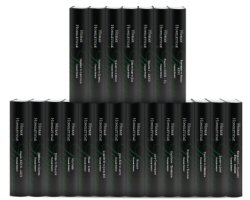
I am selling a rare and unique set of Charles Simeon’s classic commentary, Horae Homileticae. These 21 volumes, featuring Simeon’s collected sermons, represent the fruit of his fifty-four years of preaching. Published originally in 1832 for the benefit of younger pastors seeking practical improvement at the task of sermon creation, Horae Homileticae reflects the rich source of Biblical understanding of its author, a towering figure in the history of evangelical theology.

My set is unique because the volumes date from 1832 and have been lovingly and professionally rebound in chocolate brown cloth with gold lettering. The set cost over £300 and rebinding cost more than £400. You can own this unique set for just £395. Also included free is a copy of the Memoirs of the Life of the Rev Charles Simeon by Rev William Carus dated 1847 in the same rebound format.

These expository outlines (or “skeletons”) are not a verse-by-verse explanation of the English Bible. Rather, they are a chapter-by-chapter study with explanations of the most important and instructive verses in each chapter. Simeon’s aim with this commentary is “Instruction relative to the Composition of Sermons.” To this end, his exposition of the Scriptures is designed to maintain a focus on the more general aspects of a passage over and above possible treatments of particulars. His test for a sermon, as he teaches in Horae Homileticae, is threefold: does it humble the sinner, exalt the Saviour and promote holiness?

Opposing all human systems of divinity, Simeon’s commentary is also marked by an avoidance of any possible systemization of God’s Word and entanglement with theological controversies. A self-described “moderate Calvinist” or, more plainly, a “Biblical Christian,” Simeon believed that the Bible should speak for itself. “Be Bible Christians, not systems Christians” was his maxim; “My endeavor is to bring out of Scripture what is there, and not to thrust in what I think might be there. I have a great jealousy on this head; never to speak more or less than I believe to be the mind of the Spirit in the passage I am expounding.” With Horae Homileticae this conviction is soundly applied.

[Horae Homileticae] is the best place to go for researching Simeon’s theology. You can find his views on almost every key text in the Bible. . . . What Simeon experienced in the word was remarkable. It is so utterly different from the counsel that we receive today that it is worth looking at carefully.—John Piper

One can easily find suggestive and practical helps in the preparation of sermons, devotional talks, young people’s messages, prayer meeting talks, Sunday School lessons and personal Bible study. The study of these outlines will contribute greatly to expository preaching. —B. B. Siegel, Bibliotheca Sacra

If Wilberforce is the most famous evangelical layman in the Church of England, then Simeon is the most famous evangelical clergyman.—Who’s Who in Christian History

[The volumes of Horae Homileticae] have been called ‘a valley of dry bones’: be a prophet and they will live.—Charles Spurgeon

More about Charles Simeon

Sample a digital volume here