Author Archives: Stephen Sizer

Christ at the Checkpoint 2012: Seven Affirmations

Affirmation #1: Israelis and Palestinians
We affirm that all people are created in the image of God. In turn we are called to honor the dignity of every human being and to respect their inalienable rights. We affirm that Jews and Palestinians are loved by God and capable of living together within peace, justice and security. This is God’s view toward all of humanity, residing in any political boundary and manifested through the mission of Jesus in bringing to everyone, “life to the full” (John 10:10).

Affirmation #2: Theology and Land

The New Testament clearly teaches that God continues to invite Jews and Arabs into His kingdom and in no way is finished with any people group. Further, Scripture speaks of Jesus as its ultimate fulfillment. For example, the need for animal sacrifices, Levitical priesthood, and expectation of a rebuilt Temple, find their ultimate fulfillment and completion in Jesus Christ.

Affirmation #3: The Palestinian-Israeli conflict 

As followers of Jesus Christ we regret more than 60 years of conflict. We look forward to the time when the conflict will end and both peoples will enjoy genuine reconciliation. We commit ourselves to be peacemakers and to this ministry of reconciliation. As such we stand resolutely against all forms of violence and racism, regardless of the perpetrators.

Affirmation #4: The Second Coming of Christ 
There are several views which Christ followers hold to explain the future. Rather than focus on the signs of the return of Christ, our reading of the New Testament indicates that our primary mandate is to proclaim the “Good News” to the entire world.  

Affirmation #5: Zionism  
Modern Zionism is a political movement created to meet the aspirations of Jews around the world who longed for a homeland. It has become ethnocentric, privileging one people at the expense of others. Christianity calls believers in Jesus to focus on building God’s kingdom on earth.

Affirmation #6: Messianic Jews 
Messianic Jews are the brothers and sisters of all who follow Jesus or Yeshua. We are one family bound together in a fellowship of love. Although diversity in political opinions as well as theological emphasis inevitably exist, we refuse to allow these views to hinder our fellowship in Jesus.

Affirmation #7: Palestinian and Israeli Authority

The Bible teaches us to pray for all in political authority. We are called to obey them, whether they are Israeli or Palestinian, as an expression of our faith in God’s sovereign rule. We are also called to be a prophetic voice, challenging injustice creatively and non-violently.

We trust these seven affirmations help clarify the views of the conference organizers and will encourage you to participate in the Christ at the Checkpoint conference 2012.

It all goes back in the box

With many retailers keen to shift unsold Christmas stock by extending the sales in order to make room for their Spring collections, its tempting to think “If I just buy this one more outfit, I’ll be satisfied.” We rationalise ‘need’ because it’s a bargain or because buying something new makes us feel better. We are mesmerised and seduced by beautiful people who appear in adverts to tell us we can be successful, happy and fulfilled and will look just like them if we buy their product. Using everything from greed, lust or humour their message is “Use me, buy me, wear me, drink me, drive me, own me, put me in your hair… and you can be just like me.” And sadly we often allow ourselves to believe them.

James Dobson describes how he learnt this lesson.  “I learned how to play Monopoly from my grandmother. She was a wonderful person. She raised six children. She was a widow by the time that I knew her. But she was the most ruthless Monopoly player I have ever known in my life. She understood that the name of the game was to acquire. When she played and I got my initial money from the bank, I would just try to hold onto it, because I didn’t want to lose any of it. She spent everything, bought stuff she landed on as soon as she could, and she’d mortgage it to buy more stuff. And of course, the way the game goes, eventually she would accumulate everything. She would be the master of the board. She understood that money was how you keep score in the game, possessions are a matter of survival. And she beat me every time. And at the end of the game she would look at me and she’d say, “One day you’ll learn how to play the game.” She was kind of cocky, my grandmother.

When I was about ten, I played every day through the Summer holidays with a friend. It dawned on me the only way to win was total commitment to acquisition. That summer I learned how to play the game. And by the time autumn rolled around, I was more ruthless than even my grandmother. I went to play her, and I was willing to do anything to win. I was willing to bend the rules. I played with sweaty palms. Slowly, cunningly I exposed the soft underbelly of my grandmother’s weakness. Relentlessly, inexorably, I drove her off the board.

The game does strange things to you. I can still remember the day like yesterday. I looked at my grandmother. This is the person who taught me how to play.  She was an old woman by now. She was a widow.  She had raised my mother. She loved me. And I took everything she had. I destroyed her financially and psychologically. I watched her give her last dollar and quit in utter defeat. This was the greatest moment of my life.

And then she had one more lesson to teach me, my grandmother. Then she said to me, “Now it all goes back in the box.” It all goes back in the box.  All of the houses and hotels, Mayfair and Park Lane, all of those railway stations and utilities, all of that wonderful money. It all goes back in the box,” she said. But I didn’t want it all to go back in the box. I wanted to leave the board out permanently — bronze it maybe, as a memorial to what I had achieved. See, when she said, “It all goes back in the box,” it was kind of a way of saying to me, “None of it’s really yours. It doesn’t belong to you. You don’t own any of it. You just used it for a little while. And now it all goes back in the box.  And next time it’ll all go to somebody else. That’s the way the game works. So when you play the game, don’t forget this one lesson. When the game comes to an end and the game always comes to an end, the stuff all goes back in the box.”

There is a simple, two-word question we tend not to ask ourselves. “Then what?” When I’ve reached the top, then what? When I have it all, then what? When I finally have enough, when I am financially secure, when I’ve got the sought after promotion, made the ultimate purchase, got the ideal home, assured financial security, and climbed the ladder of success to the highest rung, and then the thrill wears off–and it will wear off—sooner or later you’re faced with the nagging question, “Then what?”

It was to answer that question and provide the antidote to our condition that Jesus promised,

“Do not store up for yourselves treasures on earth, where moths and vermin destroy, and where thieves break in and steal. But store up for yourselves treasures in heaven, where moths and vermin do not destroy, and where thieves do not break in and steal. For where your treasure is, there your heart will be also… “Therefore I tell you, do not worry about your life, what you will eat or drink; or about your body, what you will wear. Is not life more than food, and the body more than clothes?  Look at the birds of the air; they do not sow or reap or store away in barns, and yet your heavenly Father feeds them. Are you not much more valuable than they?” (Matthew 6:19-26).

To find out more about how you can experience the fulfilment Jesus promises, we invite you to come to our Christianity Explored taster evening Thursday 9th February at 7:30pm – light supper included. Christianity Explored is a 7 week course designed to introduce you and your friends to Jesus Christ and how through him we can know God personally.

May the Lord bless you and those you love.

With grateful thanks to John Ortberg and James Dobson for the inspiration behind this article for Connection magazine.

Christ Church Virginia Water is Growing

Encouragingly, during 2011, 30 more people attended Christ Church each week on average than in 2010. On Sunday mornings, the increase in attendance was higher, with 38 more people attending each week than in the previous year.
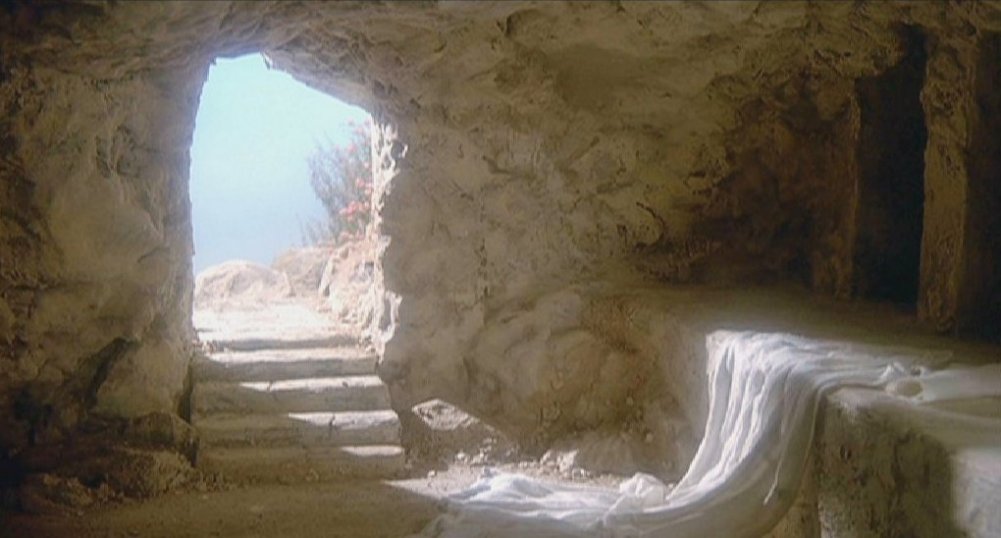
During 2011 a total of 405 people attended Christ Church each Sunday, while more than 700 people visited the church website each week. In 2011 we were blessed with the second highest Sunday attendance figures ever, praise God. Visit the church website and find out why.

“They devoted themselves to the apostles’ teaching and to fellowship, to the breaking of bread and to prayer.  Everyone was filled with awe at the many wonders and signs performed by the apostles. All the believers were together and had everything in common. They sold property and possessions to give to anyone who had need. Every day they continued to meet together in the temple courts. They broke bread in their homes and ate together with glad and sincere hearts, praising God and enjoying the favour of all the people. And the Lord added to their number daily those who were being saved.” (Acts 2:42-47)

Arthur Christmas Meets Jesus

Arthur Christmas Meets Jesus from Stephen Sizer on Vimeo.

They say there are four phases in life. In the first phase you believe in Father Christmas. In the second phase you don’t believe in Father Christmas. In the third phase you are Father Christmas. In the final phase you just look like Father Christmas. The blockbuster film in the cinema’s this week, from the makers of Wallace and Gromit, is aptly titled “Arthur Christmas”. It includes a grandfather, father and two sons, who embody at least three of these phases in life. The film at last reveals the incredible, never-before seen answer to every child’s question: ‘How does Santa deliver all those presents in one night?’

But after 70 annual deliveries, Father Christmas, whose real name is Malcolm, is nearly ready to hand over the red cloak to his oldest son and heir, Steve. Malcolm is now merely the figurehead of what has become an ultra-high-tech global package-delivering corporation hidden beneath the North Pole.  Steve seeks the glory of the position of Santa Claus, not the joy of bringing happiness to children around the world. He runs Santa’s headquarters like a military command centre, with thousands of commando elves at his disposal, and a goatee cut in the shape of a Christmas tree. Continue reading

To Us a Child is Born (Isaiah 9:1-7)

If you were the Father Christmas and you happened to visit a few hundred thousand churches today on a pre-Christmas dry run, I suspect you would find a common theme running through many sermons preached this morning. The question is – how to achieve it? Reading the news this week it struck me that the assumption often made is that regime change will lead to peace and prosperity.  The Arab Spring blossoming across much of the Middle East brings the hope of freedom, peace and prosperity through regime change.   And this desire is not limited to countries with despotic rulers. Another eight countries wish to join the European Community in the belief that a regime change from Communism to Capitalism will bring peace and prosperity. But will it? It may bring EC subsidies but, as we have seen this week, it will also bring more centralised financial regulation. But before we think the problem is only in Europe or the Middle East, let’s remember how badly we sometimes long for regime change here in Britain.  Whether from one political party to another, or one leader to another, we are sold the idea that regime change in Parliament will bring lasting peace and prosperity, at least during the election campaigns every four years. And it is not only limited to the political realm. In the City, whenever there is a loss of confidence on the stock market or share dividends, Boardroom changes are inevitable.

The world of sport is the same. A seat in the chairman’s box or the coach’s bench is closely linked to goals, attendances and league performance. I could also mention the Church of England but let’s not get too personal. The desire for regime change affects us at every level of life. The mistake, however, is to imagine that if only we can solve the crisis in Afghanistan,  in Europe, at No 10, in the City, or even in Canterbury, we could then enjoy a peaceful Christmas this year.  The reason we can’t is because the desire for regime change goes much deeper. I suspect many of us have wondered whether regime change closer to home would bring us peace and happiness.  Think about your neighbours, your relatives, your spouse, parents or children. Ever been tempted to think that regime change would solve your problems? It won’t, because the problem doesn’t lie out there, but lies in here. The heart of the human problem is the problem of the human heart. And nothing we do to change our circumstances, economics, marital status or social life will bring the peace we so badly need. Continue reading

Christianity Explored: What must I do to inherit eternal life?

A famous professor of surgery died and went to heaven. At the entrance he was asked by the gatekeeper: ‘Have you ever committed a sin you truly regret?’ ‘Yes,’ the professor answered. ‘When I was a young intern at the Hospital of Saint Lucas, we played soccer against another hospital team, and I scored a goal. I was actually off-side but the referee did not see it. The goal won us the match. I regret cheating now.’ ‘Well,’ said the gatekeeper. ‘That is a very minor sin. You may enter.’ ‘Thank you very much, Saint Peter,’ the professor answered. ‘I’m not Saint Peter,’ said the gatekeeper. ‘He is having his lunch break. I am Saint Lucas.’  “If God were to say to you: ‘Why should I let you into heaven? Why should I give you eternal life?’ what would you say?” In Mark 10 we meet someone who really wanted eternal life. I hope you do too.

The Ideal Candidate for Eternal Life: Good

As Jesus started on his way, a man ran up to him and fell on his knees before him. “Good teacher,” he asked, “what must I do to inherit eternal life?” “Why do you call me good?” Jesus answered. “No one is good—except God alone.  You know the commandments: ‘You shall not murder, you shall not commit adultery, you shall not steal, you shall not give false testimony, you shall not defraud, honour your father and mother.’” “Teacher,” he declared, “all these I have kept since I was a boy.” Jesus looked at him and loved him.” (Mark 10:17-20)

Continue reading

Christianity Explored: Why did Jesus Rise?

I needed to renew my health insurance last month. I was offered up to 15% discount on my premiums if I completed an online interactive questionnaire about my health, my lifestyle, diet, and fitness regime. I wish I hadn’t. There were about 100 multi-choice questions. Things like, do you exercise regularly? One hour a day, two hours a day? Two hours a day? How far do you jog a day? Jog? One mile? Two miles?  Are you serious? How much do you drink and how often?  I thought that was a trick question because red wine is supposed to be good for you. A bottle a day is not as good as abstinence apparently. Do you smoke? Is there a history of cardiovascular problems, mental illness, diabetes, etc. in your family? Well we are all damaged good’s aren’t we? How much do you weigh? Truthfully or aspirationally? Before or after the full English breakfast? Do you eat saturated fats?  Saturated fats apparently are things like spinach, carrots and Brussels sprouts, don’t go near them, they’ll kill you. What is your waist measurement? Well that depends doesn’t it? When I breath in or out? Then you factor in your height (without shoes), your marital status and age and then the programme will calculate your likely chances of needing medical treatment in the next ten years. A virtual doctor even gives you advice on improving your health and how to reduce your premiums still further. Staying healthy can become a full time occupation if you are not careful. It was depressing.

I managed to squeeze 5% off my premiums with a few nods, winks and promises. After I finished the survey, I ate salads for a whole week with no French fries. I went to the gym twice and got to bed earlier. It nearly killed me. Fortunately it did not last. Life insurance companies, and even retirement homes, use something similar called the countdown calculator to work out how long clients are likely to live and therefore their liability. Premiums are adjusted accordingly.  Whatever my insurance premiums next year, I know for a fact that, unless Jesus comes first, I will die one day. I don’t know if you realise but we all have a sexually transmitted disease. It is called life and the fatality rate is 100%. But because of what we read in Mark 16, the ultimate terror of death is removed. Our theme in this series entitled Christianity Explored is “The Resurrection : Why did Jesus Rise?” Let’s find some answers from Mark 16. Continue reading

Seven Biblical Answers to Popular Zionist Assumptions

After extensive field testing in the UK, USA and in the debate with Dr Calvin Smith on Revelation TV, “Has the Church Replaced Israel“, I have revised and enhanced my paper ‘Seven Biblical Answers to Popular Zionist Assumptions’ The pdf version contains additional illustrations.

1. God blesses those who bless Israel and curses those who curse Israel

Promise Fulfilment
“I will make you into a great nation, and I will bless you; I will make your name great, and you will be a blessing.  I will bless those who bless you, and whoever curses you I will curse; and all peoples on earth will be blessed through you” (Genesis 12:2-3). “The promises were spoken to Abraham and to his seed. Scripture does not say “and to seeds,” meaning many people, but “and to your seed,” meaning one person, who is Christ… There is neither Jew nor Gentile, neither slave nor free, neither male nor female, for you are all one in Christ Jesus. If you belong to Christ, then you are Abraham’s seed, and heirs according to the promise.” (Galatians 3:16, 28-29)
“I will surely bless you and make your descendants as numerous as the stars in the sky and as the sand on the seashore… and through your seed all nations on earth will be blessed…” (Genesis 22:17-18)

This popular assumption is based on Genesis 12:3. First, note that the promise was made to Abram (that is, Abraham) and no one else. Second, there is nothing in the text to indicate God intended the promise to apply to Abraham’s physical descendants unconditionally, or in perpetuity. Third, in the New Testament we are told explicitly that the promises were fulfilled in Jesus Christ and in those who acknowledge Him as their Lord and Saviour. God’s blessings come by grace through faith, not by works or race (Ephesians 2:8-9). Continue reading

Christianity Explored: The Cross – Why did Jesus die?

Bertram Russell the philosopher and cynic once said, “most people would rather die than think… and most people do.” He went on to say, “When I die I rot”, which may have been true in his case, but not the whole truth. The reality is most people would rather not think about the one certainty in life. Yesterday I went to see the World Press Photo exhibition at the Royal Festival Hall. The annual competition takes entries from photojournalists, picture agencies, newspapers and magazines across the world. The winners whose photos are on display were selected from more than 100,000 entries. I was struck by two things as I walked round: How many of them portrayed people about to die, in the act of dying or afterwards. Second, by how those visiting the exhibition stood in silence, mesmerised by the photographs.  Too much reality is hard to cope with, even in black and white. It’s the same with the biographies of famous people isn’t it? Biographies always dwell on their life achievements but invariably give little or no space to their deaths. That is why it is so striking to discover that in the biographies of Jesus dedicate about one third of their space to the last seven days in the life of Jesus and specifically to the subject of Jesus’ death. Clearly, Jesus was an amazing individual. But why spend so much time dwelling on his death? And further, why is it that the mode of his death—the cross—has become the universally-recognized symbol of Christianity?

Continue reading