Author Archives: Stephen Sizer

“Stephen is not anti-Semitic” The Most Rev. Dr. Mouneer Anis


My dear Bishop Christopher,

Greetings in the Name of our Lord Jesus Christ!

I am encouraged to write and share my heart with you because I know your graciousness, fairness and great pastoral heart so I am writing to you in support of my friend Revd Dr Stephen Sizer to express my concern that the Clergy Discipline Measure (CDM) complaint brought against him has not yet been resolved. I understand that this complaint, brought by the Board of Deputies of British Jews, has been hanging over Stephen for almost a year. This has undoubtedly caused him considerable stress, especially given the serious nature of the complaint, and he has also been obliged to cover legal fees running to several thousands of pounds. Justice would surely demand that this complaint is dealt with speedily and is not allowed to drag on any longer. Stephen shared with me that you have been pastorally very supportive of him.

I met Stephen in Egypt on several occasions. When I have heard him talk or translated for him on the subject of Christian Zionism he has always spoken with great Biblical insight and sensitivity on this important but controversial topic. Indeed, we are pleased to have been able to publish his books in Arabic through our Anglican Publishing House and make them more widely available in the Middle East.

I am quite clear in my own mind that Stephen is not anti-Semitic, nor has he said or written anything that could possibly be construed to be anti-Semitic. Thus the central thrust of the Board of Deputies’ complaint – that Stephen has made anti-Semitic statements and/or republished the anti-Semitic sentiment of others –simply does not stand up to scrutiny.

I would appeal to you to dismiss the CDM complaint, which from my perspective – and indeed the perspective of many others – has no basis whatsoever. This will allow Stephen to concentrate on his ministry in Virginia Water, where he is a much-loved pastor, and on his wider ministry, including his prophetic writings and balanced teaching on Christian Zionism and the biblical call to justice, peace and reconciliation, which we all work for in the Anglican Communion.

Please know that this letter comes with my heartfelt prayers that you will act wisely and choose the course of justice.

May the Lord bless you!
+ Mouneer Egypt

The Most Rev. Dr. Mouneer Hanna Anis

Bishop of Anglican Diocese of Egypt with North Africa and the Horn of Africa
President Bishop of the Anglican Province of Jerusalem and the Middle East

nb. This letter was written before the conciliation process was concluded and permission for its publication was given by both + Mouneer Anis and + Christopher Hill.

Conciliation with Board of Deputies of British Jews

I am very happy to announce that following meetings with conciliators appointed by the Bishop of Guildford, the complaint brought against me by the Board of Deputies of British Jews has been resolved on terms set out in the Conciliation Agreement.

Whilst pleased that this matter is now concluded, I am saddened that it has taken so long to reach this stage. Towards the end of 2011, concerns were raised about an article on my Facebook page which linked to a website named “the Ugly Truth.” In recognition of those concerns, I offered to meet leaders of the Jewish community but this offer was never taken up. Instead, in October 2012, Mr Arkush on behalf of the Board of Deputies of British Jews, made a formal complaint against me alleging “a clear and consistent pattern” of misconduct “unbecoming or inappropriate to the office a work of a clerk in Holy Orders”.

The Board of Deputies also took the unprecedented step of publishing it in full on their website. I refrained from publishing my formal Response until the complaint was resolved. I am therefore doing so today.

The complaint alleged that I had made anti-Semitic statements and had deliberately introduced my readers to anti-Semitic websites. I have always maintained that these allegations were untrue and am confident that I would have been vindicated had I been forced to contest them at a clergy disciplinary tribunal. That said, I am pleased that these issues have sensibly been resolved.

As many will be aware, I have long been an enthusiastic user of new media. The internet allows us to communicate with a mass audience at the press of a button, but with it comes the risk that we might publish our thoughts without adequately reflecting on our choice of words or how they might be interpreted. I will do all I can to guard against this risk in the future. Whilst the web is a rich source of reference, it also contains a great deal of material with which one would not wish to be associated. It is important that those using new media to conduct political debate ensure that they do not inadvertently associate them with such material.  It is for this reason that I have undertaken to take greater care over links in the future. In addition, my blog now contains a disclaimer identical to that which appears on the Board of Deputies’ Fair Play website.

It is my sincere wish that disputes such as this will be avoided in the future. The conciliation agreement includes a number of principles that we agree those engaged in political debate should follow. They emphasize that free speech does not cease to be legitimate simply because it might cause offence to some, whilst at the same time affirming that care and sensitivity should be employed in the use of language. As someone who has been virulently attacked in the past for my political and theological views, I will do my best to abide by these principles, but my hope is that my critics will do so too.

I care passionately about the safety of the Jewish people and the right of Israel to exist within internationally agreed borders. I have always opposed racism, anti-Semitism and Holocaust denial as well as Islamophobia and the denial of the Palestinian right to self-determination and will continue to do so.

Jesus calls his followers to be peacemakers and to fulfil a ministry of reconciliation. The New Testament reinforces the mandate of the Jewish prophet Micah, “And what does the Lord require of you? To act justly and to love mercy and to walk humbly with your God.” (Micah 6:8).

Revd Dr Stephen Sizer
Christ Church, Virginia Water

23rd October 2013

Form 2 Stephen Sizer
Response to the Complaint of Misconduct from Stephen Sizer
Letters of Support
Conciliation Agreement

Jeremy Moodey of Embrace the Middle East writes “Stephen … has an outstanding legal bill of almost £4,000 as he has sought to respond to the BoD’s bullying. The defence fund is in my name, audited by Steve Leah. Please give what you can to support the right of free speech.”

Sort Code: 08-93-00, account no 80407856.

For international money transfers, the additional details are:

Co-op Bank SWIFT number CP BK GB 22.
Bank’s head office address: The Co-operative Bank PLC, 1 Balloon Street, Manchester, M60 4EP.

 

On Being a Good Neighbour


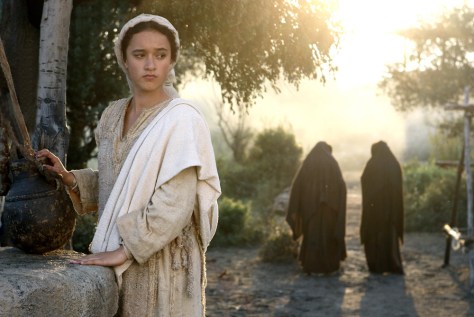
the-good-samaritan-after-delacroix-1890-Vincent-van-Gogh-1920x840Did you realise that once broadcast, TV signals begin an endless journey outward into the cosmos at the speed of light?  That means our earliest TV broadcasts are probably travelling through star systems more than 400 trillion miles from earth. Do you realise that our neighbours living 60 light years away are watching the first episodes of the Lone Ranger in black and white. 50 light years away they are now watching Bonanza. 40 light years away they have moved on to the original Star Trek series. 30 light years away they are able to watch the Dukes of Hazzard. Just 20 light years away it’s the Sopranos. Those only 10 light years away are being blessed by countless episodes of Lost. Scientists tell us that the further away your neighbours live, the more likely they are to hold outdated, inaccurate and stereotypical views of you.

Does it worry you what your neighbours think about you? What impression do you give them? Is it accurate or a distortion? When they see you coming, are they welcoming or do they lock the door and hide? Does it matter what impression you give? What about the people next door? Over the road? Down the street?

The people you meet every day on the train? The people you work with? It may have been questions like this that prompted a certain lawyer to ask Jesus the question, “who is my neighbour?” meaning, “who do I bear some responsibility for and who can I ignore?” We answer this question all the time whether we consciously think about it or not. We answer this question by the way we treat other people. In reply to the lawyers question, Jesus told a story, a parable.

A parable is simply a story with a kick in the tail, a story in which we find ourselves an active if unwitting participant rather than an objective observer or innocent passerby. This parable of Jesus is as topical and controversial today as it was to those who first heard him. Jesus’ audience would have been very familiar with news of hapless victims, robbed or murdered on that very road. Even today the road from Jerusalem down to Jericho isn’t the kind of place to take the family on a Sunday afternoon picnic. So Jesus had their attention. Christ talked about violence and danger – and we certainly have plenty of that today. He talked about crime, racial discrimination, fear and hatred. In this parable we also see neglect and concern, we see love and mercy. We know very well what the parable says, but what does it mean?

The key to understanding the parable is in the wounded traveller’s condition. It is not a curious incidental. Jesus says he was unconscious and naked.  These details are skillfully woven into the story to create the tension that is at the heart of the drama.  The Middle Eastern world was made up of various ethnic-religious communities.

You could identify a stranger coming toward you in two ways. By their accent and their clothing. In the 1st Century the various ethnic communities within Palestine used an amazing array of dialects and languages. In addition to Hebrew, one could find settled communities using Aramaic, Greek, Samaritan, Phoenician, Arabic, Nabatean, and Latin. Not without reason was the north known as the Galilee of the Gentiles. No one travelling a major highway in Palestine could be sure that the stranger he might meet would be a fellow Jew. But a short greeting would reveal their language if their clothing had not already given away their nationality. But what of the man in this story? Jesus tells us he is stripped of his outer clothes and is unconscious. He is thereby reduced to a mere human being. It was such a person that the robbers left beside the road. So who will turn aside to offer aid?

Continue reading

Sexual Ethics in the 21st Century: Canon Dr Chris Sugden

Does the Church have anything useful to say on this controversial topic? Canon Dr Chris Sugden is an ordained minister of the Church of England. After an assistant pastorship in Leeds, where he also worked in the BBC, Chris and his wife, Elaine, spent 6 years with their children in India. In 1983 they returned to England and helped establish the Oxford Centre for Mission Studies. (OCMS).

He is Executive Secretary of Anglican Mainstream, a network of evangelical and orthodox networks in the United Kingdom, which is part of the Fellowship of Confessing Anglicans (FCA) and Global Anglican Future (GAFCON).

Harvest: Investing our Talents for Jesus

Why do we celebrate Harvest Festival? To thank God for our food and drink. How do we thank God?  We thank God by sharing our food and drink with others in need. Like the Food Bank.  We also remember that God has given us our gifts and talents to share with one another – like Tools with a Mission. Who do you want to be when you grow up? Jesus told this story to help us realise that you’ve got talent! God has invested in us. He has entrusted us with gifts and talents. He wants us to develop them to serve. He wants a return on his investment.  God has made each one of us unique. He has given each of us gifts and talents, and skills and passions. How can we find out what talents God has given us?Ask these questions:

  • What am I good at? (Skills)
  • What makes me sad?  (Concerns)
  • What do I like doing? (Passion)
  • If I could do anything, what would it be? (Vision)
  • What has God told us all to do? (Responsibility).

Keep asking these questions and as you grow up, your role will become clearer.  Allow your passion to become your purpose and one day it will become your profession. But it’s not just about discovering my talents. It’s also about discovering how to use them.  I can use my talents to make lots of money for myself or I can invest them for the benefit of others. I can use my abilities to hurt people or to heal people. I can use my talents to build up or tear down. I can use my talents for myself or for God. This glove represents my life or your life. When we try and use our talents for ourselves this is what happens (blow the glove up) – we are just full of hot air and soon wear other people out.

But when we realise we are servants of the King and invite Jesus to live in us, He breathes his life in us so he can use our talents and gifts for his glory. That is why we must daily be filled with His Spirit.

Have you ever watched the programme on TV called The Dragons’ Den?  To help you apply Jesus story and discover God’s plan for your life, I’d like to make an investment in you. As long as your parents agree,

I would like to invest in you by giving you some shoe polish, a cloth and a glove. I’d like you to clean your shoes and the shoes of your family, and maybe of people who come to your house. Please don’t ask for money but if people offer to give you some, say ‘thank you’ and explain it is going to help people in Syria who are suffering. Like the man in Jesus story,

I am going away for a month, but when I come back, I expect you to return my investment in you, hopefully with interest.  Please bring back the polish and any money to the Christ Church December Family Service. We will then give any money raised to help people suffering in Syria.

And when you clean the shoes, put the glove on. It will remind yourself that you are doing it for Jesus and need his help to do it for the right reasons. It will also keep you clean.

Now this is not a competition to see how much you can make with your talent.  What matters is that we are thankful for the talents God has given us and we use them with a servant heart.

The Parable of the Dragons’ Den

There are many ways people differ. Bill Hybels observes there are cat people and there are dog people. There are tennis people and there are golf people.

Some people like to sleep with the windows open and some people prefer to sleep with the windows closed – and they are usually married to each other. Some people keep a pen and notepad by the telephone while other people just have children. There are breakfast people and there are people who don’t remember what breakfast is. There are A type people and there are the rest of you. There are Tigger people and there are Eyore people.

There are blue sky optimist people and there are chicken little – sky falling in people. And every team has at least one of each. When it comes to finances, some are cheque book people and some are cash people. There are Windsor farm shop – John Lewis – Waitrose people and there are Staines market – Poundland people. There are carefully balanced every month cheque book people and there are shut the cheque account down every two years and start over people. And you know who you are. There are people with stock brokers and there are people perfectly capable of going broke without them.

We were all brought up differently. But we all have one thing in common. We have a range of assets, talents and skills that we can invest or waste, use or lose.

In Luke 19 Jesus told a parable – I’ve called it the Parable of the Dragons’ Den, because whether you love or hate the programme, the fact is God has invested significant assets in you and he expects a return on his investment. I invite you to turn to Luke 19 with me.

This is a most unusual parable because it’s the only parable, as far as we know, Jesus told that was based on an actual historical event. What historical event lay behind this parable and why tell it at this moment? The answer lies in our first observation:

Continue reading

The Blessed Hope and the Marshmallow Test

Walter Mischel was a psychologist working with children on the campus of Stamford University in the 1960’s. In one experiement, he told the children in the pre-school  that they could have a single treat, such as a marshmallow, right now. However, if they would wait while the experimenter ran an errand, they could have two marshmallows. Some pre-schoolers grabbed the marshmallow immediately, but others were able to wait what, for them, must have seemed an endless 20 minutes. To sustain themselves in their struggle, they covered their eyes so they wouldn’t see the temptation, rested their heads on their arms, talked to themselves, sang, even tried to sleep. These plucky kids got the two-marshmallow reward. The interesting part of this experiment came in the follow-up. The children who as 4-year-olds had been able to wait for the two marshmallows were, as adolescents, still able to delay gratification in pursuing their goals. They were more socially competent and self-assertive, and better able to cope with life’s frustrations. In contrast, the children who grabbed the one marshmallow were, as adolescents, more likely to be stubborn, indecisive, and stressed.  Nature or nurture? It really doesn’t matter. Walter Mischel forgot to factor in one further dimension – the supernatural one. God can and does transform us supernaturally. That was one reason the Apostle Paul wrote this short letter to Titus.


Continue reading

Jesus and Amos – Jacob’s Fallen Tent

I know it’s only September, but it’s never too soon to start thinking of Christmas is it? Remember Charles Dickens’ play, A Christmas Carol? It’s the story of how  Ebenezer Scrooge tried to deny a Christmas break to his staff. On Christmas Eve, late at night, Scrooge is visited by three ghosts that night—the ghost of Christmas past, the ghost of Christmas present and the ghost of Christmas future.  He sees himself as he really is. He sees the love and kindness of those he has mistreated. He sees the consequences of his wicked life. He wakes up on Christmas morning a changed man. In our passage today we see where Dickens might have got his inspiration. God instructed Amos to preach a lament for the dead, except the people were still very much alive. A lament is a poem of mourning over the death of a loved one. The most obvious example in the Bible is the book of Lamentations where Jeremiah laments the destruction of Jerusalem as they are carried off into captivity. But in Amos, God laments Israel as if they had already died.

Israel was a prosperous country. The economy was booming. The military was strong. They had never had it so good. And here comes this poor, working class outsider, lamenting their death. They probably reacted the same way Scrooge reacted to Marley the first time. This lament is a good example of Hebrew poetry.  God seems to love poetry because Scripture is full of it. This particular poem was written with a common Hebrew form called a chiastic structure. Don’t get hung up on the term. Just put an A next to verses 1-3 and another A next to verses 16-17. Put a B next to verses 5-6 and another B next to verses 14-15. Put a C next to verse 7 and a C next to verses 10-13. Finally put a D next to verses 8-9. This is called a chiasm. The first and last are parallel. The next two are parallel, etc. The beauty of a chiasm is that it was written that way to put all the focus of the poem on the middle. Imagine an Oreo cookie and the way the two biscuit halves sandwich the most important crème filling in the middle. Here’s the outline.

1. Destruction is coming (5:1-3; 16-17)
2. Hope is waiting (5:4-6; 14-15)
3. Evil is abounding (5:7; 10-13)
4. God is reigning (5:8-9)

Continue reading

Silver Surfing Down to the Good News Cafe

I was on the London underground recently. A strange thing happened to me. It was very embarrassing. It was the first time it has ever happened in my life. It took me completely by surprise. I didn’t know how to handle it. I was standing by the door as I usually do when out of the blue, a young Asian man got up out of his seat and offered it to me. I thought he had made a mistake. I embarrassed him as much as myself by refusing to sit in his place. So we both stood and looked pretty silly. It had not occurred to me that I looked like an elderly man. I smiled and thanked him. I suppose my real mistake was not colouring my hair when the first grey hairs began to appear.  Now it is too late. You would notice, and in any case I’ve been overruled at home.

You can mask the signs of aging and you can even lie about your age, but there are always consequences.  I had an elderly couple come to see me recently asking me to sign a new marriage certificate for them. One of them had lied about their age 40 years ago in order to get married. Now 40 years later it had created complications. Their pension was being queried. So the marriage certificate had to be amended to match their birth certificate.

This Summer I turned 60. It was a significant moment receiving my Senior’s Railpass.
I feel like a little boy again. Oliver Wendell Holmes said “People do not quit playing because they grow old; they grow old because they quit playing.” And that’s the challenge, managing the tension and sometimes the aches and pains between how we feel on the inside and what we can do on the outside. Mark Twain once said, “Age is an issue of mind over matter. If you don’t mind, it doesn’t matter.”

Success truly knows no boundaries. Many people have achieved their dreams much later life. I was a slow developer at school, but do you know how old Harlan Sanders was when he opened his first Kentucky Fried Chicken restaurant? 65. How old was Ronald Reagan when he became President of the United States? 16 days before his 70th birthday.  How old was Golda Meir when she became Prime Minister of Israel? 70. How old was Nelson Mandela when he became President of South Africa? 74.

How old do you have to be to start living? That is your choice. The older I get, the more I want to get out of life. The greater the impact I want to have. Retire and play it safe? No! I want to live more dangerously, take more risks, learn new things, and make every day count.
I may be wearing out but I am not giving up. Hardening of the viewpoints is far more lethal than hardening of the arteries.

That is why I am really excited that the new Good News Café for Seniors (or Silver Surfers if you prefer) open every Thursday afternoon and not just monthly. We aim to host a growing number of events and activities that you want and that will motivate you to get the most out of the wonderful gift of life the Good Lord has given you. Every day is a gift from God. A new beginning. An exciting adventure, knowing we were created with meaning and with purpose. God’s plan? To know God, and serve him and enjoy him forever and ever. The Apostle Paul wrote about this,

“Therefore we do not lose heart. Though outwardly we are wasting away, yet inwardly we are being renewed day by day. For our light and momentary troubles are achieving for us an eternal glory that far outweighs them all. So we fix our eyes not on what is seen, but on what is unseen, since what is seen is temporary, but what is unseen is eternal.” (2 Corinthians 4:16-18)

May God bless you and those you love.