Author Archives: Stephen Sizer

Thank God for the Iranians

Slide4On 22nd January, the UN is sponsoring the Geneva 2 conference to try and resolve the conflict in Syria. An Iranian delegation has not been invited. That is ironic since everyone, from the Royal Family and the Prime Minister, and even the US President and politicians of both main parties, are celebrating the visit of an Iranian delegation to Palestine this week. They were carrying funds for an opposition leader the Israeli authorities wanted dead. They met covertly with his family, then created a diplomatic incident by leaving the country without notifying the authorities. The historic visit of the Magi has a contemporary ring to it. Without Iran and Iranian involvement in the Nativity story, we would not have exchanged gifts on Christmas Day!

This morning, let us note how the Christmas story is a study in contrasts. The contrast between religious hypocrisy and spiritual integrity. Between the religious hyprocrisy of Herod and the Priests, and the spiritual integrity of the Shepherds and Magi. How are we to distinguish one from the other?

Thank God for the Iranians from Stephen Sizer on Vimeo.

Continue reading

Becoming like Children Again

Why do we smile when we see a baby, even when we are having a bad hair day? Have you ever wondered what it is about babies that melts our hearts? Why are we instinctively drawn toward babies? Is it because a new person has come into the world? The thought that this person is unique? Is it the sight of their tiny hands and feet so perfectly formed?  Is it their vulnerability? Their big blue or brown eyes?

Nobel-Prize-winning zoologist Konrad Lorenz first suggested that the structure of the infant face, a relatively large head in proportion to the body, with large eyes and bulging cheeks, elicit these responses.

Morten Kringelbach and Alan Stein from the University of Oxford have also observed that a region of the human brain called the medial orbitofrontal cortex is highly active when we see the face of an infant. The medial orbitofrontal cortex is located in the front of the brain, just over the eyeballs. It is a key region for our emotions. What Kringelbach and Stein observed in their sensory experiments was that the brain reacts within a seventh of a second to seeking an infant face but not to an adult face. These responses are too fast to be consciously controlled and are therefore probably instinctive. It may therefore provide the necessary emotional tagging of infant faces that predisposes us to treat babies as special and ensure a protective bond.

Becoming like Children Again from Stephen Sizer on Vimeo.

Continue reading

The Magnificat: The Song of Mary


What is going to be the biggest musical hit this Christmas? Apparently the all-time, best selling Christmas song is Band Aid’s “Do they know it’s Christmas?” closely followed by Slade’s “Merry Xmas Everybody” and Bing Crosby’s “White Christmas”. But beating them all is Mary’s Song. Known as the “Magnificat anima mea Dominum”, it is one of the earliest Christian hymns, sung in hundreds of thousands of churches of all denominations, every week for at least 1,500 years.

And today we are going to see why. As we saw last week, Mary had some serious liabilities – she was pregnant, she was young, she was poor, she was unmarried, she was from a dubious neighbourhood. And that was just the start of her problems. Besides all that, she faced divorce by Joseph, rejection by her family and death by stoning. Good reasons why, when the angel left her,

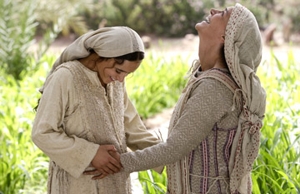
“Mary got ready and hurried to a town in the hill country of Judea, where she entered Zechariah’s home and greeted Elizabeth.” (Luke 1:39-40)

Luke 1 wonderfully records the providential work of God in providing Mary with a friend who would understand. The narrative of not one, but two, miraculous conceptions woven together in parallel, as the mothers support and encourage each other.

  1. Both begin with an introduction of the child’s parents.
  2. Both mention specific obstacles to childbearing—Elizabeth’s barrenness and Mary’s virginity.
  3. The angel Gabriel made both announcements, each time to someone living in a small, out-of-the-way location..
  4. In both there was a fearful first reaction to Gabriel’s words and a statement of reassurance from him.
  5. Then there is a description of the coming son and,
  6. In each case, an objection raised—by Zacharias, unbelief; by Joseph, lack of understanding.
  7. Last, Gabriel’s promises confirmation that his announcement will come to pass.

Continue reading

Light Force: Brother Andrew

Reading this book may seriously put some at risk – at risk of facing latent prejudices and stereotypes caused by selective reading or biased reporting on the Middle East. I am delighted that Hodder has had the courage to publish Brother Andrew’s book Light Force in Britain, because it could not have been an easy decision. There will be many who will wish this book does not receive the wide readership it justly deserves. Elizabeth Elliott, for example, lost many ‘friends’ when she wrote her similarly controversial book, Furnace of the Lord (published in 1969 also incidentally by Hodder & Stoughton), in which she describes her empathy for the suffering of the Palestinians and her overriding concern for people rather than so called ‘prophecy’.

In his first book, God’s Smuggler, Brother Andrew describes how the Lord provided an open door through the Iron Curtain enabling Western Christians to sustain and equip the suffering Church in Eastern Europe to withstand the onslaught of atheistic Communism. Eventually, however, he became too well known, a marked man. Brother Andrew was therefore led to focus his ministry on supporting another persecuted Church, this time in the Middle East, caught between Jewish Zionism and Islamic fundamentalism.

While many have succumbed to the temptation to make an all too brief visit and write yet another superficial account of their impressions of the Arab-Israeli conflict, Brother Andrew has waited 35 years to publish his diary, revealing with great candour, his many unpublicized visits to strengthen the suffering Church.

Continue reading

I am the Lord’s Servant…

Remember the last time you filled out a job application?  You listed your education, your skills, your work experience. Then you hit the final question: “What is it that makes you uniquely qualified for this position?” How do you answer without appearing arrogant? And when I am asked to give a reference for someone, the question I stumble over is “What are the applicant’s weaknesses? Employers assume your availability, but what they really want to know about is your liabilities. Most employers hire on the basis of competence. They look at your skill set and maybe your personality type. Only the enlightened ones care much about your character.  But God doesn’t operate this way. In today’s reading from Luke, we learn what it means to say “I am the Lord’s servant comma”

1. No matter who you are, the Lord can use you

“In the sixth month of Elizabeth’s pregnancy, God sent the angel Gabriel to Nazareth, a town in Galilee, to a virgin pledged to be married to a man named Joseph, a descendant of David. The virgin’s name was Mary.” (Luke 1:26-27)


Continue reading

How to Become a Wise Investor

“High fidelity: Julian Richer rewards staff loyalty with holiday homes and trips on the company jet. Next? He’s planning their inheritance…” That was the eye catching headline in the Independent this week.

“Why can’t all bosses be like Julian Richer? I’m not going to beat about the bush here: I think Julian is great. If I had to hold up someone as a role model for other wannabe tycoons to follow, the founder of the Richer Sounds hi-fi chain would be that person. … So what earns him this accolade? The way he treats his staff, the fact that in surveys 95 per cent of them say they love working for him. And then the way his approach translates into tangible results: 52 stores that produced profits of £6.9m from sales of £144.3m last year in an austerity-hit economy, and helped him to build a personal fortune estimated at £115m.

Based in what property agents refer to as the “secondary” shopping streets – the tattier end – his shops, full of in-your-face Day-Glo posters, have won awards galore for their levels of service, and achieved sales unheard-of in the electronics industry. For years, his London Bridge branch could claim to have the highest sales density of any shop in the world.

It was no surprise to hear Richer, 54, who still holds 100 per cent of the company he started 35 years ago, explain this week how he has formed a trust for when he dies so that the business becomes a mutual, similar to John Lewis, under which every staff member receives an equal share…That’s how he is. He’s often talked of the business surviving after he’s gone, of putting a structure in place to ensure his methods continue. He calls them the Richer Way (he’s pulled them together in what must rank as one of the best business books in history, now in its fifth edition, called, not surprisingly, The Richer Way). These include: providing free access to holiday homes in the UK and abroad (regardless of sales performance); trips aboard the company jet for those who suggest the best ideas; cash handouts for staff so they can go to the pub and brainstorm; the use of a Bentley for the store which does the best each month. His reasoning is simple: a happy workforce supplies good customer service, boosts sales, decreases complaints, and eradicates theft and absenteeism.”

A wise investor… in people. Our theme today is “How to Become a Wise Investor in 2014” That’s because today is our annual Pledge Sunday. Today we are asking you to make a pledge. To indicate in writing, up front, what the Lord has laid upon your heart to give back to him in 2014. Actually to ‘give back to him’ because we are acknowledging that everything we have has come from him.


Continue reading

Love and Marriage

Every year the British Social Attitudes survey asks over 3,000 people what it’s like to live in Britain and how they think Britain is run and the results of the latest survey are published today. Since 1983 the survey has been tracking people’s changing social, political and moral attitudes. Compared with 30 years ago, the survey reveals British people are far more likely to be tolerant of one another’s relationships and lifestyles. When the survey back in 1983 it was hard to imagine a Conservative Prime Minister advocating gay marriage. Now public opinion suggests that widespread acceptance of gay marriage and gay adoption is here to stay. The survey shows that in 1983 only 28 per cent said it was ‘always’ or ‘mostly’ wrong for a man and a woman to have sexual relations outside marriage. Now just 12 per cent say this is ‘always’ or ‘mostly’ wrong, and an all-time high of 65 per cent see nothing wrong at all in such behaviour. Even when a couple want to have children only 42 per cent think they ought to get married first. But the figures reveal that attitudes towards other parts of our personal relationships have become more conservative. Cheating on a partner likely to be greeted with disapproval than it was 30 years ago. Now 63 per cent say that it is “always wrong” for a married person to have sexual relations with someone other than their partner, slightly more than the 58 per cent who thought this in 1984.[1]

These Sunday evenings leading up to Christmas we are considering some of the popularly held views, and discovering from the Bible – how to answer them. Tonight we come to the question of sex. Although billed about sex before marriage, it could be broadened to include any form of sex outside a monogamous relationship between a husband and wife – Our passage from 1 Corinthians 6 deals with, and treats as equal, the sins of fornication, adultery and homosexual acts. As we begin, observe that four times Paul has to ask the question: “Do you not know?”

“Do you not know that the wicked will not inherit the kingdom of God?” (6:9)

“Do you not know that your bodies are members of Christ himself? (6:15)

“Do you not know that he who unites himself with a prostitute is one with her in body?” (6:16)

“Do you not know that your body is a templeof the Holy Spirit, who is in you, whom you have received from God?” 6:19)

Why does Paul say “Do you not know?” Why does he have to ask these rhetorical questions, not just once or twice or even three times but four times in ten verses? Because their behaviour or, at the very least their attitude toward the behavior of others, is inconsistent with their professed faith. They were either ignorant, deceived, or inconsistent. Doesn’t that sound remarkably contemporary? As David Prior observes,

Continue reading

Remembrance Sunday: How to Love Your Enemies

I was born on 27th July 1953. Not a particularly significant date in Britain but in South Korea, where I have been this week, it is hugely significant. The Korean war which began in June 1950 saw the Republic of Korea (South Korea), supported by the United Nations and British Commonwealth, defend its borders against a surprise attack by the Democratic People’s Republic of Korea (North Korea), at one time supported by China and the Soviet Union. Over three years the battle lines moved up and down the country leading to over 1.2 million deaths, at least half of whom were civilian non-combatants. The armistice was signed on July 27, 1953.

It was designed to “insure a complete cessation of hostilities and of all acts of armed force in Korea until a final peaceful settlement is achieved.” But no “final peaceful settlement” has been achieved yet. So while the Cold War in Europe ended when the Berlin Wall was torn down in 1989, North and South Korea have remained in a perpetual state of war. How have the two nations responded?

North Korea has made repeated attempts to invade the South. On Tuesday I entered one of the tunnels dug by the North, deep underneath the DMZ using slave labour and dynamite. Only 44 km (27 miles) from Seoul, the tunnel was discovered in 1978. It is 1.7 km (1.1 miles) long, 2 m high and 2 m wide. It runs through bedrock at a depth of about 73 m (240 ft) below ground. It was  designed for a surprise attack on Seoul, and could easily accommodate 30,000 men per hour along with light weaponry. A total of four tunnels have been discovered so far, but there are believed to be up to twenty more. Furthermore, North Korea has 9,495,000 active, reserve, and paramilitary personnel, which makes it the largest military organization on earth, even without its nuclear weapon programme. How has South Korea responded?

Through its ‘Sunshine policy’ it has been giving millions of pounds each year to provide vaccines, medical care and food for North Korean children. It has built a railway to bring the two countries together and opened factories in the north to further economic ties. But most significantly of all, while the North has built the largest army in the world, the South has sent more Christian peacemakers into the world, as a proportion of its population, than any other country in the world. The first evangelical missionary to Korea was a Welshman, Robert Thomas. Aged 24, he landed in Shanghai with his wife Caroline in 1863. She died of an endemic disease just a year later, and Robert himself, became a martyr on the shores of the Daedong River in 1866. But a church was born. Even though the Evangelical church in Korea is just 150 years old, numerically, after the USA, there are more South Korean missionaries in the world than any other country.

Two nations – North and South – two very different responses – one fuelled by hate, the other fuelled by love. Today we rightly remember and honour those from our community who made the supreme sacrifice to defend our freedoms and values. It is one thing to risk your life to save a friend or even to put your life on the line for your neighbours. It is quite another to give your life to fight a formidable enemy to defend your country. But at best, all we can hope for is an Armistice – a cessation of conflict. In our gospel reading today from Matthew 5, Jesus wants us to take one step further, to realise that, whether in war or peacetime, God wants to enable us to transform our enemies into family. This is the kind of radical motivation that characterizes an authentic follower of Jesus Christ. Let’s make three observations.

Continue reading