Monthly Archives: March 2009

Rico Tice on “What is Success?” (Luke 12:13-21)

Last Saturday Rico Tice of All Soul’s, Langham Place, spoke at two events at Christ Church on “What is Success?”. His short answer is this: ‘failure’ is being successful in things that ultimately don’t matter.

You can listen to Rico’s talk here. Check out some photos here or on Flickr

“Well, gents thank you very much for coming out this morning, I wonder if you can see this piece of paper that’s in front of you on the tables.  I’m just going to throw out a bit of the Bible and I just don’t know what you make of it.  Here’s a bit of the Bible, it’s Jesus telling a parable so you can fold it up and put it in your wallet.  I find it really compelling.  Let me read it to you, say a few words about it, and then I really hope it will be food for thought.  Let me read it to you, so here’s Jesus, it’s Luke 12, one of the biographies of Jesus, and this is the story we hear him tell:

Someone in the crowd said to him, “Teacher, tell my brother to divide the inheritance with me.” Jesus replied, “Man, who appointed me a judge or an arbiter between you?”  Then he said to them, “Watch out!  Be on your guard against all kinds of greed; a man’s life does not consist in the abundance of his possessions.”

And he told them this parable: “The ground of a certain rich man produced a good crop.  He thought to himself, ‘What shall I do?  I have no place to store my crops.’  Then he said, ‘This is what I’ll do.  I will tear down my barns and build bigger ones, and there I will store all my grain and my goods.  And I’ll say to myself, ‘”You have plenty of good things laid up for many years.  Take life easy; eat, drink and be merry.”‘  But God said to him, ‘You fool!  This very night your life will be demanded from you.  Then who will get what you have prepared for yourself?’  This is how it will be with anyone who stores up things for himself but is not rich toward God.”

Continue reading

Gary Lineker Supports Amos Trust Street Child World Cup

Footballer Gary Lineker has kicked off the latest project by the Amos Trust, which aims to give poor children around the world a voice through football.

The Street Child World Cup will bring together teams of street children from around the world to play in a football tournament in a year that will raise the profile of their human rights.

The BBC presenter said: “It is great that the Street Child World Cup will use this game, which is loved all over the world, to help give kids a fairer deal. No child should have to be on the streets, so if football can be a part of making a difference, that’s fantastic.”

Asked if this was the best way for children to achieve their identity, Douglas Alexander, cabinet minister for International Development, said: “I think children all over the world can learn something through football.”

Teams of street children from eight countries across Asia, Latin America, Africa and Europe will compete in the football tournament that will be hosted in South Africa during March 2010, before the FIFA World Cup.

The project co-ordinator, Jenny Dawkins, said: “Typically, hunger, neglect and violence force children onto the streets, and hunger, neglect and violence meet them there. Children participating in the Street Child World Cup will be given opportunities to challenge parliamentarians, decision-makers and the media.

Source: Church of England Newspaper

Further Information: Amos Trust & Umthombo

Meet the New Athiests… same as the Old Atheists

Matt Sieger has written a brilliant article over at Jews for Jesus website. Here is a taster:

Move over Karl Marx, Sigmund Freud, and Friedrich Nietzsche…

Make room for the new kids on the block—Richard Dawkins, Sam Harris, and Christopher Hitchens! These “New Atheists” proclaim God’s non-existence with great fervor. But they’re not saying anything new.

Dawkins declares, “Faith is the great cop out.” Where did we hear this before? Oh, yes, Marx: “Religion is the opium of the people.”

Harris says belief in God is “a sign that something is seriously wrong with your mind.” Not new. Freud said that to put faith in God is “patently infantile.”

Hitchens states, “God did not make man in his own image. Evidently it was the other way about.” Nietzsche said it already: “Is man one of God’s blunders, or is God one of man’s?”

The Bible (oops, sorry atheists) got it right: “There is nothing new under the sun” (Ecclesiastes 1:9).

So what’s different about the New Atheists? They’re just more “in your face.” As Clark Pinnock notes:

These fellows such as Nietzsche and Freud thought more in depth about what atheism entails and could understand what might interest thoughtful people in religion. The new atheism in contrast is disinterested in fair-minded discussions about whether religion might actually have something to contribute to human knowledge. In the new atheism (and it is not really “new”), readers are not expected to understand religion or have any sympathy for it. Instead they are exhorted to detest faith.1

But the New Atheists are actually wimps compared to the old atheists. When Nietzsche declared that God was dead, he understood that if there is no God, there are no morals. The New Atheists are afraid to go that far. They say we can have moral standards without God. But if there is a moral law, there must be a moral lawgiver. Where does our conscience come from, if not from God?

Read the rest here over at Jews-for-Jesus

Philippians 3:10-14: The Purpose Driven Life

I recently bought myself the latest must-have luxury in-car accessory – a travel mug. Vacuum sealed, I could enjoy my favourite hot drink for an entire journey. Knowing I would be driving quite a bit that week I decided to give it a whirl on my way to a day conference at Oak Hill College. I decided to baptize it with some really strong Arabic coffee with cardamom seeds purchased in Jerusalem. High in caffeine there is nothing that will kick-start you faster in the mornings.

The aroma itself is quite intoxicating – in an entirely legal sort of way. In the stop-go traffic of the M25 I began to enjoy the fragrant aroma of my Arabic coffee with cardamon seeds. With around a hundred or so other clergy attending from right across England I had decided that on such an important day I should wear one of my nicest jackets, a white shirt and brown trousers.  I did indeed make quite an impression. Unfortunately I discovered belatedly that the momentum of driving in one direction can cause liquid refreshments to drive in another direction. While I did indeed enjoy the taste of some of the coffee, some of it also left me with really quite impressive coffee stain down my white shirt as well. It could easily have been mistaken for dried blood from a wood chopping incident had it not been for the fragrant aroma of Arabic coffee with cardamom seeds. My lesson for the day? Everyone could tell I had been driving, and not very well.

Everyone of us is driven by something. Is it as obvious to everyone else as a coffee stain? What is driving your life? Is it fear? Is it anger? Is it remorse? Is it ambition? The desire to please? The accumulation of possessions?  A few years ago we examined what the scriptures teach about the Purpose Driven Life. We saw why Rick Warren’s book has become so popular.  Rick identifies five main purposes that God intends to be a driving force in our life.

1.We were planned for God’s pleasure – to know him and love him;

2.We were formed for God’s family – to find a home and family;

3.We were created to become like Christ – with love, joy, peace, patience, kindness, goodness, faithfulness, gentleness and self control;

4.We were shaped for serving God – with a unique mix of talents, skills and passion; and

5.We were made for a mission – to introduce other people to God’s five purposes for their lives too.

Without a God-given purpose to shape our life, we become driven by destructive influences for we are all motivated by something. Here are three of the most common forces that drive people. People are:

1.Driven by Guilt and Fear

Many people are unable or unwilling to forget what lies behind. They are unable to hide from their past. The Apostle Paul had every reason not to forget his past either. As we saw last week, he writes, “As for zeal, persecuting the church” (Philippians 3:6). He had hunted down Christians, he had supervised their arrest. He had prosecuted them and even approved their execution. “Guilt-driven people are manipulated by their memories” so that “their past controls their future”. But even though “we are products of our past” … “we don’t have to be prisoners of it.”  God’s purpose is not limited by our past. His purposes are not neutralized by the mess we make of life.

God promised through Jeremiah to his wayward people, “For I know the plans I have for you … plans to prosper you and not to harm you, plans to give you hope and a future.” (Jeremiah 29:11). God is concerned with your future not your past. Without a God-given purpose for the future many people are driven by guilt & fear from the past. That is why Paul insists, ”Forgetting what is behind … I press on toward the goal.” (Philippians 3:13). We must forget the past and look to the future.  Secondly, many people are:

2. Driven by Anger and Resentment

Holding on to hurts is incredibly destructive. If we don’t forgive and forget, we will remember and resent. “Resentment driven people either ‘clam up’ and internalize their anger or ‘blow up’ and shower others with the fall-out.” Anger always hurts.  Paul writes with sadness about some who were once friends:

“For, as I have often told you before and now say again even with tears, many live as enemies of the cross of Christ. Their destiny is destruction…” (Philippians 3:18-19).

If we do not forgive, Jesus warns, God will not forgive us. Forgiveness is at the heart of the gospel – it is the purpose of the cross. To not forgive is to turn our backs on Jesus and what he has done for us. In Philip Yancey’s book What’s so Amazing about Grace? he writes “Not to forgive imprisons me in the past and it locks out all of the potential for change.” Resentment always hurts you more than the one resented. “While the one in the wrong has probably forgotten what it was that offended you, you will continue to stew in it, chained to the past.” Rick Warren says, “Listen: Those who have hurt you in the past cannot continue to hurt you now unless you hold on to the pain through resentment. Your past is past! Nothing will change it. You are only hurting yourself with your bitterness.”

God promised through Jeremiah “Then you will call upon me and come and pray to me, and I will listen to you. You will seek me and find me when you seek me with all your heart.” (Jeremiah 29:12-13). Instead of crying out against others in rage, give them over to him. He will listen. He can take it. Seek him and you will find him. Forgive and you will be forgiven. For to forgive is also to forget. To “forget” in the Bible means “no longer to be influenced by”. In Hebrews 10:17 the Lord promises

“Their sins and lawless acts I will remember no more.” That doesn’t mean God has a bad memory! It means He forgives our past as if its forgotten.

That is why we should not keep looking back.  When Paul urges us to forget the past, he means that we are to break the power of the past by living for the future. We cannot change the past, but Jesus has changed the consequences of our past. Driven by guilt and fear, driven by anger and resentment. Thirdly many people are

3. Driven by Wealth and Materialism

The desire to acquire can so easily become a consuming passion. The drive to want more comes from the mistaken belief that ‘more’ will make me more happy, more important, more secure. The truth is the very opposite. Possessions only provide temporary happiness. I know. I’ve only ever owned one new car in my life. Actually I only owned  50% of the car – the other half belonged to a charity. But at least I told myself that my half was the visible half. It was a metallic blue Nissan Prairie, with sliding doors. And it drove like a van. But I confess that it did make me feel good driving the kids to school on that first day in a shiny new car, with my arm out of the window and with a smile on my face as if to say ‘look at me…’ The fun lasted precisely 11 months and 29 days until… the new registration plate came out and my new car became just a used car. If you want to own the latest registration plate you have to change your car every six months now… The fact is, “Self worth and net worth are not the same. Your value is not determined by your valuables … God says the most valuable things in life are not things …

Real security can only be found in that which can never be taken from you – your relationship with God.” John Stott writes: ‘Certainly no one can know himself until he has honestly asked himself about his motives. What is the driving force of his life? What ambition dominates and directs him? Ultimately there are only two controlling ambitions, to which all others may be reduced. One is our own glory, and the other, God’s.’

As we saw last week, that is why Paul says, “But whatever was to my profit I now consider loss for the sake of Christ. What is more, I consider everything a loss compared to the surpassing greatness of knowing Christ Jesus my Lord, for whose sake I have lost all things. I consider them rubbish, that I may gain Christ.” (Philippians 3:7-8)

Paul counted the best the world could offer as rubbish compared to knowing Jesus. His life had become purpose driven.  Three destructive things that drive many people : People driven by guilt and fear, driven by anger and resentment; driven by wealth and materialism. In Philippians 3, Paul offers a much more worthwhile motivation : the God-given purpose driven life. This is how he describes it:

“I want to know Christ—yes, to know the power of his resurrection and participation in his sufferings, becoming like him in his death,  and so, somehow, attaining to the resurrection from the dead.Not that I have already obtained all this, or have already been made perfect, but I press on to take hold of that for which Christ Jesus took hold of me. Brothers, I do not consider myself yet to have taken hold of it. But one thing I do: Forgetting what is behind and straining towards what is ahead, I press on towards the goal to win the prize for which God has called me heavenwards in Christ Jesus.” (Philippians 3:10-14)

There are at least five benefits from living a purpose-driven life contained in this passage.

1. Knowing your purpose gives meaning to your life

Paul writes: “I press on to take hold of that for which Christ Jesus took hold of me.” (Philippians 3:12).

“Without God, life has no purpose, and without purpose, life has no meaning. Without meaning, life has no significance…” The greatest tragedy is not death. The greatest tragedy is to live without a purpose.

That is a life sentence. We were made to have meaning. “I know the plans I have for you” God promised through Jeremiah. The initiative is all from God. Paul’s life had been transformed because the grace of Jesus had taken hold of him. This is why Paul can be so emphatic “I want to know Christ and the power of his resurrection, and the fellowship of sharing in his suffering.” (Philippians 3:10). Jesus had shown Paul love and forgiveness in friendship. Jesus had given Paul meaning and hope, a new purpose for living. “Hope is as essential to your life as air and water. You need hope to cope.

Dr. Bernie Siegel found he could predict which of his cancer patients would go into remission by simply asking, “Do you want to live to be one hundred?” Yes or no? Those with a deep sense of life purpose answered ‘yes’ and were the ones most likely to survive. Hope comes from having a purpose.”  Knowing your purpose gives meaning to your life

2. Knowing your purpose simplifies your life

Paul writes, “But one thing I do.” (Philippians 3:13). One thing.  One. “One thing you lack” Jesus says to the rich young man in Mark 10. “Only one thing is needed” Jesus has to say to over worked and hyper-critical Martha in Luke 10. “One thing I know” cries the man who had received his sight by the power of Christ, in John 9. Often we are involved in too “many things”. Only one thing matters. God’s purpose for you today – this moment. No athlete succeeds by doing everything.

They succeed by specializing. On Monday I met Josh Salzmann in the changing room at Wentworth. Josh is the director of fitness at Wentworth. He has a physique many men would die for. The secret is exercise. To concentrate on “one thing,” – to be purposeful, intentional, focused. Paul is single-minded about his ambition. “One thing I do”. This does not mean he neglected every other area of his life. Rather it means that all else was subordinated to his goal. Without a clear purpose we lack the foundation on which to base our decisions, allocate our time, or use our resource.

Life becomes cluttered with choices made based on circumstances, pressures, and emotions. Not knowing our purpose leads to overwork, to stress, fatigue and tension. On the other hand, knowing your purpose simplifies your life because, “It defines what you do and what you don’t do. Your purpose becomes the standard you use to evaluate which activities are essential and which aren’t.” I regularly remind myself that it is impossible to do everything people want me to do. I have just enough time to do God’s will. If I can’t get it all done, it means I am trying to do more than God intended for me to do or just fiddling with my computer.  Rick Warren says wisely, “Purpose-driven living leads to a simpler lifestyle and a saner schedule.” Knowing your purpose gives meaning to your life. Knowing your purpose simplifies your life

3. Knowing your purpose focuses your life

“I do not consider myself yet to have taken hold of it. But one thing I do: Forgetting what is behind and straining toward what is ahead.” (Philippians 3:13)

Paul is describing the athlete stretching out, straining every muscle as he goes flat out for the finish. He brings to mind the striking image of Eric Liddell, the Olympic runner whose story was retold in the film Chariots of Fire, chest out, head held high, legs and arms pumping furiously as he tore down the back straight to the finish to win the Olympic gold medal.

When he was criticized for spending so much time training as a runner instead of becoming a missionary, he said “I believe God made me for a purpose, but he also made me fast. And when I run I feel His pleasure.” Do you? Do you feel his pleasure knowing you are fulfilling your purpose? Paul isn’t saying “I’ve arrived” but he does say “I don’t look back.” That’s because one of the rules of running is that you don’t look back.

When you’re in the middle of a race you don’t look over your shoulder, because when you do, it can throw off your confidence if you see somebody gaining on you. It can throw off your step so that you slow down. You will lose your balance. You could fall. There’s no reason to look back. As a runner, you’re focused only on the finishing line. You cannot focus on what is ahead and turn your head at the same time.  Take your eyes off Jesus and you will focus on other people and what they have or have not done. Focus on Jesus and his love and everything is put in its right perspective.

Here’s a test: Lee Strobel once said, “If you can’t sing ‘Amazing Grace’ with tears in your eyes–or at least in your heart–then you really don’t understand what it means.” Does the grace of God drive your life? Does it grip you? Does it motivate you?

Knowing your purpose gives meaning to your life.
Knowing your purpose simplifies your life
Knowing your purpose focuses your life

4. Knowing your purpose motivates your life

“I press on towards the goal to win the prize for which God has called me heavenwards in Christ Jesus.” (Philippians 3:14)

This is purpose produces passion. Nothing energises more than having a clear purpose. “On the other hand, passion dissipates when you lack a purpose.” Rick says, “Just getting out of bed can become a major chose. It is usually meaningless work not overwork that wears us down, saps our strength, and robs our joy.” We won’t become a winning athlete by listening to lectures, watching movies, reading books, and cheering at the games. An athlete is not distracted by cream buns or heckling bystanders.

They win by getting on to the track, practising hard and determining to win. Hebrews tells us “Therefore, since we are surrounded by such a great cloud of witnesses, let us throw off everything that hinders and the sin that so easily entangles, and let us run with perseverance the race marked out for us. Let us fix our eyes on Jesus, the author and perfecter of our faith.”  (Hebrews 12:1-2)

Jesus is the author and finisher of our faith. He started the race for us and he will finish it with us. We are not alone. He is with us by his Holy Spirit. There is no greater motivation than discovering the purpose for which you were created. Knowing your purpose gives meaning to your life, it simplifies your life, it focuses your life and it motivates your life. Finally,

5. Knowing your purpose prepares you for eternity

“I press on towards the goal to win the prize for which God has called me heavenwards in Christ Jesus.” (Philippians 3:14) “Many people invest their entire lives building up a legacy on earth.” Its all for the children they rationalize. “They want to be remembered when they’re gone.” They want to be immortalized so we name roads after them. Think of the names of some of the roads in Virginia Water. Simon’s Walk, Cabrera Avenue, Wellington Avenue, Stuart Way. “what ultimately matters most will not be what others say about your life but what God says… because all achievements are eventually surpassed, all records are one day broken, all reputations eventually fade, all tributes are soon forgotten, and even road names can get changed.

I’m sure you have heard of Dr James Dobson. He recently retired as Founder and President of Focus on the Family. “In College, [the young] James Dobson’s goal was to become the school tennis champion. He felt proud when his trophy was prominently placed in the school’s trophy cabinet. Years later, someone mailed him that trophy. They had found it in the rubbish bin when the school was remodeled. Jim says “Given enough time, all your trophies will be trashed by someone else.”

Living to create an earthly legacy is a short-sighted goal. How much wiser to build an eternal legacy. You were not put on earth to be remembered. You were put here to prepare for eternity. “I press on towards the goal to win the prize for which God has called me heavenwards in Christ Jesus.” (Philippians 3:14).

C.S. Lewis put it like this: “Aim at heaven and you will get earth thrown in. Aim at earth and you get neither.” “One day you will stand before God, and he will do an audit on your life, a final exam, before you enter eternity.” As the Apostle Paul says, “For we will all stand before God’s judgment seat … So then, each of us will give an account of himself to God.” (Romans 14:10,12). The good news is that God wants you to pass the test. He has given us the questions in advance. What will those questions be?

1. What did you do with my Son, Jesus Christ?

God is not interested in our religious background or our religious views. The only thing that will matter is this – Did you receive Jesus as your Lord and Saviour? Did you learn to love him? Did you learn to trust him? Did you choose to follow Him? Jesus says “I am the way and the truth and the life. No one comes to the Father but by me.” (John 14:6). What did you do with my Son? Second question:

2. What did you do with what I gave you?

How did you invest the time, the skills and the money I entrusted to you? What did you make of the opportunities, the energy, the relationships I created for you. Did you spend them on yourself? Or did you invest them for me and my purposes? Preparing you for these two questions is the purpose of this Church and everything we stand for – “to know Christ and make him known”. Rick Warren says “The first question will determine where you spend eternity. The second question will determine what you do in eternity. So what is the driving force of my life? What would other people say it is? What do I want it to be?” For one day soon, the driving force of your life will become as visible and as obvious as the coffee stains were on my white shirt. Want to know what drives me?

“I want to know Christ and the power of his resurrection and the fellowship of sharing in his sufferings… I press on toward the goal to win the prize for which God has called me heavenwards in Christ Jesus.” (Philippians 3:10, 14)

Lets pray.


Dear Lord, help me discover your purposes for my life so that I might know you, love you and faithfully serve you all the days of my life, so that one day I may hear you say, “We’ll done, my good and faithful servant.” In Jesus’ name. Amen.


This sermon draws heavily on material from Rick Warren’s book “The Purpose Driven Life” (Zondervan) and is intended to motivate people to read the book and undertake the Purpose Driven Life – 40 Days of Purpose.

For more information see the Purpose Driven Life and details of Rick Warren’s best-selling book. For further sermons in this series see below:

40 Days of Purpose
What drives your life? : Ephesians 1:1-14
What on earth am I here for?
You were planned for God’s pleasure
You were formed for God’s family
You were created to become like Christ
You were made for a mission
Living with Purpose : Ephesians 6:10-18

Created to become like Christ : Ephesians 4
How to Grow : Philippians 2
Transformed by Truth : James 1:17-27
Growing through Temptation : Matthew 4:1-11
It Takes Time : Philippians 1:1-11

Formed for God’s Family : Ephesians 5:1-11
A Place to Belong : Romans 12:3-16
Cultivating Community : 1 Corinthians 5:1-13
Restoring Broken Fellowship : Matthew 5:17-24
Protecting our Church : Matthew 18:15-22

Chosen for a Purpose : Ephesians 1
What drives your life? : Philippians 3
Seeing Life from God’s View : 1 Corinthians 4
What Makes God Smile? Genesis 6
The Heart of Worship : Romans 12:1-2
Becoming Best Friends with God : John 15:9-17
Worship that Pleases God : John 4:19-26
When God seems distant : Job 23

The Church of England and Melanie Phillips

Church of England Inter-Faith Relations:

a Response to Melanie Phillips’s article in The Spectator

by Guy Wilkinson

National Inter-Faith Relations Adviserand Secretary for Inter-Faith Relations to the Archbishop of Canterbury copublished with the Spectator, 18 March 2009

a

We have seen in recent days in Northern Ireland just how deep antagonisms go and how long their poisonous roots remain in the ground, ready to spring to life like nettles to sting. And to continue the metaphor, we have seen in Luton how some kinds of words can be the means by which such roots are strengthened and enabled to spread.

a

Anything that matters deeply to people – religion, politics, football, patriotism – gives rise to passion and to passionate words. And passionate words can make for good or for ill, for peace or for violence. The words which tend to ill are those which are generalised, accusatory and inaccurate because they wound and lead to indignant responses which confirm everyone in their pre existing views of the other.

a

Melanie Phillips, in her recent article (The Spectator, 7 March 2009) brought together a very personalised attack on three Anglican clergy with a very generalised criticism of the Church of England for a combination of ‘extreme hostility towards Israel’, ‘appeasement of Islam’ and “with Christians around the world suffering forced conversion, ethnic cleansing and murder at Islamist hands, the church utters not a word of protest”; and finally that: “the church is truly supping with the devil and setting the stage for a repeat of an ancient tragedy.”

a

These are remarkably hurtful words for the very many in the Church of England who have worked for years in parishes and dioceses, at home and abroad precisely to find ways in which religious communities can live together peaceably and fruitfully in our neighbourhoods for the common good. This may be a naïve aspiration but it remains one which we believe to be not only worthwhile, but directly inspired by the Christian gospel. To be open to one religious community is not automatically to be hostile to another; to seek to live at peace is not necessarily to agree with the religious other; to speak softly is not to be fainthearted about our own faith nor to fail to witness to it in the hope that others might want to share it; not to grandstand in blogs and in the media when fellow Christians are under persecution is not to be taken to mean that nothing is done.

a

The Church of England and the wider Anglican Communion can be proud of the role that they have played over many decades where relations with other religions are concerned.

a

In relation to Judaism the record is clear. The earliest of its formal approaches goes back to 1942 with the formation of the Council of Christians and Jews at the instigation of the then Archbishop of Canterbury, William Temple and every Archbishop since then has been the Chair of the Presidents of the Council. In 1988 the Lambeth Conference set out its approach to relations with Judaism and Islam in its document: “The Way of Dialogue” and the Church of England followed this is with a serious study of relations with Judaism in 2001: “Sharing one Hope?”. In 2006 the present Archbishop signed a joint declaration with the Chief Rabbinate of Israel which included the words: “We reaffirm our belief in the rights of the state of Israel to live within recognised and secure borders and to defend itself by all legal means against those who threaten its peace and security. We condemn without reserve those who deny a place for Israel and especially those who engage in the evil work of seeking to bring about its destruction.” Since then the Church of England has made a major submission to the All Party Committee on anti Semitism and the Archbishop has hosted at Lambeth the inter Parliamentary Conference on anti Semitism earlier this year.

a

In recent years the Church of England and Archbishop Williams have made many initiatives towards Islam, building on the work of Archbishop Carey. These include the dialogue with Al Azhar University, the formation of the Christian Muslim Forum and the Building Bridges Seminars of Christian and Muslim scholars. And in case it should be thought that these two streams of relationship with Judaism and Islam never come together, the Archbishop with the Chief Rabbi led a visit of the leadership of all religions in this country – including representatives of the Muslim Council of Britain – to Auschwitz – Birkenau last October. Can this really be ‘supping with the devil’?

a

Lest it be thought that this work is limited to the Church’s national leadership, the Presence and Engagement programme of the past four years, affirmed in the General Synod debate on it in February and alongside the debate and resolution on the uniqueness of Christ, highlighted the work of the thousand parish churches across the country whose parishioners include substantial numbers of Hindus, Jews, Muslims, Sikhs and other faiths.

a

As for the comment that the Church is indifferent to the suffering of Christians around the world, suffice it to say in a short article such as this, that nothing could be further from the truth.

a

Last year the Church published an important document: “Generous Love – the truth of the Gospel and the call to dialogue”. The ‘generous love’ referred to is the generous love of God which embraces those who are persecuted for their faith, which encompasses all people of all faiths and which calls us to witness to the truth of the gospel and as part of that, to engage in dialogue with others.

a

Canon Guy Wilkinson is the National Inter-Faith Relations Adviser and Secretary for Inter-Faith Relations to the Archbishop of Canterbury

a

First published by Fulcrum

For a personal response to Melanie Phillips see here.

For the replies published by the Spectator see here.

Five Books That Changed My World

Wondering what to give as a gift for Easter? Want to know the five basic books I recommend every Christian to read? These are the five books that have helped me in my Christian life – after the Bible itself.


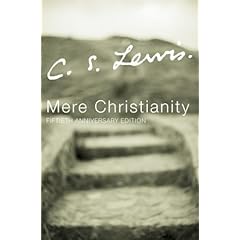
Mere Christianity: C.S. Lewis
In 1943 Great Britain, when hope and the moral fabric of society were threatened by the relentless inhumanity of global war, an Oxford don was invited to give a series of radio lectures addressing the central issues of Christianity. Over half a century after the original lectures, the topic retains it urgency. Expanded into book form, Mere Christianity never flinches as it sets out a rational basis for Christianity and builds an edifice of compassionate morality atop this foundation. As Mr. Lewis clearly demonstrates, Christianity is not a religion of flitting angels and blind faith, but of free will, an innate sense of justice and the grace of God.A forceful and accessible discussion of Christian belief that has become one of the most popular introductions to Christianity and one of the most popular of Lewis’s books. Uncovers common ground upon which all Christians can stand together.

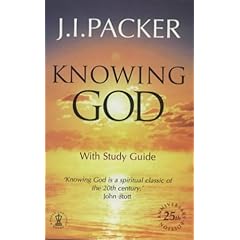
Knowing God: J.I. Packer
A lifelong pursuit of knowing God should embody the Christian’s existence. According to eminent theologian J.I. Packer, however, Christians have become enchanted by modern skepticism and have joined the “gigantic conspiracy of misdirection” by failing to put first things first. Knowing God aims to redirect our attention to the simple, deep truth that to know God is to love His Word. What began as a number of consecutive articles angled for “honest, no-nonsense readers who were fed up with facile Christian verbiage” Knowing God has become a contemporary classic by creating “small studies out of great subjects.” Each chapter is so specific in focus (covering topics such as the trinity, election, God’s wrath, and God’s sovereignty), that each succeeding chapter’s theology seems to rival the next, until one’s mind is so expanded that one’s entire view of God has changed. Having rescued us from the individual hunches of our ultra-tolerant theological age, Packer points the reader to the true character of God with his theological competence and compassionate heart. The lazy and faint-hearted should be warned about this timeless work–God is magnified, the sinner is humbled, and the saint encouraged.

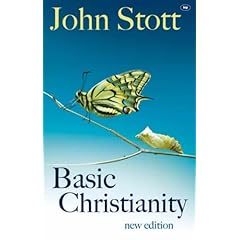
Basic Christianity: John Stott
Jesus certainly existed. His existence as an historical figure is vouched for by pagan as well as Christian writers,’ says John Stott. Who was Jesus? Why was he crucified? Did he really rise from the dead? We need answers to these key questions in order to understand the basics of Christianity. The author offers a clear and full explanation, showing what it means to be a Christian today. John R. W. Stott defends the fundamental claims of Christianity and defines the proper outworkings of these beliefs in the lives of believers. Here is a sound guide for those seeking an intellectually satisfying presentation of the Christian faith. “There are…few landmark books that everyone in the world should read. This is one of the rare few. ” — Rick Warren

The Case for Christ: Lee Strobel
The Case for Christ records Lee Strobel’s attempt to “determine if there’s credible evidence that Jesus of Nazareth really is the Son of God.” The book consists primarily of interviews between Strobel (a former legal editor at the Chicago Tribune) and biblical scholars such as Bruce Metzger. Each interview is based on a simple question, concerning historical evidence (for example, “Can the Biographies of Jesus Be Trusted?”), scientific evidence, (“Does Archaeology Confirm or Contradict Jesus’ Biographies?”), and “psychiatric evidence” (“Was Jesus Crazy When He Claimed to Be the Son of God?”). Together, these interviews compose a case brief defending Jesus’ divinity, and urging readers to reach a verdict of their own. A Seasoned Journalist Chases Down the Biggest Story in History The Project: Determine if there’s credible evidence that Jesus of Nazareth really is the Son of God. The Reporter: Lee Strobel, educated at Yale Law School, award-winning former legal editor of the Chicago Tribune-with a background of atheism. The Experts: A dozen scholars, with doctorates from Cambridge, Princeton, Brandeis, and other top-flight institutions, who are recognized authorities on Jesus. The Story: Retracing his own spiritual journey, Strobel cross-examines the experts with tough, point-blank questions: How reliable is the New Testament? Does evidence exist for Jesus outside the Bible? Is there any reason to believe the resurrection was an actual historical event?

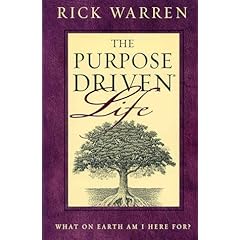
The Purpose Driven Life: Rick Warren
The spiritual premise in The Purpose-Driven Life is that there are no accidents—God planned everything and everyone. Therefore, every human has a divine purpose, according to God’s master plan. Like a twist on John F. Kennedy’s famous inaugural address, this book could be summed up like this: “So my fellow Christians, ask not what God can do for your life plan, ask what your life can do for God’s plan.” Those who are looking for advice on finding one’s calling through career choice, creative expression, or any form of self-discovery should go elsewhere. This is not about self-exploration; it is about purposeful devotion to a Christian God. The book is set up to be a 40-day immersion plan, recognizing that the Bible favors the number 40 as a “spiritually significant time,” according to author Rick Warren, the founding pastor of Saddleback Church in Lake Forest, California, touted as one of the nation largest congregations. Warren’s hope is that readers will “interact” with the 40 chapters, reading them one day at a time, with extensive underlining and writing in the margins. As an inspirational manifesto for creating a more worshipful, church-driven life, this book delivers. Every page is laden with references to scripture or dogma. But it does not do much to address the challenges of modern Christian living, with its competing material, professional, and financial distractions. Nonetheless, this is probably an excellent resource for devout Christians who crave a jumpstart back to worshipfulness.

If you are looking for a good Study Bible, there are two I use on a daily basis and would recommend:

Today’s New International Version (TNIV) Study Bible

Recommended by leading evangelical scholars, pastors, teachers, and church leaders worldwide for its clarity, accessibility, and precision of meaning, the “TNIV” is now available in a full-featured study edition. The “Zondervan TNIV Study Bible” combines over 20,000 in-text notes that form the study backbone of this Bible with the most current scholarship reflected through ongoing discoveries in archaeology, linguistics, and biblical history. Including award-winning features and concise, conservative biblical commentary, the “Zondervan TNIV Study Bible” is edited by the same leading evangelical scholars who brought the world the bestselling “Zondervan NIV Study Bible”. With a treasury of instant study material alongside the easy-to-read and highly accurate today’s “New International Version”, the “Zondervan TNIV Study Bible” provides the most comprehensive study Bible for an emerging generation of Bible readers.

Features include: over 20,000 bottom-of-the-page, verse-by-verse study notes offer biblical perspectives and study insights; icons throughout the study notes highlight historical/archaeological contexts, biblical characters and people groups, notes for personal application; topical index offers over 700 entries to enhance personal and topical Bible study; 16 pages of new, satellite-generated, full-color maps; “TNIV” side-column cross-reference system and concordance; helpful indexes to study notes, in-text maps, and color maps; the complete text of the “TNIV” in a single-column format with words of Christ in red; and presentation page, notes and map index, and 8-page historical timeline section.

Check out the TNIV website.

The English Standard Version (ESV) Study Bible
The ESV Study Bible was created to help people understand the Bible in a deeper way—to understand the timeless truth of God’s Word as a powerful, compelling, life-changing reality. To accomplish this, the ESV Study Bible combines the best and most recent evangelical Christian scholarship with the highly regarded ESV Bible text. The result is the most comprehensive study Bible ever published—with 2,752 pages of extensive, accessible Bible resources.

Created by an outstanding team of 95 evangelical Christian scholars and teachers, the ESV Study Bible presents completely new study notes, maps, illustrations, charts, timelines, articles, and introductions. Altogether the ESV Study Bible comprises 2 million words of Bible text, insightful explanation, teaching, and reference material—equivalent to a 20-volume Bible resource library all contained in one volume.

Check out the ESV website.

Calumny and the Blogosphere

Charles Freeman was not the first and certainly won’t be the last to fall victim to calumny. His description of the tactics used against him sound remarkably familiar this side of the Pond. They “… include character assassination, selective misquotation, the willful distortion of the record, the fabrication of falsehoods, and an utter disregard for the truth.”

Michael Orsi, writing in the Homiletic and Pastoral Review, has a perceptive and timely article on Calumny in the blogosphere.

He begins by warning that “Calumnious blogging is a serious offense against God’s law. Those who engage in it are jeopardizing their immortal souls and the souls of others.”

“Calumny is defined by the American Heritage Dictionary (1992) as a “false statement maliciously made to injure another’s reputation.” The Catechism of the Catholic Church (1994) places calumny as a serious sin under the Eighth Commandment, “Thou shall not bear false witness against your neighbor.” The Catechism states, “He becomes guilty of calumny who, by remarks contrary to the truth, harms the reputation of others and gives occasion for false judgments concerning them” (2447). The Catechism notes that calumny offends “against the virtues of justice and charity” (2479).

Calumny and its close relative detraction (derogatory comments that reveal the hidden faults or sins of another without reason) have been part of life since the dawn of time. But opportunities for breaking the Eighth Commandment have proliferated with the advent of the Internet, especially since the rise of the phenomenon known as “blogging.”’

In his very helpful article Orsi identifies some tell-tale warning signs to use in discerning and avoiding  the sin of calumny:

“There is a certain self-defeating aspect of calumnious blogging. The titillation of malicious gossip and the thrill of tearing down other human beings do have their limits. Insinuations and outrageous charges often provoke counterclaims that are just as wild. Mutual misquoting, distortion, hearsay and condemnation can spiral to heights of ridiculousness that strain credulity and eventually make readers lose interest. Even the element of anonymity can have counterproductive effects, highlighting the Kafkaesque unreality of the “kangaroo court” assembled in cyberspace. Readers can begin to suspect cowardice at work, or even to speculate about the psychological health of a blogger who will only comment from behind the mask of a fictitious name.

Still, the practice persists, and with the ubiquitous presence of the Internet, it touches the lives of believers in every parish today. Indeed, it presents us with a situation of serious moral conflict that pastors should address, because it violates the dignity of persons and undermines truth. And in the end, truth is the only basis on which a good society can be built. Thus, I offer the following recommendations about points that should be made regarding blogging:

  • Pastors should speak on the Eighth Commandment and its corollary injunctions against calumny and detraction.
  • People should be warned that what they read on blogs is not necessarily true.
  • Any anonymous blog or unsigned response has the weight of an unsigned letter and so should be quickly dismissed.
  • A blog that is particularly vicious toward persons can be indicative of psychological illness, or simply an evil person, and is therefore suspect.
  • Any blog that is unedifying and demeaning to another person should not be read. It is the equivalent of pornography.
  • Responding to these calumnious blogs, even for defense of the individual or for clarification, only encourages the offender and prolongs the life of the calumny.
  • Those who suffer calumny on anonymous blogs are, for the most part, better off enduring it. Seeking to correct misrepresentations usually has the effect of keeping controversy alive and adding to its interest value.
  • While reading such blogs is damaging to its target (since it causes unwarranted negative speculation about another’s character), it also hurts the reader since it causes scandal, sowing pessimism and despondency.
  • Calumnious blogging is a serious offense against God’s law. Those who engage in it are jeopardizing their immortal souls and the souls of others.
  • For anyone to make a judgment concerning a person’s character based on what is read on a negative blog is to be a formal cooperator in the evil perpetrated by the blogger.
Orsi concludes “Those involved in blogging would do well to keep in mind the words of Isaiah 33:15, which says of the good person: “He who acts with integrity, who speaks sincerely …, shuts suggestion of murder out of his ears, and closes his eyes against crime, this man will dwell in the heights.”
a
Read the whole article here

Counting your Profits and Losses: Philippians 3:1-11

Can you imagine earning £3 million a day? Can you imagine spending £3 million a day? For every day of every week of every year of your entire life? Then you are beginning to comprehend how much money Bernard Madoff confessed to defrauding his clients of Friday. He faces a possible 150 year jail sentence for defrauding people of a cool $65 billion dollars. But that amount pales by comparison with what the British government is planning to do legally over the next three months.

The Bank of England has just announced unprecedented steps to prevent the deepest slump since the 1930s. Described as “Quantitative Easing” policy makers cut the key interest rate to 0.5 percent last week, the lowest since the bank was founded in 1694. The Economist described this policy of “Quantitative Easing” with something of an understatement as advancing “to the frontier of orthodox monetary policy.” But more dramatically, this week, the Bank of England published plans to print £75 billion pounds. Something the Economist described as “having already crossed a frontier…”

Newsweek Magazine, noting that some banks made a profit the last two months and that their shares are rising, has confounded the pessimists by predicting we are actually entering a bull market.  Their headline shouts “Buy”. So should we sell or buy? Should we sit tight or take risks? What lessons do we learn from the week? Jesus once asked a question which may shed light on all this.

“What good is it for you to gain the whole world, yet forfeit your soul?” (Mark 8:36).

What good is it for you to defraud $65 billion dollars and forfeit your freedom? What good is it for a nation to print £75 billion pounds and continue in the life style that led to the crisis? Despite the front cover of Newsweek suggesting we are entering a bull market instead of  a bear market, I’d like to suggest a third option – a Biblical market – for God has spoken more about wealth than just about any other subject in the Bible. My advice is sell, sell, sell and invest in the Church. We give a far better rate of return and for a far longer period. Jesus says:

“I tell you the truth, no one who has left home or brothers or sisters or mother or father or children or fields for me and the gospel  will fail to receive a hundred times as much in this present age (homes, brothers, sisters, mothers, children and fields–and with them, persecutions) and in the age to come, eternal life.” (Mark 10:29-30)

That’s what I call a pretty good rate of return. In our passage from Philippians this morning Paul encourages us to think about our profit and loss account.

“But whatever were gains to me I now consider loss for the sake of Christ.  What is more, I consider everything a loss because of the surpassing worth of knowing Christ Jesus my Lord, for whose sake I have lost all things. I consider them garbage, that I may gain Christ.” (Philippians 3:7-8)

Read more here

No Axis of Evil: Letters to the Spectator Editor

The following letters have been published in the Spectator in response to a libelous article by Melanie Phillips Beware the New Axis of Evangelicals and Islamists

………………………………………………………………………………………………………………………………………………………..

Sir: Melanie Phillips’s article (‘Beware the new axis of evangelicals and Islamists’, 7 March) contains untruthful statements about me. I have never said that I wish Israel, in her words, ‘to be destroyed’ or to ‘disappear just as did the apartheid regime in South Africa’. I have never believed this and categorically reject any position that threatens the integrity of Israel as a sovereign nation. I have, however, spoken out against Holocaust denial as well as religious extremism. Far from seeking to ‘appease radical Islam’, I have criticised Islamist attacks against Christians in Iraq, as well as in Afghanistan. I have never knowingly, to use her words, ‘given interviews to, endorsed or forwarded material from American white supremacists and Holocaust deniers’. My publishers in the USA, InterVarsity Press, occasionally arrange interviews for me. I trust their judgment.

I do wish to see the present illegal occupation of Gaza, the Golan Heights and the West Bank brought to an end, but only as a consequence of the peaceful implementation of all relevant UN resolutions, the road map to peace previously agreed by the US, EU, Russia and UN in April 2003, the Annapolis Agreement of November 2007 and Quartet Statement of December 2008.

What saddened me most, however, about Melanie Phillips’s article were her concluding remarks criticising the archbishops and bishops of the Church of England. I have been a Christian minister for just short of 30 years but have yet to meet a priest, let alone a bishop or archbishop, who displays ‘extreme hostility towards Israel’ or who wishes to ‘accommodate and appease’ Islam.

Stephen Sizer
Christ Church, Virginia Water, Surrey

…………………………………………………………………………………………………………………………………………………….

Sir: I did not, as Melanie Phillips claims, ‘rubbish’ anyone in my review of Global Jihad. I offered a measured but critical response to Dr Sookhdeo’s analysis of Islam and terrorism.

Phillips claims I justify Palestinian terrorism, but provides no evidence. In addition, citing a 2002 article of mine on contemporary anti-Semitism, she omits to mention that right after the part she quotes, I also describe how ‘European culture has a history of anti-Semitism’ partly rooted in ‘the shameful teachings of many in the Church’.

It is a shame if there cannot be disagreement on important issues without recourse to slurs and disingenuously selective quotations.

Ben White
Sao Paulo, Brazil

………………………………………………………………………………………………………………………………………………………

Sir: Melanie Phillips accuses me of insinuating that the Jews were ‘people who are instructed by their religion to be violent, treacherous and imperialist’. This would, if I had said or meant it, be a thoroughly disgraceful piece of anti-Semitism. But anyone who reads my piece will see that it was actually a paraphrase of Dr Sookhdeo’s attitude to Muslims.

Andrew Brown
Editor, Belief, the Guardian, London N1

………………………………………………………………………………………………………………………………………………………

Phillips and the facts

Sir: Melanie Phillips (‘Beware the new axis of evangelicals and Islamists’, 7 March) states that I was present at the meeting last July, at All Nations Christian College, Ware, Hertfordshire, organised by Global Connections and the group Christian Responses to Islam in Britain. I was not there. Facts are sacred in journalism. This is one of many inaccuracies in the article, which were mentioned in letters last week. Global Connections and Christian Responses to Islam in Britain are to be commended for their sensitive work.

Graham Kings
St Mary’s Church, Islington, London N1

……………………………………………………………………………………………………………………………………………………….

Smear by association

Sir: Melanie Phillips was so anxious to vent her wrath against Revd Stephen Sizer (‘Beware the new axis of evangelicals and Islamists’, 7 March) for his role in persuading the Church of England to divest itself of shares in Caterpillar, the American company which makes the armoured bulldozers used by Israel to flatten Palestinian villagers’ homes and uproot their olive groves, that she presented misinformation about me in order to perpetrate a smear by association against Sizer. The fact that Sizer’s email bulletins sometimes land in my inbox is no basis for suggesting that he and I are of the same mind.

Sizer approaches the plight of Palestine from his position as a Christian who, it seems to me, has an internationalist and non-racialist outlook. I am a religiously agnostic British Nationalist and racialist who recognises that the Palestinians, since 1948, have faced an invasion of their homeland by aliens who have set about expropriating Palestine for themselves. I see similarities between what has happened to the Palestinians since 1948 and what has happened to the indigenous British people over the same period.

The National Front — at least while I was involved with it from 1969 to 1983 — was not ‘neo-Nazi’. It was a nationalist party with a fully democratic constitution at every level. There were self-proclaimed neo-Nazi groups around at that time, but they were formally proscribed by the NF. All this is fully on record, including in various High Court proceedings. Phillips was also wrong to describe me as ‘the former leader’ of the NF. I served as its National Activities Organiser under a number of leaders.

Martin Webster
Via email

………………………………………………………………………………………………………………………………………………………..

For a longer response to Melanie’s article see here.

For the reply from the Church of England see here.

For an insight on Melanie’s political views see Wikipedia, that bastion of objectivity and truth, especially her views on Israel.

For the perspective of a Jewish Israeli see Jeff Halper here

Blessing the Children of Abraham: An Annotated Bibliography

“I am not ashamed of the gospel, because it is the power of God that brings salvation to everyone who believes: first to the Jew, then to the Gentile.” (Romans 1:16)

Various  attempts have been made in recent years to broaden the definition of anti-Semitism to both criticise those engaged in evangelism among Jewish people as well as those who question the continued Israeli occupation of Gaza, the Golan and the West Bank. Neither is necessarily true although it sometimes is.

However, articles such as  “Anti-Zionist Attacks on Church and Messianic Group” (since removed from Moriel’s website but still endorsed by them) appears on a website associated with Christian Friends of Israel. They blame my writings for attacks against Jewish people and Christians here and abroad.

Jacob Prasch states, “We additionally agree that articles citing Sizer’s anti-Zionist and anti-Christian Zionist propaganda republished in radical Islamic publications are contributing to the incitement of Moslem attacks on churches in the UK are excellently written… But now he stands publicly accused by some sources (none published by Moriel) of having his articles against Christian Zionists used to help incite attacks on churches in the UK in the same manner radical Moslems attack churches in Islamic countries.”

Besides being economical with the truth (Moriel did publish the above article – it was accessible on 10th March 2009) these allegations are unproven and defamatory. Nothing could be further from the truth. When ever I am invited to speak, especially at interfaith gatherings, I present a Christian perspective that repudiates the use of violence to resolve injustice, and instead calls for active peacmaking efforts with the purpose of achieving reconciliation.

In Zion’s Christian Soldiers, I stress that it is important to distinguish between Judaism, Israel and Zionism as well as repudiate the use of violence to bring an end to the Arab-Israeli conflict.

“Judaism is a religious system. Israel is a sovereign nation. Zionism is a political system. These three are not synonymous. I respect Judaism, repudiate anti-Semitism, encourage interfaith dialogue and defend Israel’s right to exist within borders recognised by the international community…”

In Christian Zionism, I distinguish between three strands of Christian Zionism – Messianic, Apocalyptic and Political. Messianic and Jewish Christian organisations that are primarily evangelistic, such as the Churches Ministry Among Jewish People (CMJ), Christian Witness for Israel (CWI) and Jews for Jesus (JFJ) must be distinguished from those primarily having a social or political ministry, such as Bridges for Peace (BFP), Christian Friends of Israel (CFI), Christian Friends of Israeli Communities (CFOIC) and the International Christian Embassy Jerusalem (ICEJ). I am in the process of revising the book as the emphasis of some of these agencies has evolved over time and new ones have emerged such as John Hagee’s Christians United for Israel (CUFI) and Mike Evans’ Jerusalem Prayer Team.

How big is this movement? The Pew Forum on Religion and Public Life estimates there are 20-40 million supporters in America. The Unity Coalition for Israel draws together over 200 different organizations and claims 40 million active members. John Hagee has weekly access through TV and radio to 99 million homes in 200 countries. Hagee is just one of thousands of other pastors, television evangelists, authors and politicians who identify with Christian Zionism.

Whether they welcome it is another matter, but I endorse those ministries committed to presenting the good news of Jesus Christ to Jewish people, defending the existence of a safe homeland for the Jewish people, combating anti-Semitism and enhancing the understanding of the Gentile church as to our Jewish origins.

“I ask then: Did God reject his people? By no means! I am an Israelite myself, a descendant of Abraham, from the tribe of Benjamin. God did not reject his people, whom he foreknew.” (Romans 11:1-2)

That is why I have willingly contributed to Messianic conferences in South Africa and Israel, debated with Jewish rabbis and academics, dialogued with Zionists on radio and theological colleges as well as have met with representatives of agencies such as CMJ and CWI, for example, on a regular basis.

My books have been endorsed by Jewish academics such as Dr Jeff Halper, Rabbi Professor Dan Cohn-Sherbok and Professor Norton Mezvinsky

Jeff Halper writes,”Everyone loves peace, but not everyone loves peace-makers. The work of people like Stephen Sizer is crucial to peace-making. “Peace” is not merely a goody-goody term that we use on Christmas or Passover. It has to do with hard realities like conflict, injustice and suffering, all of which require not only good will, but an analysis which identifies the causes of the conflict and offers a way out. Hardest of all, peace-making requires self-reflection, self-criticism and the ability to see the viewpoint of the Other, the “enemy,” especially when “your side” is involved. And one more thing is essential to peace-making: an ability to reach out, even to your detractors, so that a common ground of action can be established.

In all these things my fellow peace-maker Stephen excels. Over the years he has shown both courage and good-will, but most important, in my mind, he has provided us with tough analysis, primarily around issues dealing with Christian Zionism, a fundamental obstacle to a just peace in Israel and Palestine, that helps us get to the foundations of the conflict in order to resolve it. One would think Stephen’s work would be appreciated by everyone – Christian Zionists excepted, (although a sizeable number of critical Evangelicals do support his analysis). His seminal book, Christian Zionism, accompanied by films and presentations, provides an authoritative de-bunking of the spurious theology underlying that school’s seemingly “pro-Israeli” positions which make genuine peace-making so difficult.

Why Stephen is attacked and demonized by the organized Jewish community is an absolute mystery to me. After all, Christian Zionism is supremely anti-Semitic: at the End of Days those Jews who do not accept Jesus die. Indeed, the Jews are sacrificed in the battle of Armageddon; witness Pat Robertson’s outrage at Israeli Prime Minister Ehud Olmert when he ended the attack on Lebanon in 2006, an attack that, in the eyes of Robertson and other Christian Zionists, was supposed to trigger Armageddon – no matter what befalls the Jews/Israelis. Jewish demonization of Stephen, rather than of the Christian Zionists, who Jewish and Israeli leaders cynically consider our allies,” demonstrates nothing more than bad faith. It is perfectly acceptable, apparently, to be anti-Semitic if, like Robertson, you are “pro-Israel.” Simply professing a doctrine in which the Jewish people is exterminated and disappears is no crime, in their view, as long as it somehow serves short-term Israeli interests (and Stephen shows that Christian Zionism does not serve Israeli or Jewish interests in any way).

Ironically, then, it is the peace-makers – anti-anti-Semites like Stephen and even critical Israeli Jews like me – who are the enemy. If that is the case, then all the protestations of the Jewish community against anti-Semitism are hollow. What they really mean is, be anti-Semitic by all means if you combine that with a pro-Israeli position, but woe be unto those who fight such an anti-Semitic creed as Christian Zionism because by opposing Christian Zionism you are somehow opposing Israel. In attacking Stephen in his criticism of Christian Zionism, Jewish leaders have gone so far as to define “pro-Israeliness” in anti-Semitic terms.

But peace-makers are themselves tough people, willing and able to face down bigotry and bad faith. Indeed, this willingness and ability are what makes us peace-makers. To the organized Jewish community I would only say, as an Israeli Jew: remove your moral and intellectual blinders so as to be able to differentiate your true (if critical) friends from your true enemies.” Jeff Halper, Jerusalem, April 8, 2009.

My books have also received critical but constructive reviews from David Pawson and Tony Higton.

“my fellow Zionists… will be disturbed by my agreement with much of Sizer’s criticism of this position.” (p. 19). “I am grateful to Stephen Sizer for drawing attention to the legitimate criticisms of dispensational Zionism. He has rendered a service to the cause of Zionism which was needed.” (David Pawson, Defending Christian Zionism, p. 39)

“After years of sparring, Stephen Sizer and I met up and found we had wide areas of agreement. Having worked in Jewish ministry for seven years, half of them in Jerusalem, I have seen the best and worst of Christian Zionism. Insofar as it combats anti-Semitism, defends the existence of a safe homeland for Jewish people, promotes evangelism among Jewish people, and supports reconciliation in the Holy Land, it is good. However, Sizer is right to criticize the serious failings of some Christian Zionism. I agree with him in rejecting the following errors which are held by many Christian Zionists:

  • Lack of godly compassion for the Palestinians, and of concern for their human rights and about their legitimate aspirations.
  • A negative attitude toward Palestinians, and Arabs in general, to the point of racism.
  • Uncritical support for Israel (a secular, sinful state like any other), justifying all its actions against the Palestinians.
  • Neglecting or even opposing and forbidding evangelism of Israelis, sometimes believing that Jewish people can experience salvation through Judaism.
  • Being more interested in the fulfilment of prophecy than in application of kingdom principles such as justice and reconciliation.
  • Opposing the peace process.
  • Sometimes advocating the ethnic cleansing of Palestinians from the Holy Land.
  • Sometimes supporting the rebuilding of the temple regardless of the problematic theological implications and the danger of provoking extreme violence.” (Tony Higton, A Critique of Christian Zionism, p. 18)

Over the years we have also hosted events in our church for CMJ and Jews for Jesus and regularly invite a local Jewish Christian pastor to speak at our monthly men’s breakfasts. Our church family include several who are Jewish or identify with Messianic Judaism. They seem comfortable with my own views, despite attempts by at least one anonymous blogger to change their mind having gained access to our church Facebook account. Offers to meet face to face and resolve his or her concerns proved fruitless.

“Rather, we have renounced secret and shameful ways; we do not use deception, nor do we distort the word of God. On the contrary, by setting forth the truth plainly we commend ourselves to every man’s conscience in the sight of God.” (2 Corinthians 4:2)


An Annotated Bibliography

The following list is partial and subjective but these books have been helpful, at least to me, in understanding and distinguishing between Judaism, Israel and Zionism and the necessity of Christian witness among Jewish people.

Light Force Brother Andrew
Wrongly accused of being anti-Israel, Brother Andrew replies, “The best way I can help Israel is by leading her enemies to Jesus Christ.” He shows that genuine dialogue is possible based on our common humanity. Should we really be surprised, he asks, to discover that so called terrorists are human beings like you and me created in the image of God? Dr. Carl Moeller, president of Open Doors USA, summarises the importance of this unique book. “Light Force is a riveting and often provocative book. The book details Brother Andrew’s passion and compassion for the Church and bringing the Light of Jesus to one of the world’s on-going hot spots. Like God’s Smuggler, it is compelling reading. By reading the daily headlines from the Middle East, we know Light Force will be both timely and relevant.”

Israel: Land of God’s Promise: Murray Dixon
Israel is the most misunderstood nation on the planet. The Jewish people are the most consistently persecuted in all of history – ancient and modern – why? Can the Church afford to pursue its historically notorious treatment of the Jew and the nation of Israel? This book offers clarity where confusion abounds. The author compels us to examine Church history and Jewish history in the light of God’s word. Jesus is Jewish and so are the roots of the Christian faith – why is that significant? No nation, ever, has been regathered from worldwide dispersion to its ancient homeland, and speaking its ancient language – except Israel. And that, only, after man’s most hideous crime, to attempt to exterminate them – why?

Atlas of the Holocaust: Martin Gilbert
The atlas traces each phase of the Holocaust, beginning with the anti-Semitic violence of prewar Germany and leading to the German conquest of countries in which the Jews had lived for centuries. Presented in chronological order, the maps document in compelling detail, month by month and week by week, the story of the Holocaust, from the spread of the early random killings of Jews and their systematic mass expulsion from thousands of towns and villages to the establishment of ghettos and the setting up of the death camps. The atlas ends with the death marches and executions in the final days of the Allied liberation. Also shown on the maps are more than two hundred acts of resistance and revolt, as well as areas of Jewish partisan activity and other avenues of escape and rescue. Many maps tell the stories of hundreds of children deported to their deaths. Others bear witness to individuals active in revolt and tell moving sagas of their courage and defiance.

No Strange God: Gordon Jessup
An outline of Jewish life and faith. Revised edition of this classic work which helps Christians understand their Jewish neighbours.

Christian Witness to the Jewish People: Lausanne Occasional Papers
This report, is one of a series of Lausanne Occasional Papers (LOPs) emerging from the historic Consultation on World Evangelization (COWE) held in Pattaya, Thailand, in June 1980.

Judaism is Not Jewish: Baruch Maoz
People from a Jewish background face difficult choices when they trust in Jesus as the Jewish Messiah. Baruch Maoz, the leader of a Christian Church in Israel, believes that to be Jewish is a blessing from God. The strong Jewish cultural identity impacts on worship and life so how does a Jewish Christian worship with his Gentile brothers and sisters? If they join churches will they be assimilated? If they establish synagogues will their fellow Christians feel excluded? The response that some Jewish Christians have decided upon is to establish a fourth branch of Judaism called Messianic Judaism (the others are Orthodox, Conservative and Reform). Baruch accepts there are fine Christians within the movement but shows how Jewish life is not the same as synagogue life. He enables Jewish Christians to retain a cultural identity without losing fellowship with other Christians.

c

The Israel Lobby and US Foreign Policy: John Mearsheimer and Stephen Walt
How a powerful American interest group has created havoc in the Middle East, damaged Israel itself and now threatens an even more perilous future. The Israel Lobby by John J. Mearsheimer of the University of Chicago and Stephen M. Walt of Harvard’s John F. Kennedy School of Government, was one of the most controversial articles in recent memory. Originally published in the London Review of Books in March 2006, it provoked both howls of outrage and cheers of gratitude for challenging what had been a taboo issue in America: the impact of the Israel lobby on U.S. foreign policy. Now in a work of major importance, Mearsheimer and Walt deepen and expand their argument and confront recent developments in Lebanon and Iran. They describe the remarkable level of material and diplomatic support that the United States provides to Israel and argues that this support cannot be fully explained on either strategic or moral grounds. This exceptional relationship is due largely to the political influence of a loose coalition of individuals and organizations that actively work to shape U.S. foreign policy in a pro-Israel direction. Mearsheimer and Walt provocatively contend that the lobby has a far-reaching impact on America’s posture throughout the Middle East—in Iraq, Iran, Lebanon, and toward the Israeli-Palestinian conflict—and the policies it has encouraged are in neither America’s national interest nor Israel’s long-term interest. The lobby’s influence also affects America’s relationship with important allies and increases dangers that all states face from global jihadist terror. You can read the London Review of Books article that inspired the book here.

Rabbis Meet Jesus the Messiah: Messianic Good News
This book contains the moving and exciting testimonies of twenty four Rabbis, each of whom were brought to the wonderful, but startling revelation that Jesus is the Messiah through a careful and diligent study of the Scriptures. Part of the purpose of this book is to refute the view expressed by various Jewish leaders throughout the ages that only worthless, ignorant and mentally feeble Jews are likely to be believers in Christ and to accept his teachings as recorded in the New Testament. Contrary to this, the Rabbis mentioned in the book, had all received rabbinical ordination, having been thoroughly schooled in the traditions of their fathers and the teachings of Judaism. This book also corrects the misconception that when a Jew becomes a believer in Yeshua – Jesus, he becomes a traitor (meshumid) to the Jewish people and ceases to be Jewish. It must be emphasised that the turning away from sin to God, is the fulfillment of what it really means to be a Jew. These testimonies are presented as a source of inspiration and encouragement to readers and to those who are faced with the same challenge today.

Abandoned: Stan Telchin
What’s the problem with Messianic Judaism? Stan Telchin, a Messianic Jew and former pastor, explores in depth the heart and soul of Messianic Judaism. He exposes the motive behind its creation, its controversial doctrines and its ineffectiveness in Jewish evangelism. Messianic Judaism has grown significantly in fewer than four decades. While intended originally to appeal to Jewish people, unexpectedly it appeals primarily to Gentiles. Telchin, in following the teaching of the apostle Paul, sees Messianic Judaism as divisive. With a firm and loving approach, he addresses the dangers of this movement, reiterates God’s intention for His Church to serve as “one new man” and, most importantly, advocates unity among the body of believers.

Anti-Semitism: Dan Cohn-Sherbok
Dan Cohn-Sherbok traces the origins of anti-Semitism and its manifestations, from political opposition, to racial persecution and religious and philosophical justifications for some of history’s most outrageous acts. Against this background of intolerance and persecution, Cohn-Sherbok describes Jewish emancipation from the late 18th century and its gradual transformation into the parallel political and nationalistic ideal of Zionism. He explores how, in the post-war period, anti-Semitism, already triggered by 19th-century Zionism and the formation of a Jewish settlement in Palestine at the end of the 19th century, has become rampant in the Arab world. Finally, he discusses how specific strands of anti-Semitism have arisen in the United States largely as a result of conflict between African-Americans and Jews, and how in Russia and Poland anti-Semitism is as strong as ever. The book covers all historical periods up to the present day and is written for the general reader.

The Iron Wall: Israel and the Arab World: Avi Shlaim
In the 1920s, hard-line Zionists developed the doctrine of the Iron Wall: negotiations with the Arabs must always be from a position of military strength. This doctrine, argues Avi Shlaim, became central to Israeli policy; dissenters were marginalized and many opportunities lost. Drawing on a great deal of new material and interviews with many key participants, Shlaim places Israel’s political and military actions under an uncompromising lens. The result is a fresh and informed account of one of the world’s most intractable conflicts of modern times.

Not Ashamed: The Story of Jews for Jesus: Ruth Tucker
Not Ashamed tells the remarkable story of how a small band of young Jewish believers became the world’s best-known Christian ministry to the Jewish people. Historian Ruth A. Tucker affectionately describes them as a “mission with an attitude.” She pulls no punches in presenting their triumphs and flops, and their often-controversial methods for winning souls and facing down hostile opposition. You’ll find more than fascinating history in Not Ashamed. You’ll discover the underlying connections between Christianity and Judaism and the reasons for centuries of conflict between Christians and Jews. Most important of all, you’ll come to understand the passion behind Jews for Jesus as they bring the message of the Messiah to their own people.

An annotated bibliography of books on Islam will follow.