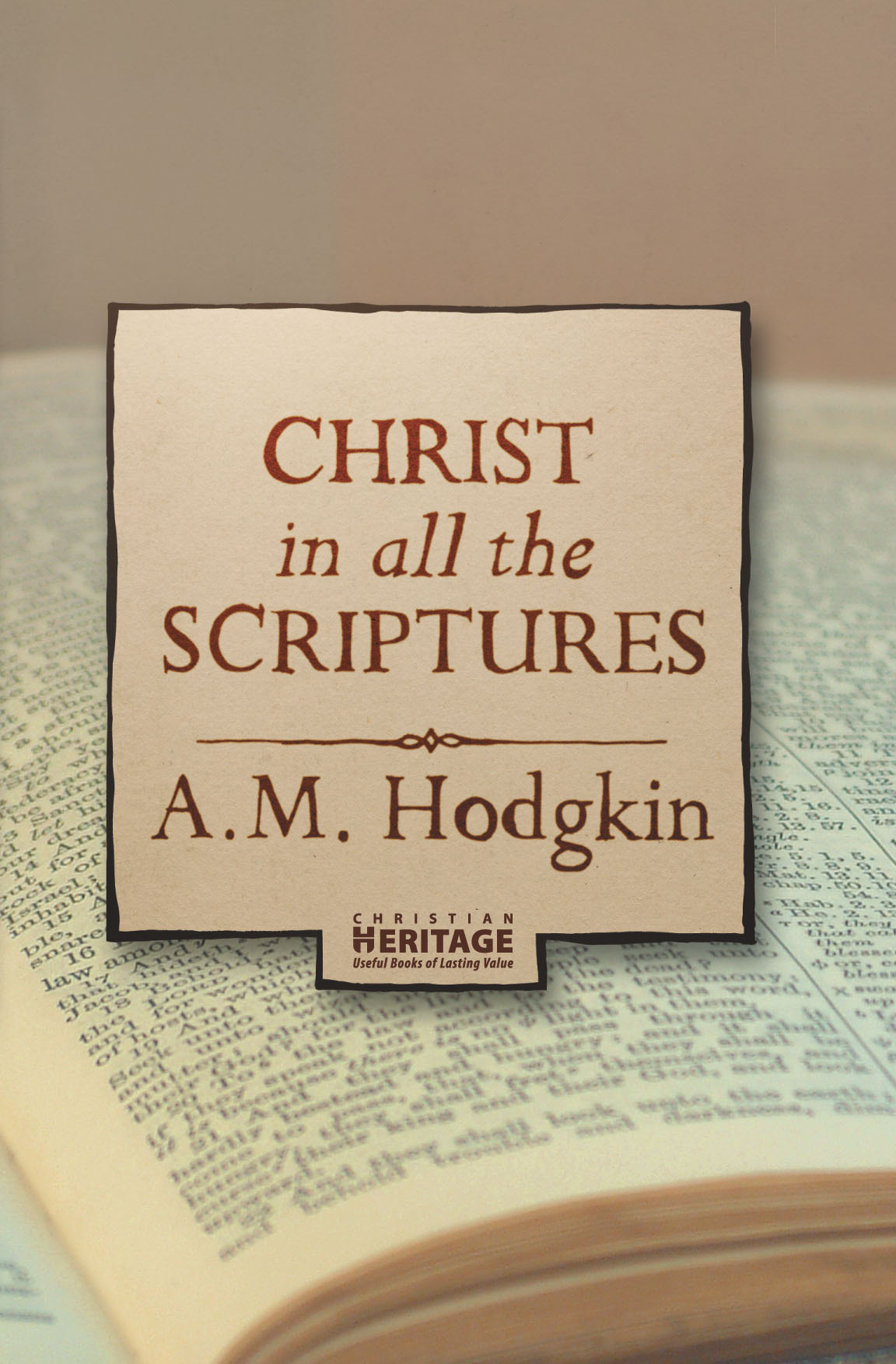
You are invited to discover what the Hebrew scriptures reveal concerning the Lord Jesus Christ. Amazingly, every central character, every key event, every prophecy, every Feast and Festival reveals ever more brightly the person and work of the Messiah, God’s anointed Son. You will see conclusively that His coming was no accident but part of God’s redemptive plan, revealed from the very beginning and progressively through history and Scripture.
And if you would like to read the book that inspired the series, it is appropriately called Christ in All the Scriptures. Written by A. M. Hodgkin, and first published in 1909, it has rightly become a classic. You can also read the entire book digitally here.
Hodgkin observes, in his introduction “Abraham rejoiced to see My day.” ”Moses wrote of Me.” ”David called [Me] Lord.” (John 8:56; 5:46; Matthew 22:45). We have in these words of our Saviour abundant authority for seeking Him in the Old Testament … To those of us who believe in Christ as truly God, as well as truly Man, His word on these matters is authoritative.”
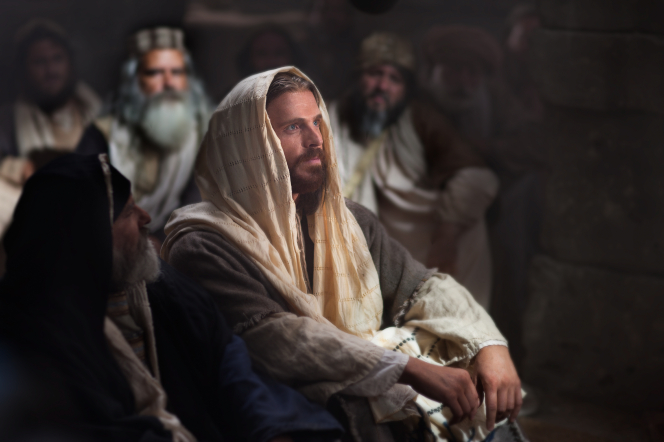
 In the Gospels, Jesus refers to 20 Old Testament characters and quotes from 17 Old Testament books. In Genesis, for example, Jesus refers to creation, the institution of marriage, to Noah, Abraham, Lot, to Sodom and Gomorrah. From Exodus, Jesus speaks of Moses, the burning bush, the Mannah in the wilderness and the Ten Commandments. From Leviticus, the ceremonial and moral law. From Numbers, the bronze serpent. From Deuteronomy, the law of Moses. Then there are references to David, Solomon, Elijah and Zechariah. He confounds his critics not just by quoting Scripture but by identifying himself as the one the Scriptures are speaking about.
“How foolish you are, and how slow to believe all that the prophets have spoken! Did not the Messiah have to suffer these things and then enter his glory?” And beginning with Moses and all the Prophets, he explained to them what was said in all the Scriptures concerning himself… Everything must be fulfilled that is written about me in the Law of Moses, the Prophets and the Psalms.” Then he opened their minds so they could understand the Scriptures.” (Luke 24:25-27; 44-45)
“Today this scripture is fulfilled in your hearing.” (Luke 4:21).
“You diligently study the Scriptures because you think that by them you possess eternal life. These are the Scriptures that testify about me.” (John 5:39).
Continue reading →

 “Do you not know that God entrusted you with that money (all above what buys necessities for your families) to feed the hungry, to clothe the naked, to help the stranger, the widow, the fatherless; and, indeed, as far as it will go, to relieve the wants of all mankind? How can you, how dare you, defraud the Lord, by applying it to any other purpose?” I wonder if you can guess who said that? John Wesley.