The United Methodist Church for Kairos Response present two authorities on Christian Zionism, a disturbing political theology embraced by millions of Americans who now have a tremendous influence on US foreign policy with regard to Israel and Palestine. Our speakers will help us understand the theology of Christian Zionism, why it is an inaccurate interpretation of Scripture, how it is harming Palestinian Christians and the entire Middle East peace process, and how to counter this theology in our churches.
Thomas Jefferson once asked the rhetorical question:
“Can the liberties of a nation be thought secure when we have removed their only firm basis, a conviction in the minds of the people that these liberties are of the gift of God? That they are not to be violated but with his wrath?”
In the 18th Century, on both sides of the Atlantic, there would likely have been a consensus that the answer was self-evident – our civic responsibility is but the outworking of our higher responsibilities to God. When the same revolutionary spirit infected the North American Colonies as it had France, it became a more debatable question there also. The First Amendment to the United States Constitution, which Jefferson helped write, provided one solution – separate church and state. Originally this was intended to protect the church from the state. But since 1947, the U.S. Supreme Court has interpreted it to mean that religion and government must stay separate for the benefit of both. Not so today. In an increasingly secularized world, most Americans and Europeans believe the Church should keep out of politics.
It is appropriate then to ask the question, what has religion got to do with politics? I suggest a great deal. From a Christian perspective, that we have responsibilities to both God and the state is clearly implied in Jesus’ enigmatic epigram, ‘Give back to Caesar what is Caesar’s and to God what is God’s.’ (Matthew 22:21). The religious leaders had tried to expose Jesus as either a collaborator with or rebel against the Roman Empire. Here is the context:
God has created us with meaning and purpose, with dignity and value – in His image. But for what? – We inhabit a world designed, created, nurtured and sustained by Almighty God, to whom we are accountable for the way we steward His good earth.
“The earth is the Lord’s, and everything in it,the world, and all who live in it; for he founded it on the seas and established it on the waters. Who may ascend the mountain of the Lord? Who may stand in his holy place? The one who has clean hands and a pure heart, who does not trust in an idolor swear by a false god.” (Psalm 24:1-4)
Life is a journey, with a beginning and end. We’re all travelers, somewhere on that journey, forever on the move, learning, growing, changing. The disruption caused by Covid-19, the daily news updates of casualties and the attempts to find a vaccine inevitably lead to a rollercoaster of emotions, highs and lows, hopes and fears. Psalm 23 is probably the most widely known and best loved of them all. In part it is because it addresses the strong emotions we often feel at times such as this. There are two parts to Psalm 23:
23:1-3 “The Lord Is My Shepherd” – What I affirm about God. 23:5-6 “You love will follow me” – What I experience of God.
23:4 links the two together. The Lord is my Shepherd because I know Lord you are with me.
We are invariably fascinated when secrets are revealed in the media – except perhaps when they are, our own. Those deeply personal things that matter the most to us – our children, our family, our bodies, our emails, our text messages, our age, our photos, our income, our bank accounts, we keep these private, and in many cases wisely so. The more important, the more personal, the more sensitive the information, the more likely, we will want to keep it private, confidential, or concealed. And many people feel the same way about their religious faith. Its personal. Its private. And it remains concealed.
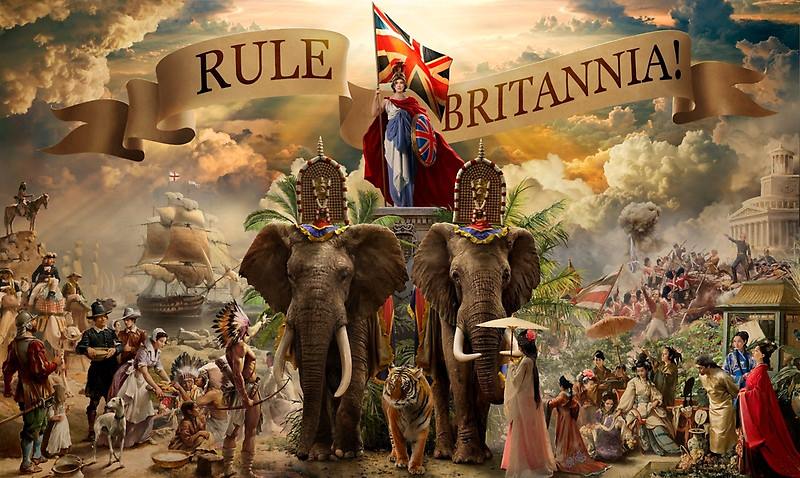
“When Britain first, at Heaven’s command, Arose from out the azure main, This was the charter of the land, And guardian angels sang this strain: Rule Britannia! Britannia rule the waves Britons never, never, never, shall be slaves.
The nations, not so blest as thee, Must, in their turns, to tyrants fall; While thou shalt flourish great and free, The dread and envy of them all. Rule Britannia! Britannia rule the waves Britons never, never, never, shall be slaves.
Sung with gusto at the Last Night of the Proms, “Rule Britannia” was a poem composed by James Thomson and set to music by Thomas Arne in 1740 to commemorate the accession of George II. [1]
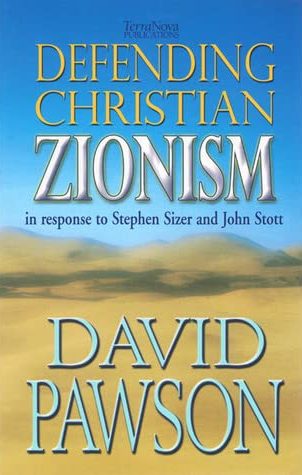
As a young Christian at Sussex University in the early 1970’s, I was enthralled by David Pawson’s biblically-based teaching and coveted his weekly teaching audio cassette tapes, especially on controversial theological and political subjects. He taught me to root my faith in scripture and apply it to every aspect of life. Forty years on, I remember David with respect and admiration. View his website here.
As a young Christian and student at Sussex university, I was enthralled by David Pawson’s biblically-based teaching in the 1970’s and coveted his weekly teaching recordings, especially on controversial theological and political subjects. He taught me to root my faith in scripture and apply it to every aspect of life. Forty years on, I remember David with respect and admiration. View his website here.
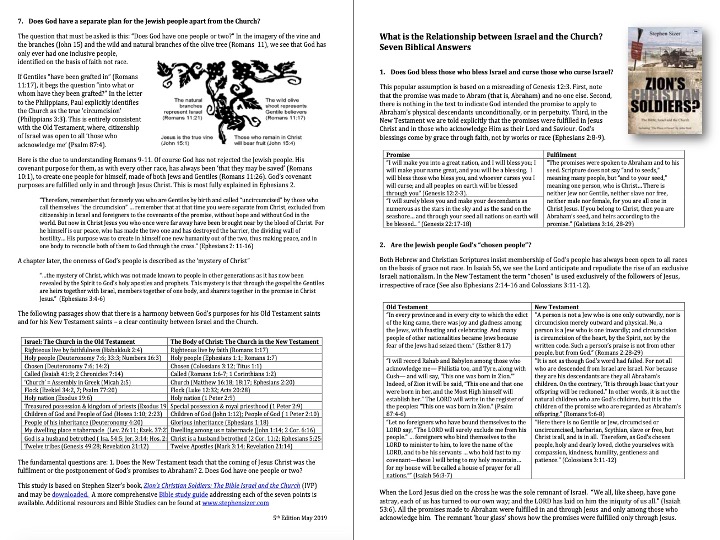
Although we agreed to disagree on some subjects, David kindly wrote this about my book Zion’s Christian Soldiers.
“my fellow Zionists… will be disturbed by my agreement with much of Sizer’s criticism of this position… I am grateful to Stephen Sizer for drawing attention to the legitimate criticisms of dispensational Zionism. He has rendered a service to the cause of Zionism which was needed.” David Pawson
In May 2008, David and I held a conversation about Christian Zionism on Premier Radio. Listen here.
The Living Stones of the Holy Land Trust is an ecumenical charity with the primary aim of advancing education about Christianity in the Holy Land and countries around, by:
raising awareness in Britain and elsewhere, educating and informing the public concerning Christians in the Holy Land, through our website, lectures, newsletter and a yearbook of academic theological articles;
promoting contacts between Christians (and others) in Britain and in the Holy Land, e.g. through pilgrimages promoting encounter, reflection and witness;
cooperating with other charities and groups with similar aims, by sharing activities and information
Websites store cookies to enhance functionality and personalise your experience. You can manage your preferences, but blocking some cookies may impact site performance and services.
Essential cookies enable basic functions and are necessary for the proper function of the website.
Name
Description
Duration
Cookie Preferences
This cookie is used to store the user's cookie consent preferences.