Category Archives: Bible

The Passion of Jesus the Messiah

DX239_18A3_9Frans van der Lugt, a 75 year old Jesuit priest, was a well-known figure in the Old City of Homs, respected by many for his solidarity with residents of the rebel-held area under a government siege for nearly two years. He refused to leave insisting that Syria was his home and he wanted to be with its citizens in their time of need. “If you stay, you stay for the struggle” he told the Independent in February. Last Sunday he was abducted and then murdered in his monastery garden. Another clergyman Ziad Hilal, described Frans as “a ray of joy and hope to all those trapped in the Old City.”

If you want to know someone’s heart, observe their final journey. The scale of the devastation in Syria is apocalyptic. The UN estimates there are 9 million refugees. If you want to help, see Embrace the Middle East, Tearfund or World Vision. I was in Tehran this week to publicize a Peace Pilgrimage to Syria taking medical supplies. I hope to welcome one or more of the participants on their way home next Sunday. If you want to know someone’s heart, observe their final journey.  In the verses before us today we learn three things about Jesus’ final journey.

The Passion of Jesus the Messiah from Stephen Sizer on Vimeo.

Continue reading

Christians Zionists at War with Syria

syria1Why has Israel been the subject of more UN Resolutions than any other country in the world? And why has the USA vetoed virtually every single one of them? Why is Israel allowed to develop chemical, biological and nuclear weapons while other Middle East countries denied access to peaceful nuclear technology? Why such a close relationship between Israel and the United States of America? What is the fascination with Israel among Evangelical Christians in America?

There is a simple explanation. At least one in four American Christians surveyed recently by Christianity Today magazine said that they believe it is their biblical responsibility to support the nation of Israel. This view is known as Christian Zionism.

The Pew Research Center put the figure at 63 per cent among white evangelicals. Christian Zionism is therefore pervasive within American evangelical, charismatic and independent denominations including the Assemblies of God, Pentecostals and Southern Baptists, as well as many of the independent mega-churches and among television evangelists.

Christian Zionism is much less prevalent within the historic denominations (Roman Catholic, Episcopal, Methodist, Presbyterian), which show a greater respect for the work of the United Nations, support human rights, the rule of international law, empathize with the Palestinians and cooperate with the indigenous Middle East churches.

Continue reading

Jesus the Master is Returning

noah

I suspect Russell Crowe and the producers of his latest film, in cinemas from next week, had wished they had released Noah in January at the height of the wettest winter on record. The film has inevitably aroused controversy. On the one hand for being creative with the Scriptures, but on the other for assuming that the Flood really happened.

It has certainly divided my Facebook friends. When challenged as to whether I really believed in the story of Noah. I simply replied, “Jesus clearly did, and that is good enough for me.” In our series the Passion of Jesus, as we prepare for Easter, we are listening to Jesus explain the meaning of his death, the significance of his resurrection, the implications of his ascension and the signs of his return. In the first half of Matthew 24, last week, we saw how Jesus answered his disciples’ question.

“What will be the sign of your coming and of the end of the age?” (Matthew 24:3).

I recommended viewing these verses through varifocal lenses. For Jesus describes: The Beginning of the Last Days. The Signs of the Last Days and the End of the Last Days. And all are in perfect focus.

In the verses before us today, Jesus elaborates on the events immediately preceding his return. I want to draw out three implications for us:

1. Jesus will return to an unsuspecting world
2. Jesus will rebuke unfaithful hypocrites
3. Jesus will reward his diligent servants

Continue reading

Jesus and the Torah

1669842_10152100078587893_1647673459_o

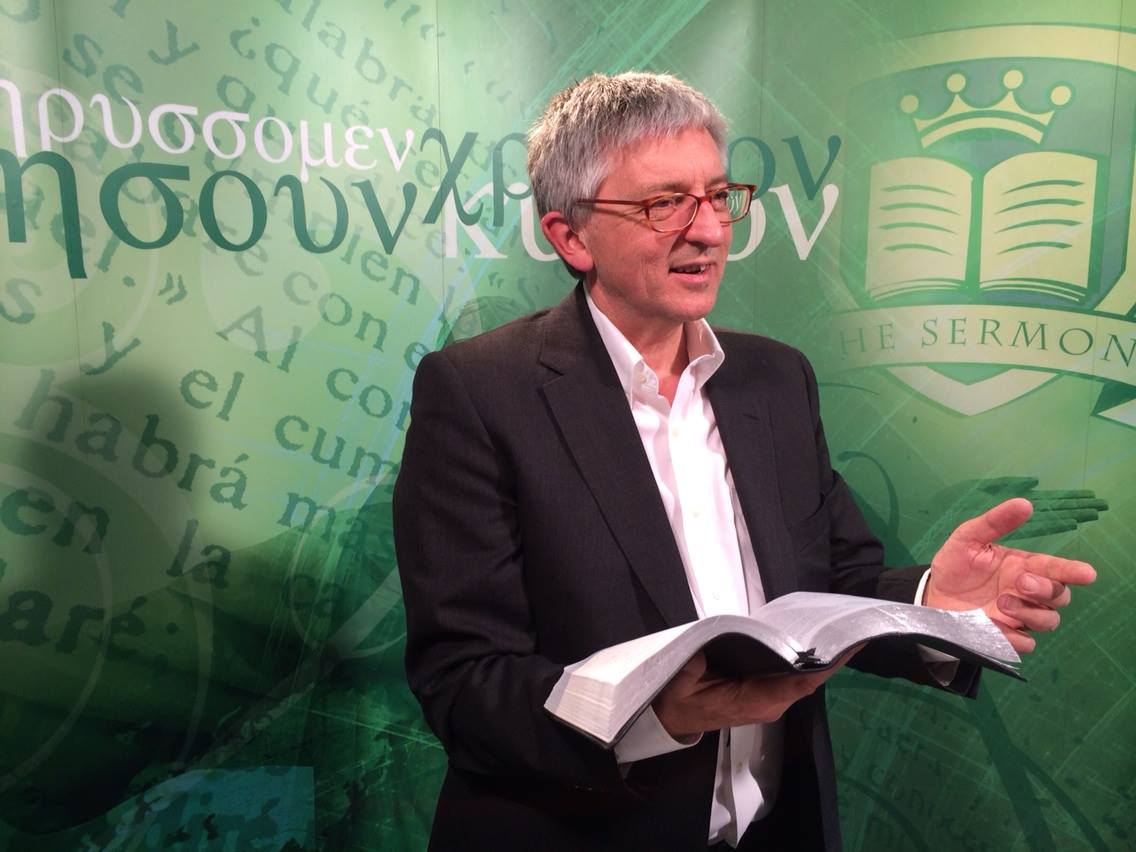
I was recently with Vivid Broadcast, Broadbridge Heath, Sussex, to record six of my sermons on ‘Christ in all the Scriptures’ for ‘The Sermon‘ a ministry of Richard Bewes.

Genesis: Jesus and Abraham’s Sacrifice
Exodus: Jesus and the Passover Lamb
Leviticus: Jesus and the Atonement Sacrifice
Numbers: Jesus and the Bronze Snake
Deuteronomy: Jesus and the Prophet
Joshua: Jesus and the Commander of the Lord’s Army

View the whole series so far here

Vivid have recently won the contract to record the Antique Roadshow.

1669842_10152100078572893_2131105299_o

Jesus is Coming Soon

In July 2006, at the launch of Christians United for Israel, after recorded greetings from President George W. Bush, and in the presence of US Senators and the Israeli Ambassador, Pastor John Hagee from Texas suggested,

“The United States must join Israel in a pre-emptive military strike against Iran to fulfill God’s plan for both Israel and the West … a biblically prophesied end-time confrontation with Iran, which will lead to the Rapture, Tribulation, and Second Coming of Christ.” [i]

Is that what the Apostle Peter had in mind when he said we should “look forward to the day of God and speed its coming”? (2 Peter 3:12).  Is this how we “speed Christ’s coming”?  Well what did Jesus say? In our series The Passion of Jesus, we have come to Matthew 24. The chapter begins with Jesus’ disciples asking him a question.

“What will be the sign of your coming and of the end of the age?” (Matthew 24:3).

They were dying to know when Jesus would return. And Christians have been speculating ever since. In verse 34, Jesus answers,

“Truly I tell you, this generation will certainly not pass away until all these things have happened.” (Matthew 24:34).

Jesus is Coming Soon from Stephen Sizer on Vimeo.

The problem has been that Christians in every generation since have believed Jesus was referring to their generation. Were they wrong? Well, yes and no. As a young Christian growing up in the 1970s, I was addicted to books on Bible prophecy like Hal Lindsey’s, Late Great Planet Earth. Lindsey insisted the signs of Jesus return were coming true in our generation. Lindsey figured that the return of the Jewish people back to the land after 2000 years, the founding of the State of Israel in 1948, and the capture of Jerusalem in 1967, were signs that Jesus predicted. Since a biblical generation is 40 years, Lindsey speculated that Jesus would therefore return in 1988.

Continue reading

Christianity Explored in Arabic

Would you like to help make history? South Sudanese Christians have asked for our help to fund the translation of the Christianity Explored course into Arabic.

One of our partners I have worked with in Juba writes,

“there is urgent need to translate the CE material to Arabic to benefit mainly those South Sudanese Christians who came from Arabic background. They are taking their discipleship seriously and they have great impact on other believers in South Sudan.”

We need to raise $1,000 US Dollars to facilitate the translation of the course material by this Summer. In August we hope to return to South Sudan and continue to train church leaders to use the course. If you would like to help make this possible, we would be pleased to hear from you. We are working with the charity Fields of Life to make this happen.

Here are photos of some of our adventures introducing Christianity Explored in Uganda, Kenya, Burundi and South Sudan.

Will the Jewish Temple be Rebuilt?

_DSC9475-026

“Mounting tension: Israel’s Knesset debates proposal to enforce its sovereignty at Al-Aqsa Mosque – a move seen as ‘an extreme provocation to Muslims worldwide’” was the ominous headline in the Independent newspaper, 27th February 2014.

Ben Lynfield writes, “The Arab-Israeli conflict took on an increasingly religious hue when the Jordanian parliament voted unanimously to expel Israel’s ambassador in Amman after Israeli legislators held an unprecedented debate on Tuesday evening over a proposal to enforce Israeli sovereignty at one of Jerusalem’s holiest sites, currently administered by Jordan, and to allow Jewish prayer there. 500 metres by 300 metres, the Temple Mount, or Haram Al Sharif as it is called in Arabic, is probably the most disputed plot of land on earth. Hal Lindsey claims, ‘I believe the fate of the world will be determined by an ancient feud over 35 acres of land.’[1]

Many Christians share the belief that the Islamic shrines must be destroyed and that a Jewish Temple must and will be rebuilt – very soon. But this won’t be a museum replica of the one king Solomon built or be just another attraction for pilgrims to the Holy Land. No, this Temple will be built for one purpose and one purpose only – for bloody animal sacrifices, and lots of them.

What is the case for rebuilding the Jewish Temple? Does the Bible predict such an event? If so, where and how it might be built? What does the New Testament  say on the subject? What are the implications for Christians should the Jewish Temple be rebuilt?  Continue reading

The King of Righteousness is Coming

Jesus-Christ-jesus-9917686-640-457Isaiah 32–35:  Community Bible Study International (CBSI)

 In 1919, American writer Lincoln Steffens visited the Soviet Union to see what the Communist revolution was accomplishing; and in a letter to a friend, he wrote, “I have seen the future, and it works.” If he were alive today, he would probably be less optimistic; but in those days, “the Russian experiment” seemed to be dramatically successful.

In the four chapters that conclude the first section of his prophecy, Isaiah invites us to look at four future events to see what God has planned for His people and His world. These chapters are not human speculation; they are divinely inspired revelation, and they can be trusted.

1. The King will Reign (Isa. 32:1–20)

At the beginning of its history, the nation of Israel was a theocracy. God was their King. But in the days of Samuel, the people asked for a king; and God gave them Saul (1 Sam. 8). As you know Saul failed in his divinely appointed role and the Lord raised up David who established both the dynasty for Israel’s throne and the ancestry for Israel’s Messiah (2 Sam. 7). Every Jew knew that the future Messiah-King would be the Son of David (Matt. 22:41–46). In Isaiah 32:1, Isaiah writes about “a king”; but in 33:17, he calls him “the king.” By the time you get to verse 22, He is “our king.” It is not enough to say that Jesus Christ is “a King” or even “the King.” We must confess our faith in Him and say with assurance that He is “our King.” Like Nathanael, we must say, “Rabbi, You are the Son of God! You are the King of Israel!” (John 1:49, NKJV)

Continue reading

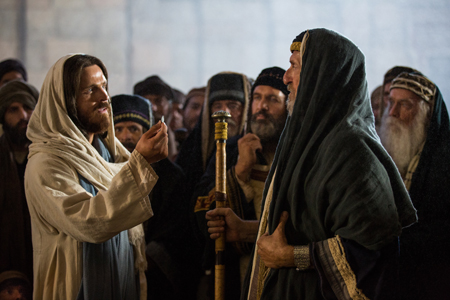
Jesus Confronts Religious Abusers

Have you noticed that when a new hotel or commercial building is being constructed, the architects will invariably install large mirrors in the lobby? Ever wondered why? Apparently we complain less when we’re looking at ourselves.

We all get distracted by our reflection at times, don’t we?  We all want to be seen, to be recognized, to be accepted, affirmed, encouraged, appreciated, valued. And that’s OK. It is instinctive to want to be loved. As long as we are not preoccupied or obsessed with ourselves and what others can or should do for us.  As we emphasize on our church website “We were designed to live in community – to know and be known, to love and be loved, to serve and be served, to celebrate and be celebrated.”

But like the mirrors you sometimes find at amusement parks, our self perception can so easily become warped or distorted when we view ourselves through the eyes of other people rather than God.  It is bad enough when this is tolerated in a community and remains unchecked. But it is much worse when religious leaders encourage and exploit their image or position. Then it becomes abusive and manipulative.  I have been a victim of that kind of spiritual abuse. And if you have been a church member for any length of time, you probably have been too. Spiritual abuse ranges from the relatively benign to the lethally toxic, but usually stems from a misuse of authority by religious leaders.

Continue reading

What are we to make of Jesus Christ?

When I was a child, I used to read the Daily Mail newspaper every day – well, the Peanuts cartoons, to be precise. I still remember when Lucy asked each of her friends whether she should have her ears pierced. The conversation went on for days. Schroeder was playing his piano. “Do you think I should have my ears pierced?” He replies, “I don’t mind, you pierced mine long ago.” She storms off. “Linus, Do you think I should have my ears pierced?” “I have a better idea…” he replies cheekily, “Why don’t you have your mouth boarded up?” Lucy wallops him. When he comes to, he reflects, “It was worth it!”

How do you cope with people who just don’t seem to like you? No matter how hard you try to be nice to them, they will always twist your words, they question your motives, they gossip about you, they try and discredit you, they seem to undermine you at every opportunity.  Maybe you work with them, maybe they live next door, or maybe you are related. How do you deal with them? Blank them out? Retaliate? Stoop to their level? Do you go on the defensive? How do you react?

As we approach Easter, in the first of our new teaching series, entitled The Passion of Jesus, we see how Jesus dealt with his enemies. We see his passion for them. When they ask what appear to be innocent questions, Jesus responds with a question of his own:

What do you think about the Messiah?” – “who is he?” (Matthew 22:41). Implicit in that question are two more, “Why did Jesus come?” and What is his claim on our lives?”

What are we to make of Jesus Christ? from Stephen Sizer on Vimeo.

Continue reading