
Category Archives: Bible

An Unexpected Journey this Christmas

“Far over the misty mountains cold.
To dungeons deep and caverns old.
We must ere break of day.
To seek the pale enchanted gold.”

Is that a line from

A. Nativity 2?
B. James Bond?
C. Life of Pi?

The correct answer is
D. The Hobbit.

J.R.R. Tolkein’s fantasy takes place in “Middle-earth.” Middle Earth is not some never-never land. It is simply an adaptation of the Old English Middle–erthe from Middan-geard which is the name inhabited lands “between the seas.” Which means, in some profound sense Tolkien’s intended his fantasy world to be a mirror, or reflection of our own. So what has a fairy story about elves and dwarves got to do with Christmas? Lets try and find an answer through three riddles.

Continue reading

Jesus at the Christmas Movies

It became a popular tradition at my former parish, Christ Church, Virginia Water, for my annual sermon at the Christmas Carol Service to feature one of the films being shown in cinemas in December. Here is a selection:

Jesus and Star Wars: The Force Awakens  (2015)
The Gospel According to Paddington Bear  (2014)
Frozen: A Story to Melt Your Heart  (2013)
The Hobbit: An Unexpected Journey  (2012)
Arthur Christmas Meets Jesus  (2011)
A Lion in the Manger  (2010)
The Purpose of Christmas  (2009)
The Day the Earth Stood Still  (2008)
His Dark Materials  (2007)
Always Winter Never Christmas  (2005)
The Incredibles  (2004)
The Return of the King  (2003)

Palm Sunday: Three Barriers to Surrendering to God

Surrender is not a popular word, is it?  Almost disliked as much as the word submission. It implies losing, and no one wants to be a loser. Surrender evokes unpleasant images of admitting defeat in battle, forfeiting a game, or yielding to a stronger opponent. The word is almost always used in a negative context. In today’s competitive culture we are taught to never give up and never give in. So, we don’t hear much about surrendering. If winning is everything, to surrender is unthinkable. We would rather dwell on winning, succeeding, overcoming and conquering not yielding, submitting, obeying, or surrendering. It is ironic then that surrender is at the heart of the Christian faith.

Palm Sunday is all about surrender. Jesus rode on a donkey not a horse.  Jesus came in peace not war, to surrender not conquer. Jesus came to give his life as a ransom sacrifice, to be the Passover lamb, to make atonement with God. And when some in the crowd laid their coats on the ground, it was a sign of their surrender to him. Because surrender is the natural response to God’s grace and mercy. Our surrender is called many things in scripture: consecration, taking up your cross, dying to self, yielding to the Spirit, presenting ourselves as a living sacrifice. What matters is that we do it, not what we call it. 

Continue reading

Christmas According to Paddington Bear

Trains were humming, loudspeakers blaring, porters rushing about shouting at one another, and altogether there was so much noise that Mr Brown, who saw him first, had to tell his wife several times before she understood. ‘A bear? On Paddington station?’

Mrs Brown looked at her husband in amazement. ‘Don’t be silly, Henry. There can’t be!” “Seeing that something was expected of it the bear stood up and politely raised its hat, revealing two black ears. ‘Good afternoon,’ it said, in a small clear voice … The bear puffed out its chest. ‘I’m a very rare sort of bear,’ he replied importantly. ‘There aren’t many of us left where I come from.’ ‘And where is that?’ asked Mrs Brown. The bear looked round carefully before replying. ‘Darkest Peru. I’m not really supposed to be here at all. I’m a stowaway.'”[1] Michael Bond’s marmalade sandwich-loving Peruvian bear first sauntered onto the page in 1958’s A Bear Called Paddington.

Named after the London station at which he was found, Paddington has been delighting generations of children the world over, ever since. Now for the first time he is appearing in the cinema too. Paddington, is a charming and funny little adventure about a very polite and friendly bear who yearns for a new home in London. Harry Potter producer David Heyman says: “Paddington Bear is a universally loved character, treasured for his optimism, his sense of fair play and his perfect manners, and of course for his unintentional talent for comic chaos.”

Continue reading

Jesus and Moana: Where Do You Long To Be?

“There’s a line where the sky meets the sea
And it calls me
But no one knows how far it goes
All the time wondering where I need to be
Is behind me
I’m on my own
To worlds unknown”

I wonder if you can identify with Moana singing “How Far I’ll Go” in the lavish original Disney film?

“Every turn I take
Every trail I track
Is a choice I make
Now I can’t turn back
From the great unknown
Where I go alone
Where I long to be”

When you look at the beauty of the world around you, does it fill you with a sense of wonder? Does its abundance inspire you to praise God?  Are you thankful just to be alive? Are you frustrated with the world the way it is? Does the presence of evil and suffering impel you to want to help those in need? Are you restless? Are you longing to fulfil your destiny?  I encourage you to see the film Moana.

Continue reading

Jesus and the Pharisees: Contrasting Strategies for War and Peace: (Mark 3:1-12)

“Treacherous colleagues, competitive friends, bloody-minded commuters – it’s a war out there. And according to Robert Greene, it’s a conflict we’re ill-equipped to deal with. After analyzing the moves of history’s great military leaders, he’s written a rulebook to achieving victory in life’s daily battles.”[1]

The blurb goes on to say, “Spanning world civilizations, synthesizing dozens of political, philosophical, and religious texts and thousands of years of violent conflict, The 33 Strategies of War is a comprehensive guide to the subtle social game of everyday life informed by the most ingenious and effective military principles in war. Learn the offensive strategies that require you to maintain the initiative and negotiate from a position of strength, or the defensive strategies designed to help you respond to dangerous situations and avoid unwinnable wars.


According to Penguin the publishers, this is “An indispensable book…  The great warriors of battlefields and drawing rooms alike demonstrate prudence, agility, balance, and calm, and a keen understanding that the rational, resourceful, and intuitive always defeat the panicked, the uncreative, and the stupid… The 33 Strategies of War provides all the psychological ammunition you need to overcome patterns of failure and forever gain the upper hand.”[2]

Today we are going to learn about Jesus’ strategy, not for war but for peace. We are going to compare Jesus’ strategy with that of the Pharisees (and by way of application – observe how the same tactics are used by Zionists today). 

Continue reading

How to Become a Contagious Christian (1 Peter 3)

I got a surprise call from the BBC recently. “Did I have a spirit of adventure? Could I think on my feet and cope without home comforts? Did I like a challenge? Was I willing to appear on their programme ‘Bare Necessities’? Two teams compete against each other to see who can survive in a remote location somewhere in the world for a week with only the bare essentials provided. Was I willing to join a team of three vicars competing against three bookmakers? Naturally. With God on our side it would be no contest. Could I participate at short notice? Did I have a passport? Could I go anywhere in the world? For an audience of 2 million, when do we start? Did I have any phobias? Real men don’t have phobias – at least we don’t admit them to strangers. Would I be prepared to eat anything? Yes with my eyes closed. Could I work in a team made up of strangers? Try me. The last question – Did I have one wish? ‘To see heaven on earth’ I heard myself say. The interview lasted half an hour. It felt a cert. I was in. They loved me. The delightful programme co-ordinator assured me she would come back to me in a few days. I put the phone down and began to prepare myself. 

Continue reading

Surrender or Else (Philippians 2)

Surrender is not a popular word, is it?  Almost disliked as much as the word submission. It implies losing, and no one wants to be a loser. Surrender evokes unpleasant images of admitting defeat in battle, forfeiting a game, or yielding to a stronger opponent. The word is almost always used in a negative context. In today’s competitive culture we are taught to never give up and never give in. So, we don’t hear much about surrendering. If winning is everything, to surrender is unthinkable. We would rather dwell on winning, succeeding, overcoming and conquering not yielding, submitting, obeying, or surrendering. It is ironic then that surrender is at the heart of the Christian faith.
 
On Palm Sunday Jesus rode on a donkey not a horse.  Jesus came in peace not war, to surrender not conquer. Jesus came to give his life as a ransom sacrifice, to be the Passover lamb, to make atonement with God. And when some in the crowd laid their coats on the ground, it was a sign of their surrender to him. Because surrender is the natural response to God’s grace and mercy. Our surrender is called many things in scripture: consecration, taking up your cross, dying to self, yielding to the Spirit, presenting ourselves as a living sacrifice. What matters is that we do it, not what we call it. 

Continue reading

John Stott : The Place of Israel

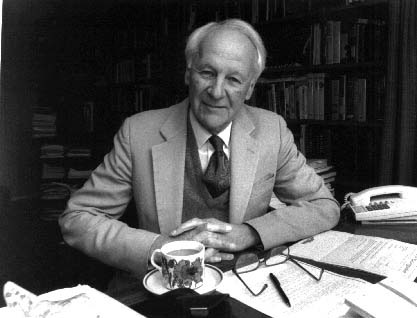
John Stott will long be remembered as a pastor and teacher and inspirational leader within the Anglican evangelical community for over 65 years. Less well known is the courageous stand John took on the need for justice and peace in the Middle East. John kindly wrote the foreword to In the Footsteps of Jesus and the Apostles and allowed his sermon on ‘the Place of Israel‘ to be included in Zion’s Christian Soldiers He also wrote this gracious commendation of Christian Zionism

“I am glad to commend Stephen Sizer’s ground-breaking critique of Christian Zionism. His comprehensive overview of its roots, its theological basis and its political consequences is very timely. I myself believe that Zionism, both political and Christian, is incompatible with biblical faith. Stephen’s book has helped to reinforce this conviction.”

To make John’s views on the Place of Israel more widely known I am reproducing his sermon here:  Continue reading

Redeeming Israel? Confused on the Road to Emmaus (Luke 24)

If you went in search of the village of Emmaus today, you would not find it. This Sunday, literally hundreds of millions of Christians around the world will hear the Easter story of the encounter between two disciples and the risen Lord Jesus on the Road to Emmaus. Few however, will hear mention of Emmaus today, or what has happened there in our lifetime. In an article published by If Americans Knew,  Sacred Christian Site Emmaus Destroyed by Israel, Alison Weir writes,

“In 1967, after Israel launched its Six Day War, Israel expelled the inhabitants of Emmaus and obliterated almost all traces of the village, along with two other Palestinian villages nearby. This was part of the Israeli strategy, in the words of an Israeli historian, “to take over as much of Palestine as possible with as few Palestinians as possible” Israeli journalist Amira Hass describes Emmaus before it was levelled:

“Schools, mosques, an ancient church, olive presses, paths to fields and orchards, bubbling streams, mountain air, sabra bushes, carob and olive and deciduous trees, harvested fields, graves, water cisterns.” Israel then “brought in the bulldozers and destroyed and detonated and trampled. Not for the first time, not for the last. And the owners of all that beauty – the elderly, the children, the infants – heard and watched the explosions from a kilometre or two away.”

Continue reading