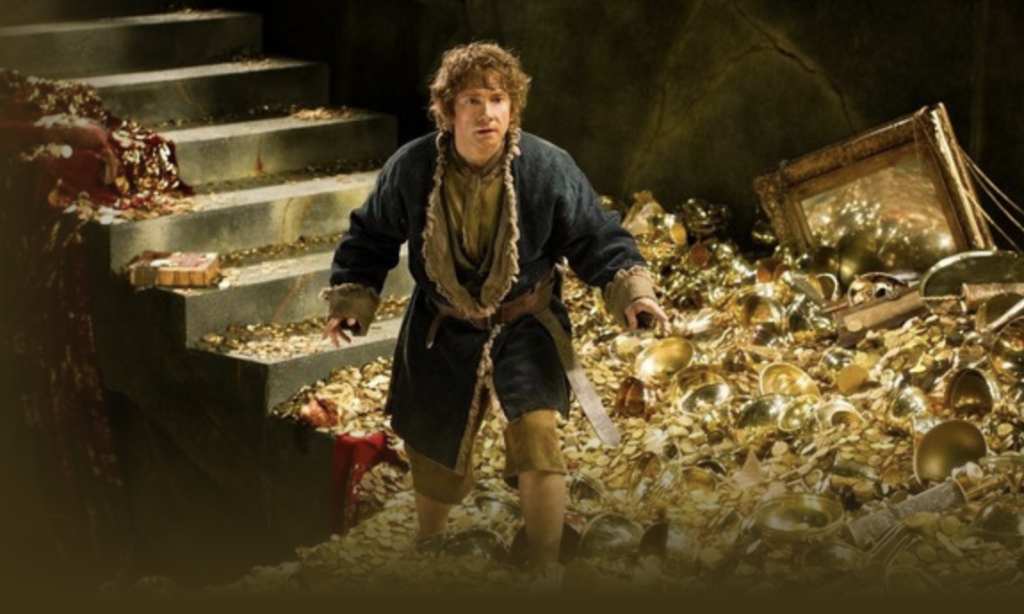
“Far over the misty mountains cold. To dungeons deep and caverns old. We must ere break of day. To seek the pale enchanted gold.”
Is that a line from
A. Nativity 2? B. James Bond? C. Life of Pi?
The correct answer is D. The Hobbit.
J.R.R. Tolkein’s fantasy takes place in “Middle-earth.” Middle Earth is not some never-never land. It is simply an adaptation of the Old English Middle–erthe from Middan-geard which is the name inhabited lands “between the seas.” Which means, in some profound sense Tolkien’s intended his fantasy world to be a mirror, or reflection of our own. So what has a fairy story about elves and dwarves got to do with Christmas? Lets try and find an answer through three riddles.
If you were like me, when you were very young, there were only two really important events in your life. You felt like they could not come soon enough. What were they? The first was… your birthday. The second was… Jesus’ birthday. Both involved presents. Lots of presents. Then when you were old enough to know that Father Christmas was not in the Nativity Play and you were allowed to stay up late, there was a third special day. New Year’s Eve. There were no presents but you still looked forward to the party and seeing in the New Year. For me, Summer holidays were special but never as special as my birthday and Christmas Day. We love to celebrate beginnings. We celebrate new life. Our birthday. Family birthdays. Jesus’ birthday. The birth of a new year. So what is it with the Church? When does the Church year begin? Not Christmas and the birth of our Saviour. Not Easter and the gift of new life. Not even Pentecost and the birth of the Church. The Church year begins with Advent. Continue reading →
This month we’re continuing the conversation about Christian Zionism with Rev. Dr Stephen Sizer, the first Director of ISCZ. We’ll uncover more about the history of Christian Zionism and learn about why engaging in the work to combat this theology is so necessary.
Unable to attend personally, I nevertheless wholeheartedly endorse the declaration and urge you not only to sign it, but pledge to share it and endeavour, with God’s help, to make it a reality.
View resources and recordings from the conference here
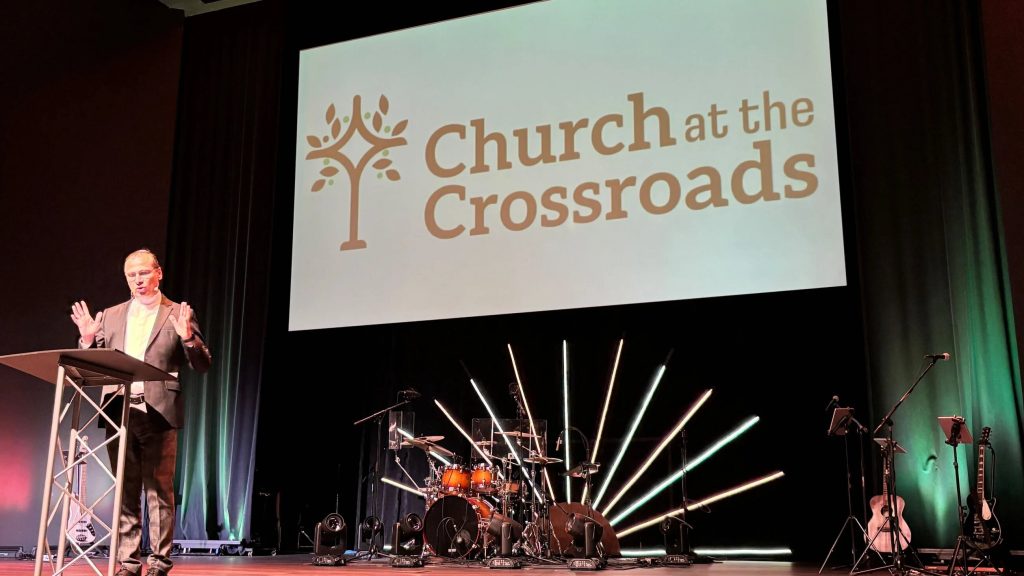
Church at the Crossroads was held on September 11-13 in Glen Ellyn, IL.
It is a gathering of Christians who recognize that the church stands at a defining moment–Jesus is urgently calling us back to the narrow way of the cross. As violence escalates in Israel and Palestine, and some in the Church use Scripture to justify war, occupation, or silence, we must ask: Have we traded the gospel of peace for the false promises of security and comfort?
At this crossroads, the Church must choose. Will we follow the political idols of our day—or Jesus, who disarmed the powers and made peace through His blood?
Rooted in Scripture and led by Palestinian Christian leaders—alongside pastors and peacemakers from across North America—this conference invites American Christians to engage in honest reckoning, prophetic reflection, and faithful action. Through worship, prayer, teaching, and fellowship, we are called to repentance, renewal, and courageous discipleship. This is a space to confront harmful theologies, rediscover the gospel of the Kingdom, and stand with all who seek justice in the land.
Jesus is calling the Church—not to comfort, but to faithfulness, peace, and costly love.
Trains were humming, loudspeakers blaring, porters rushing about shouting at one another, and altogether there was so much noise that Mr Brown, who saw him first, had to tell his wife several times before she understood. ‘A bear? On Paddington station?’
Mrs Brown looked at her husband in amazement. ‘Don’t be silly, Henry. There can’t be!” “Seeing that something was expected of it the bear stood up and politely raised its hat, revealing two black ears. ‘Good afternoon,’ it said, in a small clear voice … The bear puffed out its chest. ‘I’m a very rare sort of bear,’ he replied importantly. ‘There aren’t many of us left where I come from.’ ‘And where is that?’ asked Mrs Brown. The bear looked round carefully before replying. ‘Darkest Peru. I’m not really supposed to be here at all. I’m a stowaway.'”[1] Michael Bond’s marmalade sandwich-loving Peruvian bear first sauntered onto the page in 1958’s A Bear Called Paddington.
Named after the London station at which he was found, Paddington has been delighting generations of children the world over, ever since. Now for the first time he is appearing in the cinema too. Paddington, is a charming and funny little adventure about a very polite and friendly bear who yearns for a new home in London. Harry Potter producer David Heyman says: “Paddington Bear is a universally loved character, treasured for his optimism, his sense of fair play and his perfect manners, and of course for his unintentional talent for comic chaos.”
“There’s a line where the sky meets the sea
And it calls me
But no one knows how far it goes
All the time wondering where I need to be
Is behind me
I’m on my own
To worlds unknown”
I wonder if you can identify with Moana singing “How Far I’ll Go” in the lavish original Disney film?
“Every turn I take
Every trail I track
Is a choice I make
Now I can’t turn back
From the great unknown
Where I go alone
Where I long to be”
When you look at the beauty of the world around you, does it fill you with a sense of wonder? Does its abundance inspire you to praise God? Are you thankful just to be alive? Are you frustrated with the world the way it is? Does the presence of evil and suffering impel you to want to help those in need? Are you restless? Are you longing to fulfil your destiny? I encourage you to see the film Moana.
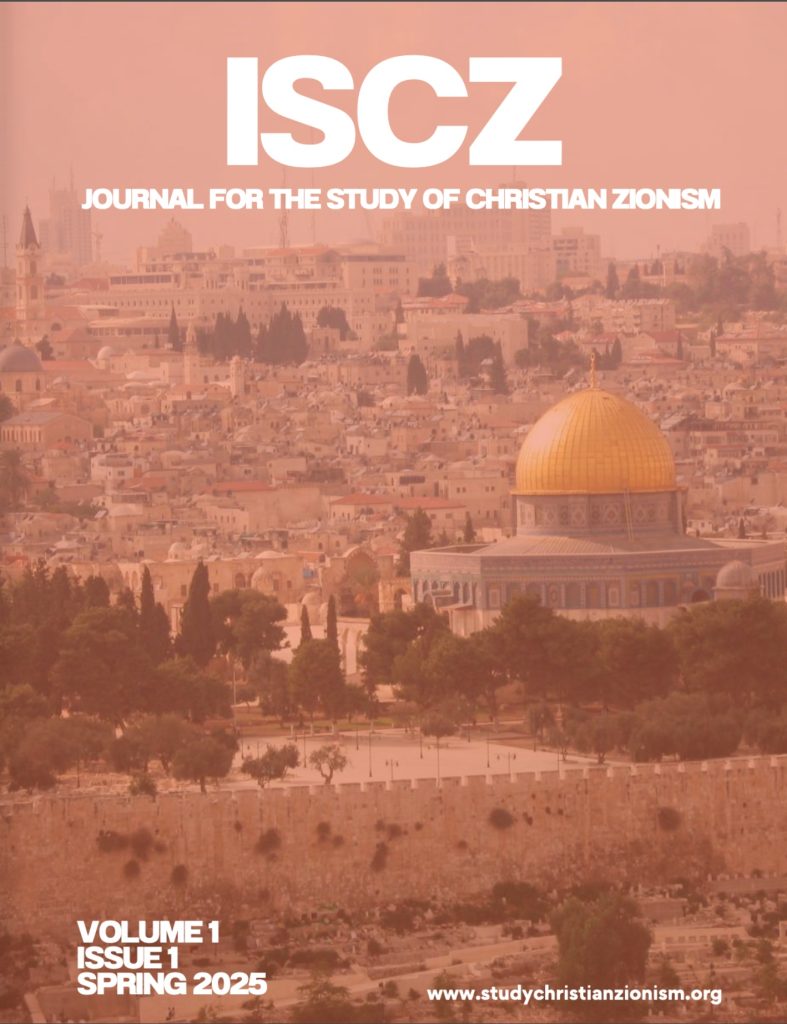
Just 500 metres by 300 metres, the Temple Mount, or Haram Al Sharif as it is called in Arabic, is probably the most disputed plot of land on earth. Hal Lindsey claims, ‘I believe the fate of the world will be determined by an ancient feud over 35 acres of land.’
Many Christians share the belief that the Islamic shrines must be destroyed and that a Jewish Temple must and will be rebuilt – very soon. But this won’t be a museum replica of the one king Solomon built or be just another attraction for pilgrims to the Holy Land. No, this Temple will be built for one purpose and one purpose only – for bloody animal sacrifices, and lots of them.
In this article we want to explore the case for rebuilding the Jewish Temple; consider whether the Bible predicts such an event; and if so, where and how it might be built. We will then look at what the New Testament has to say on the subject and some of the implications for Christianity should the Jewish Temple be rebuilt. Finally, we will reveal that the Temple is actually under construction (but don’t peep).
However eccentric or strange it may seem, influential Christian leaders are actively promoting and funding Jewish religious groups who want to destroy the Dome of the Rock in Jerusalem, the third most holy shrine within Islam. They want to replace it with a fully functioning Jewish Temple. They are doing so because they believe the Bible mandates it. Indeed, some Christians like pastor Clyde Lott, a Pentecostal rancher from Mississippi, are even trying to breed the perfect red heifer to assist in future Temple sacrifices. According to the Book of Numbers chapter 19, the ashes of a red heifer are needed to purify the priests and altar before sacrifices can be offered again.
The search for the red heifer has been described as a ‘four legged time bomb’.
Do you realise the very first person to see the risen Lord Jesus, the first person to respond to him and the first person to tell the good news to others, was not one of the Apostles, but Mary Magdalene. Mary Magdalene appears in all four Gospel accounts of the death and resurrection of Jesus.
From these we learn that Mary Magdalene became a friend and follower of Jesus after he cast out seven demons from her. She was present during Jesus’ trial (Matthew 27:45). She was there at the Crucifixion (John 19:25).She watched Joseph of Arimathea bury Jesus (Luke 23:56).
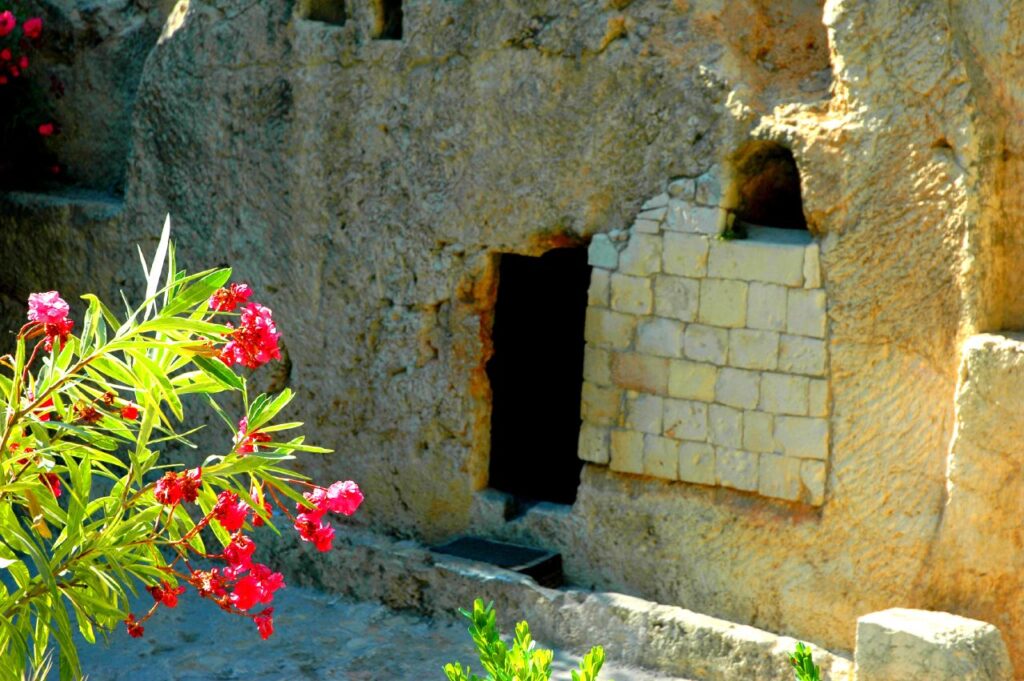
And on Easter Sunday she and some other women were the first to discover the stone had been rolled away (John 20:1), first to meet the risen Lord Jesus (John 20:15-16) first to tell the disbelieving disciples the good news (John 20:18).
Surprisingly, it was also Mary and some other women who supported Jesus financially from their income. This tells us something about the value Jesus placed on women. Jesus recruited and traveled with both men and women followers. That was unheard of. When we think of the disciples we tend to imagine the 12 male Apostles, but Jesus drew around him both men and women, into one extended family of sisters and brothers. In this Jesus was very radical. It was the custom that women would only travel with their families. In the Easter story, the Apostle John gives us the fullest account of Mary’s role. As we read John 20 together I want to make three observations about Mary: About her heart, about her mind and about her will.
What is the most expensive property you can buy? If you want a London address, One Hyde Park was on sale recently for £75 million. Knightsbridge on one side, the world’s biggest back garden on the other, and very little noise from the neighbours. But if you need a little more sunshine in the Summer, consider the Villa Leopolda on the French Riviera. Named after the former King of Belgium it went on sale recently for only £485 million. And if money is no object, the most expensive property in the world? Currently, the Antilia Building in South Mumbai. 27 stories high. Three helipads on the roof, nine elevators in the lobby and space for 168 cars in the garage. A snip at £650 million.
These are the properties you can buy. What about those you can’t? Comfortably the most expensive private residence in the UK, Buckingham Palace is valued at over £1 billion. The Palace houses 775 rooms, including 52 bedrooms, 19 state rooms, 188 staff rooms, 92 offices, and 78 bathrooms. But what is the most expensive property in the world? It is not Buckingham Palace. It is not the White House, the Kremlin or even the Vatican.
Websites store cookies to enhance functionality and personalise your experience. You can manage your preferences, but blocking some cookies may impact site performance and services.
Essential cookies enable basic functions and are necessary for the proper function of the website.
Name
Description
Duration
Cookie Preferences
This cookie is used to store the user's cookie consent preferences.