 A Highland farmer was overseeing his animals in a remote mountainous pasture when suddenly a brand-new BMW coupe appeared out of a dust cloud towards him. The driver, a young man in a white Armani suit, Ray Ban sunglasses, YSL tie, and Mediterranean tan, leans out the window and asks in a perfect Oxbridge accent, “If I tell you exactly how many cows and calves you have in your herd, Will you give me a calf?”
The farmer looks at the man, obviously a yuppie, then looks at his peacefully grazing flock and calmly answers, “Sure, why not?” The yuppie parks his car, whips out his Mac Book Air, links by wifi to his iPhone 5. He turns on his Garmin Nuvi sat nav to get an exact fix on his location, uploads his location to a NATO satellite which then creates a series of ultra-high-resolution images of the hillsides around him. Downloading the photos via a real time image enhancing facility in Hamburg, Germany, within seconds, he prints out the full-colour, 150 page report on his portable LaserJet printer. Taking off his Ray Bans, the young man unbuttons his Armani jacket and smiles to reveal two rows of perfect ultra-white teeth. Turning to the farmer he says, “You have 1,586 cows and calves.” “That’s right. Well then, I guess you can take one of my ‘calves’,” says the farmer. He watches the young man select one of the animals.
He looks on amused as the young man stuffs it into the trunk of his car. Then the farmer says to the young man, “Now, if I can tell you exactly what your business is, will you give me back my calf and your sunglasses?” The young man thinks about it for a second and then says, “Okay, why not?” The farmer looks up, scratches his stubble, leans on his stick and says, “You’re one of those non-elected ‘special advisors’ to the Prime Minister working for one of them publically funded Quangos with offices in Westminster but living tax free in Brussels aren’t you?”, says the farmer. “Wow! That’s correct,” says the yuppie, “but how did you guess all that?” “No guessing was required” answered the farmer. “You showed up here even though nobody called you; you want to get paid for an answer I already knew, to a question I don’t need to ask. And you really don’t know a thing about cows…this is a herd of sheep. Now give me back my sheep dog.”
 Wednesday was our monthly day of prayer and fasting. In the evening we prayed for Kylie serving in India, for Francis and Georgina moving to Holland and for Ian and Suzanne going soon to Uganda.
 An hour outside the Saudi capital of Riyadh, in the rocky terrain of the desert, a Saudi family concludes a daylong outing. A full moon illuminates the black line of silhouettes in prayer. Karen House, writes of what happened next in Newsweek, “While I sit by myself on a blanket nearby, Ahmad and his father, brother, and young sister prostrate themselves in the direction of Mecca. Observing my failure to pray, Ahmad, who is 6, approaches, clearly concerned. “I need to teach you something,” he says. “What?” I ask. “Do you know what to say when the angel of death comes?” he says. Assuming I do not, the little boy then provides the answers that the dying should give if they want to transit successfully to the hereafter: “The angel asks you, ‘Who is your God?’ and you say, ‘Allah,’?” says Ahmad. “?‘Who is your prophet?’ You say, ‘Muhammad.’ ‘What is your faith?’ You say, ‘Islam.’”
 “The Temple Mount is like a smouldering volcano that is bubbling and threatening to erupt – a threat that is liable to endanger Israel’s existence.’ That was the summary of a report delivered to the Israeli prime minister by the former head of the Israeli secret service and by the former police commissioner. And the tragedy is this – some misguided Christians it seems are ready to light the fuse. Many Christians raised on the Scofield Reference Bible and books by authors like Hal Lindsey are convinced the Jewish Temple must be rebuilt so that it can be desecrated by the Anti-Christ, before Jesus can return. Hal Lindsey writes,
 The Book of Isaiah, written around 700 years before the coming of Jesus Christ, is quoted more times in the New Testament than any other book of the Hebrew Scriptures. Why is that? 754 of Isaiah’s 1292 verses are predicting the future. That means 59% of Isaiah is prophecy. Isaiah contains 11 direct prophecies concerning Jesus and it is cited or alluded to in at least 50 NT passages. Why? Why? Lets find out.
 Signs can be very useful. Some signs tell you the obvious. Some signs leave it to your imagination. Sometimes signs tell you what lies ahead. Some signs tell others what you don’t really want them to know. Some signs tell you more than they probably should. Sometimes they tell you what to look out for. Sometimes they tell more about the writer than the sign itself. Sometimes signs should not be taken too literally. Sometimes signs are just plain confusing. But the best ones show us the way to heaven. In our Bible reading today we learn about the greatest sign in the world.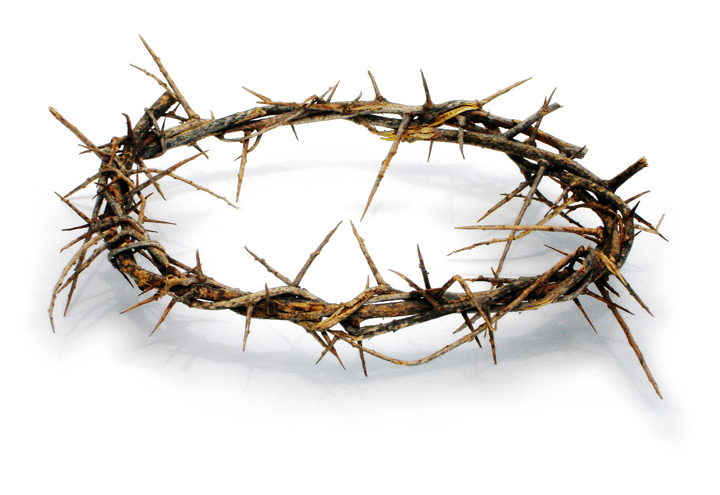

 Its been a pretty good time for pharmaceutical company shares – at least those selling stress reducing medications… First, there was the government sponsored report that revealed the next generation of home buyers will struggle to even get a toe hold on the property ladder. Whereas in 2000, house prices averaged four times annual earnings, by 2026, house prices will cost 10 times average earnings – so mortgages will get costlier and take longer to pay off. The solution? Simple. Live with your parents until you can move in with your children…