Category Archives: Anglicanism

Jewish Rabbis, Professors, Academics, Clergy and Activists Challenge CCJ Statement

16 March 2012

From: Rabbi Professor Dan Cohn-Sherbok PhD, DD
Emeritus Professor of Judaism
University of Wales

Dear Christopher

I am writing to you about Dr. Stephen Sizer whom I have known for several years. I am very concerned about recent accusations made in the press that he is antisemitic.

Perhaps I should say something initially about my knowledge of antisemitism as well my involvement in a recent court case dealing with Jew-hatred as an expert witness for the Counter Terrorism Agency of the Crown Prosecution Service. I have written three books dealing with the topic of antisemitism: The Crucified Jew: Twenty Centuries of Christian Antisemitism (Harper Collins, 1992 ), Antisemitism: A History (Sutton, 2004), and The Paradox of Antisemitism (Continuum, 2006). The aim of the first two books was to trace the historical development of Jew-hatred through the ages, and to illustrate its evil nature. The third book was designed to demonstrate the paradoxical nature of antisemitism: although Judaeophobia is one of humanity’s greatest crimes and must be eradicated wherever possible, the Jewish people have paradoxically survived due to persecution and suffering. Our agonies have drawn us together and enabled us to endure: this may be the meaning of the concept of God’s suffering servant.

On the basis of these and other publications, I was hired by the Counter Terrorism Agency of the Crown Prosecution Service to be an expert witness in an important trial of two individuals who had disseminated antisemitic material on the internet. The trial took place in Leeds in 2009 and was dealt with by two separate juries. Eventually the two defendants, Simon Sheppard and Stephen Whittle, were found guilty of inciting racial hatred against Jews (and others) and were sent to prison. This was an important legal case because one of the central issues that was discussed at the trial was whether the Jewish community should be considered strictly a religious body or an ethnic group. This was critical because if the Jewish community is solely a religious group then the defendants could not be tried under the Race Relations Act. During the trial I attempted to demonstrate that the Jews are in fact both a religious and ethnic community–the jury eventually agreed, and this set a precedent for any further cases of antisemitic attack. During the trial the police informed me that the Attorney General was particularly interested in the case because of its legal significance.

I mention all this because I have had substantial experience with prosecution of individuals who encourage racial hatred. Given this background, I have been disturbed to read about the allegations made against Stephen Sizer. These are, I believe, completely without foundation: there is simply no evidence that he is an antisemite. It is true that many of his writings are highly critical of Israeli policy; in this respect they echo the views of a number of important Jewish historical revisionists including Professor Avi Shlaim of Oxford University and Illan Pappe of Exeter University who in a variety of publications have castigated Israel for its treatment of the Palestinians. It would be a mistake to consider their views antisemitic, as it would to construe Stephen Sizer’s political criticisms as evidence of antipathy against Jews.

What is true, however, is that Stephen Sizer is an international expert on the origins and growth of Christian Zionism. Some time ago I read his seminal study of Christian Zionism: Christian Zionism: Road-Map to Armageddon (IVP, 2004) which I subsequently quoted in my own study of Christian Zionism: The Politics of Apocalypse: The History and Influence of Christian Zionism (Oneworld, 2006). Several years later he published another significant study: Zion’s Christian Soldiers (IVP, 2007) which was highly praised by such scholars as Professor Ronald E. Clements, the Right Rev Kenneth Cragg, and Professor Gary M. Burge. This is what I myself wrote about the book:

Stephen Sizer deftly expresses the many exegetical missteps of contemporary Christian Zionists. He advocates a more just and Christ-centred alternative to the politically and ethically problematic views espoused by many contemporary end-time popularizers.

In these two books, Stephen Sizer is highly critical of Christian Zionism, yet it would be a profound mistake to interpret his views as constituting an attack on Jewry.

This week I have been in contact with Stephen Sizer regarding the issue of the website that has been referred to in the press. I asked him how it happened that this offensive website (which relates to Israel’s action) on his Facebook was not removed straightaway. He has sent me all the relevant information including the offending website material. What he tells me is as follows: He assumed Nick Howard was based in the United States and did not in fact read Nick Howard’s complaint. This was a mistake and he regrets ignoring it, but due to his active involvement in Middle East affairs, he gets criticism on a daily and weekly basis. However, once he realized the seriousness of the error of linking his Facebook entry with the offending website, he did remove it and wrote to Marcus Dysch at the Jewish Chronicle on 4 January. He states that he had thought he had done so before. In his letter to Marcus Dysch (which he put on his blog), he states that he has over the years made his position clear on antisemitism and holocaust denial. Citing material from his own website, he writes:

I have for example:

*lamented the suffering of Christians under Islamic rule
*criticized the Iranian government’s human rights record
*criticized Hamas
*repudiated suicide bombers and terrorism
*repudiated holocaust deniers
*repudiated antisemitism
*repudiated racism and the British National Party
*distinguished anti-Zionism from antisemitism
*advocated a diplomatic solution to resolving tensions with Iran
*advocated for the resolution of the Israeli-Palestinian conflict by peaceful means based on the implementation of international law

He then went on to quote from his book, Zion’s Christian Soldiers:

“It is true that at various times in the past, churches and church leaders have tolerated or incited antisemitism and even attacks on Jewish people. Racism is a sin and without excuse. Anti-Semitism must be repudiated unequivocally. However, we must not confuse apples with oranges. Anti-Zionism is not the same thing as antisemitism despite attempts to broaden the definition. Criticising a political system as racist is not necessarily racist. Judaism is a religious system. Israel is a sovereign nation. Zionism is a political system. These three are not synonymous. I respect Judaism, repudiate antisemitism, encourage interfaith dialogue and defend Israel’s right to exist within borders recognized by the international community. But like many Jews, I disagree with a political system which gives preference to expatriate Jews born elsewhere in the world while denying the same rights to Arab Palestinians born in the country itself.”

I am sure Stephen Sizer is giving an honest account of his mistake in failing to read Nick Howard’s email and not removing the offending website more speedily. I hope the Church will forgive him for his mistake (Perhaps I should mention in this regard that I am in the process of publishing a book about the Middle East crisis: it is due out next week. Alongside this book, I have also written a Companion Website (which will be available online) including about 70 websites related to the conflict between Israel and the Palestinians. In the light of Stephen Sizer’s experience, I realize I must carefully scrutinize each website to make sure there is no offending material, and I have told the publishers that they must delay putting the Companion Website online until I have done so.)

No doubt Stephen Sizer’s detractors are acting in good faith, and I agree with them that antisemitism must be confronted. But they are regrettably misguided in their allegations about Stephen Sizer. He is in no sense antisemitic, and instead is fully in sympathy with those who seek to eradicate all forms of Jew-hatred in the modern world. Let me turn finally to the trial I mentioned in Leeds. Following the conviction of the two defendants, Bassetlaw MP John Mann, chair of the All-Party Parliamentary Group against Antisemitism commented:

The conviction of Simon Sheppard and Stephen Whittle is proof that if you write, disseminate and publish antisemitic racist propaganda in the UK, or on the internet from here in the UK, the police will come after you and the courts will convict. This case sets an excellent precedent– antisemitic hate is not welcome here in the UK.

Having worked with the Counter Terrorist Agency of the Crown Prosecution Service, I am fully in agreement with such sentiments. We in the Jewish community must be vigilant to insure that our community does not suffer from attack. But it would be a travesty of justice to construe Stephen Sizer’s mistake in linking an offensive website to his Facebook and not removing it immediately as a deliberate attempt to encourage racial hatred.

Yours ever,

Dan

Rabbi Professor Dan Cohn-Sherbok

Permission to publish this letter was obtained from the author and recipient.

See also letters from:

Dr Mark Braverman, Author of the Fatal Embrace
Anne Clayton, Coordinator, Friends of Sabeel UK
Rabbi Professor Dan Cohn-Sherbok, University of Wales
Jeremy Corbyn MP, Islington North
Professor Scott Elias, Royal Holloway, University of London
Tony Greenstein, Founding Member of the Palestine Solidarity Campaign
Professor Mary Grey, Patron, Friends of Sabeel UK
Dr Jeff Halper, Co-founder of the Israeli Committee Against House Demolitions
Canon Garth Hewitt, Founder of the Amos Trust
Dr Ghada Karmi, Exeter University
Venerable Michael Lawson, Rector of St Saviour’s, Guildford
Jeremy Moodey, Chief Executive, Biblelands
Diana Neslen, Jews for Justice for Palestinians
Professor Ilan Pappe, Exeter University
Rabbi Dr Stanley Howard Schwartz, Hospice Chaplain and retired Army Chaplain

Church Times: Vicar is not Anti-Semitic
Church Times: Rabbi Clears Vicar of Anti-Semitism
Church Times: Dr Sizer is Cleared
Jewish Chronicle: Bishop: anti-Zionist vicar ‘no antisemite’
Jewish Chronicle: Sizer: I am ready to meet the Board of Deputies any time
 

The Cross of Good Friday in Isaiah 53

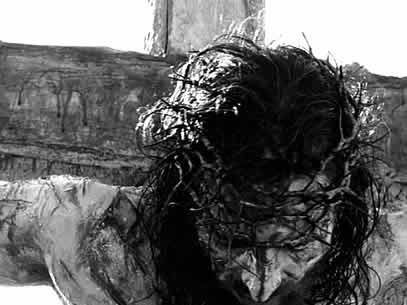
Written around 700 years before Christ, the Book of Isaiah is quoted more times in the New Testament than any other book of the Hebrew Scriptures. 754 of Isaiah’s 1292 verses are predictive. That means 59% of Isaiah is prophecy.  Isaiah contains 11 direct prophecies concerning Jesus and it is cited or alluded to in at least 50 NT passages. Why?

Lets find out. With the eyes of faith we see Isaiah 53 so explicitly refers to the Lord Jesus it doesn’t need much by way of explanation. Indeed it became so obvious that Isaiah was referring to Jesus after he was crucified and rose again from the dead, that, as the Church separated from the Synagogue, Isaiah 53 was no longer read as part of the Jewish lectionary of readings for the year.  There are five stanzas to this passage, each of three verses, and it begins in chapter 52:13. (Remember the chapter divisions and verse numbering was added in Medieval times and are not there in the original).

1. The Predicted Saviour: The Servant’s Role (52:13-15)
2. The Rejected Saviour: The Servant’s Life (53:1-3)
3. The Representative Saviour: The Servant’s Suffering (53:4-6)
4. The Crucified Saviour: The Servant’s Death (53:7-9)
5. The Glorious Saviour: The Servant’s Resurrection (53:10-12)


Continue reading

Imagine a Church where…

Christ Church Annual Church Meeting: 1st April 2012

May I invite you to put your hand up. Now please take it down if you joined Christ Church in 2012. Welcome to Christ Church! Put your hand down if you joined in 2011. Thank you. 2010? 2009? 2008, 2007, 2006, 2005, 2004, 2003, 2002, 2001, 2000, 1999, 1998, 1997? You were here when Joanna and I arrived. Well done. For those who were here cast your mind back. For those who have joined since, imagine…

Imagine. Imagine if you walked into Christ Church on Sunday 1st April 1997 what would you have experienced? First of all, you would have entered via the long corridor and in through the tower doors. If the weather had been warm you might even have entered by the tower steps. The white divider would have been closed and the seats would have been in rows facing the chancel. The curtain and cross covered the Ten Commandments and Lords Prayer. The Communion Table was in the middle of the podium with two seats on either side. A wooden lectern stood in front of the table and behind a communion rail. To the right in the transept you would have seen a robed choir and to the left our organist playing. You would have found a Morning Prayer order of service card and hymn book in the pocket in front of you as well as a Bible. There was a large kneeler on a rack under the seat in front of you. And I would have been wearing a clerical collar and robes.

Continue reading

Cairo Programme

Monday 13 February 8.30-9.45 am AUC, Speak in discuss in class on Zionism of Dr Michael Reimer.

Monday 13 February 1-3 pm
AUC, Mary Cross Hall, Speaker at al-Quds Palestinian Club, and discussion. Multimedia and catering.

Monday 13 February 7 pm
St John’s Church, Port Said Street, Maadi: Speech on Christian Zionism: The historical roots, faith basis and political agenda, discussion.

Tuesday 14 February, 10-12 am
Meeting with Heliopolis Clergy in St Michael’s Church, 8 Seti Street, Heliopolis: Christian-Zionism and the Bible, speech, discussion, film

Wednesday 15 February, 7-9 pm
All Saints Cathedral, Zamalek (behind Marriott hotel), Christian-Zionism and the Bible. Speech, discussion, film

Thursday 16 February, 7-9 pm
St Michael’s Church, 8 Seti Street, Heliopolis: Open Meeting: Christian-Zionism and the Bible. Speech, discussion, film

Friday 17 February, 11-12.15 am
St Michael’s Church, 8 Seti Street, Heliopolis: Preaching in Anglican (English) worship service. Time for discussion afterwards.

Sunday 19 February, 7-8.30 pm
St Michael’s Church, 8 Seti Street, Heliopolis: Preaching in Anglican (Arabic) worship service. Time for discussion afterwards.

Heliopolis Anglican Church

Christianity Explored Launch in Burundi

Craig Dyer and I leave for Bujumbura in Burundi on Sunday to launch the new Kirundi translation of Christianity Explored at the invitation of the Anglican Archbishop Bernard Ntahoturi. The journey takes us via Kenya, Uganda and Rwanda.

The BBC gives the low down on Burundi and why this kind of initiative is so important in equipping and training church leaders in communicating the Christian message of reconciliation.

Burundi, one of the world’s poorest nations, is emerging from a 12-year, ethnic-based civil war. The government and the last active rebel group signed a ceasefire in May 2008, but post-election tension in 2010 renewed fears of civil war.

This will be our fourth visit to East Africa to train pastors and church leaders to use Christianity Explored.  Previous visits have been to Kenya and Uganda. Check out the photos here

Christ Church Virginia Water is Growing

Encouragingly, during 2011, 30 more people attended Christ Church each week on average than in 2010. On Sunday mornings, the increase in attendance was higher, with 38 more people attending each week than in the previous year.

During 2011 a total of 405 people attended Christ Church each Sunday, while more than 700 people visited the church website each week. In 2011 we were blessed with the second highest Sunday attendance figures ever, praise God. Visit the church website and find out why.

“They devoted themselves to the apostles’ teaching and to fellowship, to the breaking of bread and to prayer.  Everyone was filled with awe at the many wonders and signs performed by the apostles. All the believers were together and had everything in common. They sold property and possessions to give to anyone who had need. Every day they continued to meet together in the temple courts. They broke bread in their homes and ate together with glad and sincere hearts, praising God and enjoying the favour of all the people. And the Lord added to their number daily those who were being saved.” (Acts 2:42-47)

Anglican Mission in England (AMiE)

NEW ANGLICAN MISSION SOCIETY ANNOUNCED

The Anglican Mission in England (AMIE) held its inaugural event on Wednesday June 22 during an evangelical ministers’ conference in central London.

AMIE has been established as a society within the Church of England dedicated to the conversion of England and biblical church planting. There is a steering committee and a panel of bishops. The bishops aim to provide effective oversight in collaboration with senior clergy.

The AMIE has been encouraged in this development by the Primates’ Council of the Fellowship of Confessing Anglicans (GAFCON) who said in a communiqué from Nairobi in May 2011: “We remain convinced that from within the Provinces which we represent there are creative ways by which we can support those who have been alienated so that they can remain within the Anglican family.”

The AMIE is determined to remain within the Church of England. The desire of those who identify with the society is to have an effective structure which enables them to remain in the Church of England and work as closely as possible with its institutions. Churches or individuals may join or affiliate themselves with the AMIE for a variety of reasons. Some may be churches in impaired communion with their diocesan bishop who require oversight. Others may be in good relations with their bishop but wish to identify with and support others.

At the London conference three English clergy who have been ordained in Kenya for “ministry in the wider Anglican Communion” with the support of the GAFCON Prımates’ Councıl were welcomed and prayed with by bishops and church leaders in support of their ministry.

The launch of AMIE follows four and a half years of discussions with senior Anglican leaders in England about ways in which those who are genuinely in need of effective orthodox oversight in the Church of England can receive it.

The AMIE will continue to encourage church planting and all forms of Christian witness in accord with the Jerusalem Statement of the GAFCON Conference in June 2008.

Charles Raven writes,

“The AMiE is not only committed to adventurous church planting and the re-conversion of England, but is also prepared to provide alternative episcopal oversight in cases where it is clear that diocesan bishops are failing in their canonical duty to uphold sound teaching. The key institutional innovation is a panel of bishops formed by Bishops Michael Nazir Ali, John Ball, Colin Bazley, Wallace Benn and John Ellison which enjoys the support and encouragement of the GAFCON Primates’ Council.”

See also the Jerusalem Declaration


Women in Episcopacy: Runnymede Synod Calls for Legal Protection for Traditionalists

Supporters of Women Bishops failed to win a majority following last night’s Runnymede Deanery Synod debate.

The motion “Runnymede Deanery encourages Guildford Diocesan Synod to approve the proposals embodied in the draft Bishops and Priests (Consecration and Ordination of Women) Measure and in draft Amending Canon number 30” failed to win a majority (12 for, 12 against and 2 abstentions).

A Following Motion calling for legal protection for traditionalists won a majority (14 in favour, 11 against and 1 abstention). Advocated by the Church of England Evangelical Council the Following Motion stated:

This synod:

  1. Desires that all faithful Anglicans remain and thrive together in the Church of England; and therefore
  2. Calls upon the House of Bishops to bring forward amendments to the draft Bishops and Priests (Consecration and Ordination of Women) Measure to ensure that those unable on theological grounds to accept the ministry of women bishops are able to receive episcopal oversight from a bishop with authority (ie ordinary jurisdiction) conferred by the Measure rather than by delegation from a Diocesan Bishop.

Guildford Diocese will decide its response in June.

You can view my Power Point presentation  here or in PowerPoint 2007 here) and listen to an audio recording here.

I commend this article in the Guardian by Rob Thomas of REFORM.

The news from Synod is that the Church of England may begin to consecrate women bishops in the next few years, with little provision for those who feel less comfortable with the idea. While this can be portrayed as a victory for equality, the position of traditionalists is simply that the draft measure (pdf) as it stands doesn’t provide for a secure future for us in the Church of England, a future that was promised in 1993 but now appears to have been rescinded.

Our problem with women bishops is not to do with equality, but theology. In the case of conservative evangelicals, we believe that the Bible recommends a particular order in the church which allows us to bear witness to the wider world about something that is true of God.

The Bible insists on the absolute equality of men and women, but gives them different functions in the church, so that men can show leadership through self-sacrifice and thus reveal the character of God, and women can demonstrate Christian discipleship to the wider church, thus helping us all follow Christ better.

These are theological issues, not ones to do with justice or fairness. If we are to continue to be able to demonstrate these different functions within the church, we need to be able to do that via legislation. A code of practice such as the one now proposed cannot be enough, because its provisions are not binding. They only have to be taken into account. This means that it would for the future women bishops themselves to decide how much security to provide for traditionalists. That cannot be a satisfactory solution to the problem.

Experience of what has happened in Canada and the US shows that over time, people become less and less tolerant of traditionalist positions. That is why a clear statutory provision needs to be made, not the half-baked, half-hearted approach that the draft measure currently contains.

Read the whole article here

In the words of Dr Ann Young:

During the past 3 years, I – like many of you and many others in the church – have had to ask myself ‘am I opposed to this because of habit or perversity or reluctance to change?’

If the leadership role of men rested only on one or two verses in the letters of St Paul, then I might be convinced that it was a practice for that time, but not binding us now. However, that is not the case. As I read it, the consistent teaching of Scripture is that men have the responsibility under God to take these roles. It was so in the Old Testament times, with a few rare exceptions. There is no doubt that Jesus gave new and unheard dignity to women, and they were key supporters of his ministry. Yet he did not appoint any women as disciples. Was this just because it would have gone against the demands of social norms. The Holy Spirit ‘brought to mind all that Jesus had taught’. Yet the apostles led by Him chose no women, only men, to fill the leadership roles in those decades of the church.

I will vote against the principle canon. I cannot set aside my conviction
  • That Jesus Christ established His church on a pattern that is eternal,
  • That the Bible plainly places the responsibility for leadership of God’s people on men,
  • And that the Holy Spirit’s guidance has maintained and continues to maintain the church according to the will of God.
If the canon passes, it becomes less to do with theology and more to do with practicality and the weight we give to tradition. Whether the canon passes or not, we will need to show one another respect and care if we are to honour God rather than act as a group engaged in political debate.

Runnymede Mayor’s Civic Service: Church and State

Runnymede Mayor’s Civic Service Romans 13 from Stephen Sizer on Vimeo.


Thomas Jefferson once asked the rhetorical question: “Can the liberties of a nation be thought secure when we have removed their only firm basis, a conviction in the minds of the people that these liberties are of the gift of God? That they are not to be violated but with his wrath?”

In the 18th Century, on both sides of the Atlantic, there might have been a consensus that the answer was self-evident – at least in Britain if not in France. When the same revolutionary spirit infected the North American Colonies it became a more debatable question there also. The First Amendment to the United States Constitution, which Jefferson helped write, provided one solution – separate church and state.

While originally intended to protect the church from the state, since 1947, the U.S. Supreme Court has interpreted it to mean that religion and government must stay separate for the benefit of both. Not so today. Most people believe the Church should keep its nose out of politics. Which is why our Bible reading from Romans may have sounded somewhat reactionary or fundamentalist depending on your political affiliation?

Even the idea of holding a religious ceremony to inaugurate the appointment of a new civic leader may to some, appear eccentric or inappropriate. What has religion got to do with politics? I suggest a great deal, and worthy of our attention today. Please turn with me to our Bible reading from Romans.

That we have responsibilities to both God and the state was clearly implied in Jesus’ enigmatic epigram, ‘Give to Caesar what is Caesar’s and to God what is God’s.’ (Matthew 22:21)

Now the Apostle Paul enlarges on the state’s God-appointed role and on the responsibility of Christian citizens in relation to it. His emphasis however, is on personal citizenship rather than on any particular theory of church—state relations.

1. The Authority of the State
2. The Role of Government
3. The Responsibility of Citizens

Continue reading