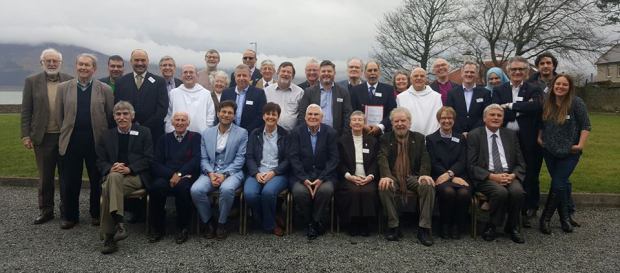
Rostrevor Declaration: A meeting of significant members drawn from different churches and faiths on “Higher quality of disagreement”.
Like most other Western countries the island of Ireland is experiencing many challenges as it struggles to manage the growing diversity of communities within it. While the cultural and social fabric of our society becomes more rich and colourful, the relationships between some of our faith groups, reflecting a global trend as religious conflicts grow around the world, are becoming or in danger of becoming more tense. As global populations shift and more people are displaced by violence, war, climate change or simply lack of opportunity, it is likely that the religious demography will continue to change.
The growth of Islam in Ireland, North and South has challenged some of the historically Christian characteristics of the Island and its peoples; as, within both Christianity and Islam, and to some extent Judaism, there are traditions which see themselves as conservative and orthodox, and which makes claims to truth which are “particularist” or in some cases wholly “exclusivist”. The tensions between faith communities are reflective of what is happening globally as Christian, Muslim and Jewish leaders and their followers experience a fear of the other, which contributes to polarisation and radicalisation.
On the 10th March, 2017 a gathering of 30 significant members of the three Abrahamic faiths came together from Ireland North and South and Britain to pursue a conversation not with the aim of seeking, still less enforcing consensus, but rather fostering a Higher Quality of Disagreement. The gathering built some improbable relationships which bridged the divide between the groups of believers and created a sense of common purpose and an environment conducive to addressing contentious but common concerns.
Some principles were agreed as an outcome to our first gathering which have and will continue to be refined through further discussions which are distilled and the rolling report will be referred to as the Rostrevor Declaration :
Rostrevor Declaration
- The Scriptures of all three faiths, Jewish, Christian and Muslim, encourage us to treat others as we would like them to treat us. As members of faith communities we have a responsibility to act according to the scriptures and actively remind other members of our communities of this scriptural wisdom and thus deserving of respect.
- We encourage members of faith communities to remember that members of all faiths were created in the image of the heavenly Creator.
- Our places of worship should be regarded with respect and be places of safety and hospitality.
- We need to re-humanise rather than dehumanise community relations by reminding members of our believing communities of the positive characteristics of other faiths while protecting total academic freedom and respectful free speech as given in international instruments [Article 18 of the Universal Declaration of Human Rights and Articles 9 and 10 of the European Convention on Human Rights] and biblically proclaimed in 1 Peter 3:15.
- We will actively build mutual respect by advocating for the safety, freedom and well-being of one another, which includes standing up for the liberties of followers of other faiths to worship, manifest their faith and change their religion in this land and beyond, and we will speak out and be activists wherever we see persecution at home or overseas.
- We will help to reduce fear between our believing communities by advocating and facilitating education and understanding among and between the communities.
- We will encourage members of our communities not simply to speak the truth but strive to live it with integrity.
- We are committed to building friendship between members of our faith communities and letting the mercy of the heavenly creator inform how we relate to each other.
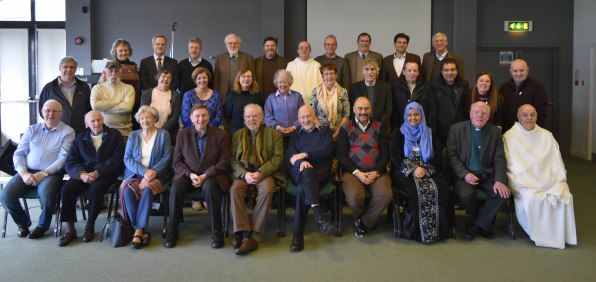
A third meeting took place at An Cuan in Rostrevor on 18th January 2018, bringing together faith leaders, politicians and artists to reflect on the theme of the Epiphany in Christian tradition and the relevance of the feast for our world today.
The meeting brought to a close this series of gatherings and at the same time began to explore how the Rostrevor Declaration could be implemented and applied to specific issues such as Brexit, the integration of asylum seekers and strengthening the Good Friday Agreement.
 “Now the story of Christ is simply a true myth: a myth working on us in the same way as the others, but with the tremendous difference that it really happened.” — C. S. Lewis