Category Archives: Sermons

Jesus and His Sheep and Goats

Do you know why dogs and cats are so different? A dog looks at you with those big brown eyes, cocks its head to one side and says to itself, “You love me, you feed me, you care for me, you take me for walks… you must be God”. A cat looks at you with those piercing green eyes and thinks to itself “You love me, you feed me, you care for me, you stroke me … I must be God”.

There are cat people and there are dog people. There are tennis people and there are golf people. Some people like to sleep with the windows open and some people prefer to sleep with the windows closed – and they are usually married to each other. Some people keep a pen and notepad by the telephone while other people just have children. There are breakfast people and there are people who don’t remember what breakfast is. There are A type people and there are the rest of you. There are Tigger people and there are Eyore people. There are blue sky optimist people and there are chicken little – sky falling in people. And every team has at least one of each. When it comes to finances, some are cheque book people and some are cash people. There are Harrods people and there are T.K. Maxx people. There are Waitrose shoppers and Aldi shoppers. There are carefully balanced every month cheque book people and there are shut the cheque account down every two years and start over people. There are people with stock brokers and there are people perfectly capable of going broke without them. And you know who you are.

Jesus says that ultimately, there are only two kinds of people – the sheep people and the goat people. Do you know which you are?

“When the Son of Man comes in his glory, and all the angels with him, he will sit on his throne in heavenly glory. All the nations will be gathered before him, and he will separate the people one from another as a shepherd separates the sheep from the goats. He will put the sheep on his right and the goats on his left.” (Matthew 25:31-33)

Jesus the King and the Sheep and the Goats from Stephen Sizer on Vimeo.

Continue reading

Jesus the Master is Returning

noah

I suspect Russell Crowe and the producers of his latest film, in cinemas from next week, had wished they had released Noah in January at the height of the wettest winter on record. The film has inevitably aroused controversy. On the one hand for being creative with the Scriptures, but on the other for assuming that the Flood really happened.

It has certainly divided my Facebook friends. When challenged as to whether I really believed in the story of Noah. I simply replied, “Jesus clearly did, and that is good enough for me.” In our series the Passion of Jesus, as we prepare for Easter, we are listening to Jesus explain the meaning of his death, the significance of his resurrection, the implications of his ascension and the signs of his return. In the first half of Matthew 24, last week, we saw how Jesus answered his disciples’ question.

“What will be the sign of your coming and of the end of the age?” (Matthew 24:3).

I recommended viewing these verses through varifocal lenses. For Jesus describes: The Beginning of the Last Days. The Signs of the Last Days and the End of the Last Days. And all are in perfect focus.

In the verses before us today, Jesus elaborates on the events immediately preceding his return. I want to draw out three implications for us:

1. Jesus will return to an unsuspecting world
2. Jesus will rebuke unfaithful hypocrites
3. Jesus will reward his diligent servants

Continue reading

Jesus and the Torah

1669842_10152100078587893_1647673459_o

I was recently with Vivid Broadcast, Broadbridge Heath, Sussex, to record six of my sermons on ‘Christ in all the Scriptures’ for ‘The Sermon‘ a ministry of Richard Bewes.

Genesis: Jesus and Abraham’s Sacrifice
Exodus: Jesus and the Passover Lamb
Leviticus: Jesus and the Atonement Sacrifice
Numbers: Jesus and the Bronze Snake
Deuteronomy: Jesus and the Prophet
Joshua: Jesus and the Commander of the Lord’s Army

View the whole series so far here

Vivid have recently won the contract to record the Antique Roadshow.

1669842_10152100078572893_2131105299_o

Jesus is Coming Soon

In July 2006, at the launch of Christians United for Israel, after recorded greetings from President George W. Bush, and in the presence of US Senators and the Israeli Ambassador, Pastor John Hagee from Texas suggested,

“The United States must join Israel in a pre-emptive military strike against Iran to fulfill God’s plan for both Israel and the West … a biblically prophesied end-time confrontation with Iran, which will lead to the Rapture, Tribulation, and Second Coming of Christ.” [i]

Is that what the Apostle Peter had in mind when he said we should “look forward to the day of God and speed its coming”? (2 Peter 3:12).  Is this how we “speed Christ’s coming”?  Well what did Jesus say? In our series The Passion of Jesus, we have come to Matthew 24. The chapter begins with Jesus’ disciples asking him a question.

“What will be the sign of your coming and of the end of the age?” (Matthew 24:3).

They were dying to know when Jesus would return. And Christians have been speculating ever since. In verse 34, Jesus answers,

“Truly I tell you, this generation will certainly not pass away until all these things have happened.” (Matthew 24:34).

Jesus is Coming Soon from Stephen Sizer on Vimeo.

The problem has been that Christians in every generation since have believed Jesus was referring to their generation. Were they wrong? Well, yes and no. As a young Christian growing up in the 1970s, I was addicted to books on Bible prophecy like Hal Lindsey’s, Late Great Planet Earth. Lindsey insisted the signs of Jesus return were coming true in our generation. Lindsey figured that the return of the Jewish people back to the land after 2000 years, the founding of the State of Israel in 1948, and the capture of Jerusalem in 1967, were signs that Jesus predicted. Since a biblical generation is 40 years, Lindsey speculated that Jesus would therefore return in 1988.

Continue reading

The King of Righteousness is Coming

Jesus-Christ-jesus-9917686-640-457Isaiah 32–35:  Community Bible Study International (CBSI)

 In 1919, American writer Lincoln Steffens visited the Soviet Union to see what the Communist revolution was accomplishing; and in a letter to a friend, he wrote, “I have seen the future, and it works.” If he were alive today, he would probably be less optimistic; but in those days, “the Russian experiment” seemed to be dramatically successful.

In the four chapters that conclude the first section of his prophecy, Isaiah invites us to look at four future events to see what God has planned for His people and His world. These chapters are not human speculation; they are divinely inspired revelation, and they can be trusted.

1. The King will Reign (Isa. 32:1–20)

At the beginning of its history, the nation of Israel was a theocracy. God was their King. But in the days of Samuel, the people asked for a king; and God gave them Saul (1 Sam. 8). As you know Saul failed in his divinely appointed role and the Lord raised up David who established both the dynasty for Israel’s throne and the ancestry for Israel’s Messiah (2 Sam. 7). Every Jew knew that the future Messiah-King would be the Son of David (Matt. 22:41–46). In Isaiah 32:1, Isaiah writes about “a king”; but in 33:17, he calls him “the king.” By the time you get to verse 22, He is “our king.” It is not enough to say that Jesus Christ is “a King” or even “the King.” We must confess our faith in Him and say with assurance that He is “our King.” Like Nathanael, we must say, “Rabbi, You are the Son of God! You are the King of Israel!” (John 1:49, NKJV)

Continue reading

Jesus Confronts Religious Abusers

Have you noticed that when a new hotel or commercial building is being constructed, the architects will invariably install large mirrors in the lobby? Ever wondered why? Apparently we complain less when we’re looking at ourselves.
We all get distracted by our reflection at times, don’t we?  We all want to be seen, to be recognized, to be accepted, affirmed, encouraged, appreciated, valued. And that’s OK. It is instinctive to want to be loved. As long as we are not preoccupied or obsessed with ourselves and what others can or should do for us.  As we emphasize on our church website “We were designed to live in community – to know and be known, to love and be loved, to serve and be served, to celebrate and be celebrated.”

But like the mirrors you sometimes find at amusement parks, our self perception can so easily become warped or distorted when we view ourselves through the eyes of other people rather than God.  It is bad enough when this is tolerated in a community and remains unchecked. But it is much worse when religious leaders encourage and exploit their image or position. Then it becomes abusive and manipulative.  I have been a victim of that kind of spiritual abuse. And if you have been a church member for any length of time, you probably have been too. Spiritual abuse ranges from the relatively benign to the lethally toxic, but usually stems from a misuse of authority by religious leaders.

Continue reading

What are we to make of Jesus Christ?

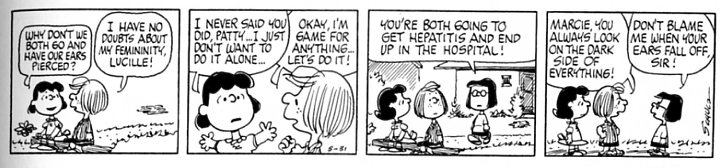
When I was a child, I used to read the Daily Mail newspaper every day – well, the Peanuts cartoons, to be precise. I still remember when Lucy asked each of her friends whether she should have her ears pierced. The conversation went on for days. Schroeder was playing his piano. “Do you think I should have my ears pierced?” He replies, “I don’t mind, you pierced mine long ago.” She storms off. “Linus, Do you think I should have my ears pierced?” “I have a better idea…” he replies cheekily, “Why don’t you have your mouth boarded up?” Lucy wallops him. When he comes to, he reflects, “It was worth it!”

How do you cope with people who just don’t seem to like you? No matter how hard you try to be nice to them, they will always twist your words, they question your motives, they gossip about you, they try and discredit you, they seem to undermine you at every opportunity.  Maybe you work with them, maybe they live next door, or maybe you are related. How do you deal with them? Blank them out? Retaliate? Stoop to their level? Do you go on the defensive? How do you react?

As we approach Easter, in the first of our new teaching series, entitled The Passion of Jesus, we see how Jesus dealt with his enemies. We see his passion for them. When they ask what appear to be innocent questions, Jesus responds with a question of his own:

What do you think about the Messiah?” – “who is he?” (Matthew 22:41). Implicit in that question are two more, “Why did Jesus come?” and What is his claim on our lives?”

What are we to make of Jesus Christ? from Stephen Sizer on Vimeo.

Continue reading

What Abraham Discovered: God will Provide

Our son Michael celebrated his 21st birthday last week.  When he was born, five weeks premature, and I held that little bundle of life in my hands for the first time, I didn’t know whether the Lord who had given us a son would take him back again. Although I wasn’t quite as old as Abraham, it was the first time I could really identify with him. Twenty one years later, Mike is taller, more intelligent and more attractive than me.

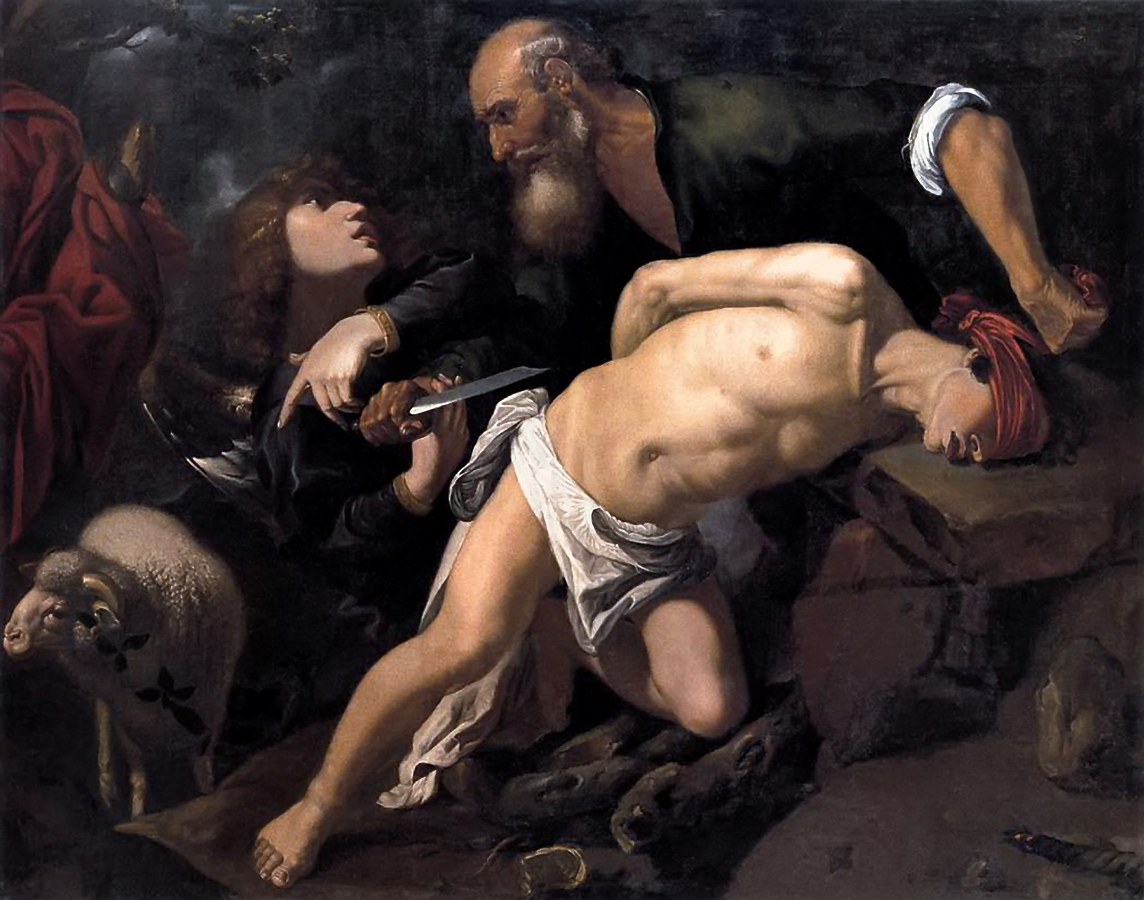
At the age of 75, Abraham was called to follow the Lord. Now, aged well over 100, he was still having faith-stretching, heart stopping experiences. The lesson? We are never too old to face new challenges, fight new battles, and learn new truths. When we stop learning, we stop growing; and when we stop growing, we stop living. “The first forty years of life give us the text,” “and the next thirty supply the commentary.” The “commentary” is being written as we listen to God, and follow His directions, one step, one day, one challenge at a time.  Sad to say, many people understand neither the text nor the commentary, and their lives are ended before they have understood the meaning of life. Genesis 22 records the greatest test that Abraham ever faced. In it we also see the progressive unfolding of God’s rescue mission for planet earth. As we found in our series Christ in All the Scriptures, it contains a beautiful prefiguring of Christ’s sacrifice on Calvary.

In both, the lesson from this passage is this:  obedient faith overcomes in the trials of life. I want us to consider five lessons we can learn from the testing of Abraham. We can learn them the hard way or the easy way. With God or without him.


Continue reading

The Liberty of Grace

The Liberty of Grace – and Why the Church is Persecuted (Galatians 5)

Last Sunday while we were holding our service, Islamist militants “slaughtered” some 30 churchgoers in north-eastern Nigeria.  The Bishop of Yola told the BBC the insurgents had locked the church and “cut people’s throats” in Waga Chakawa village, Adamawa state. On the same day, militants also attacked Kawuri village in neighbouring Borno, killing 52 people. Both assaults were blamed on the Boko Haram group. The name means “Western education is forbidden” – is especially active in the north-east of the country. Boko Haram wants to impose a severe form of Islamic law, and has been blamed for thousands of deaths in Nigeria.

The Liberty of Grace from Stephen Sizer on Vimeo.

The Bishop of Yola, Mamza Dami Stephen, said parishioners described how the insurgents had arrived on trucks and locked the church “towards the end of the service”. “Some people tried to escape through the windows and the [attackers] shot at them,” the bishop said. The militants set off bombs, before burning houses and taking residents hostage during a four-hour siege. The bishop said locals were gripped by terror. “Everybody is living in fear,” he explained. “There is no protection. We cannot predict where and when they are going to attack. People can’t sleep with their eyes closed.” Open Doors asks us to pray for God’s comfort and grace to reach all affected by these tragic incidents and that there will be an end to this cruel war against the people of Nigeria, and Christians in particular. But what happened in Nigeria last Sunday should not surprise us. This is the Open Doors 2013 Watch List.

Jesus said, “If you hold to my teaching, you are really my disciples. Then you will know the truth, and the truth will set you free.” (John 8:31-32). But the truth is dangerous for many in our world today. And Christians in the South and East, it seems, are willing to pay the price to stand for Jesus. Yet in the West, we have domesticated Him. We don’t necessarily see the link between truth and freedom. We probably don’t experience opposition to our faith on a daily basis. So we take freedom for granted and we are liable to compromise the truth. When was the last time you brought Jesus into a conversation at a dinner party or meal with friends or neighbours? Die for Jesus on the streets of Virginia Water? I don’t think so. Hard to imagine. In November each year, we pause for two minutes silence to remember the names of people from Virginia Water who gave their lives to preserve our freedoms and defend us from fascism and totalitarianism. Imagine if those lists were the names of Christian brothers and sisters from our church family who had given their lives in the service of Christ? Would we honour them differently? What of those Christ followers in Syria, Iraq, Iran, North Korea, and many parts of the world, for whom the persecution Paul writes of in our passage today is the norm. Can we take it for granted that it won’t happen in our country?

Continue reading

El Shaddai: The God Who Covenants

Have you seen the weather forecast for this week? Temperatures will be dropping to – 60 degrees centigrade. Winds exceeding 100 mph. No sunlight for months on end. Imagine surviving in those conditions without shelter, without heat, without clothes. Its hard to believe but some do, indeed they have adapted and thrive in such conditions. Every aspect of the Emperor Penguin’s life is tough, for the bird is the southernmost species and breeds on the ice-bound Antarctic land mass. What it takes to do this is remarkable.

At the end of the Antarctic summer, in March, the birds flop out of the Southern Ocean where they have been assiduously stuffing themselves, and begin a long trek to their mating grounds, up to 70 miles away. Thousands gradually come together, tramping over the ice in long single files like patrols of infantry. But that’s only the beginning. After courtship and pairing, the female bird produces a single egg, and then one of nature’s great curtains comes down.

A six-month [winter] dark descends, and the temperature drops with it, to minus 60 and [lower] – and the female bird departs. She has gone without food for so long – and the effort of producing the egg has been so great – that she must return to the sea to feed. The task of incubating the egg, in the harshest conditions on earth, falls to the males.  When blizzards arrive, with 100 mph winds in a nightmare of [24 hour] frozen dark, [they] huddle round together in great groups to keep a minimum of warmth…

Most survive, and so do their eggs, kept secure and warm in a fold of abdominal skin just above their feet. After 60 days of this, the eggs hatch. The male then feeds the tiny chick at first with a milky substance, then eventually the female returns to take over, recognising her mate by call. How do the penguins survive 100 mph winds and -60 degree temperatures? By taking turns at standing on the outer edge of the crowd where it is coldest, and then moving back in to the relative warmth and shelter of the huddle.

It seems to me to be a vivid natural illustration of what God intends human society to be. A supernatural window on what his Covenant people, the Church, have been called to be, to show those who are spiritually cold, lost and alone in the dark, how to find the way home to the warmth, the comfort and light of the Father’s embrace.

God’s rescue plan for the world began a long time ago with Abraham. From Abraham, God was going to build a family of faith who would become an entire nation who in turn would lead the whole world back to God. That is the context for the covenant God makes with Abraham in Genesis 17. Our series is entitled “What Abraham Discovered” and today our theme is “El Shaddai – the God who Covenants.” Lets explore the passage and ask three questions:

  1. What did the Covenant mean for Abraham?
  2. What did the Covenant mean for God’s people?
  3. What does the Covenant mean for us today?


El Shaddai: The God Who Covenants from Stephen Sizer on Vimeo.

Continue reading